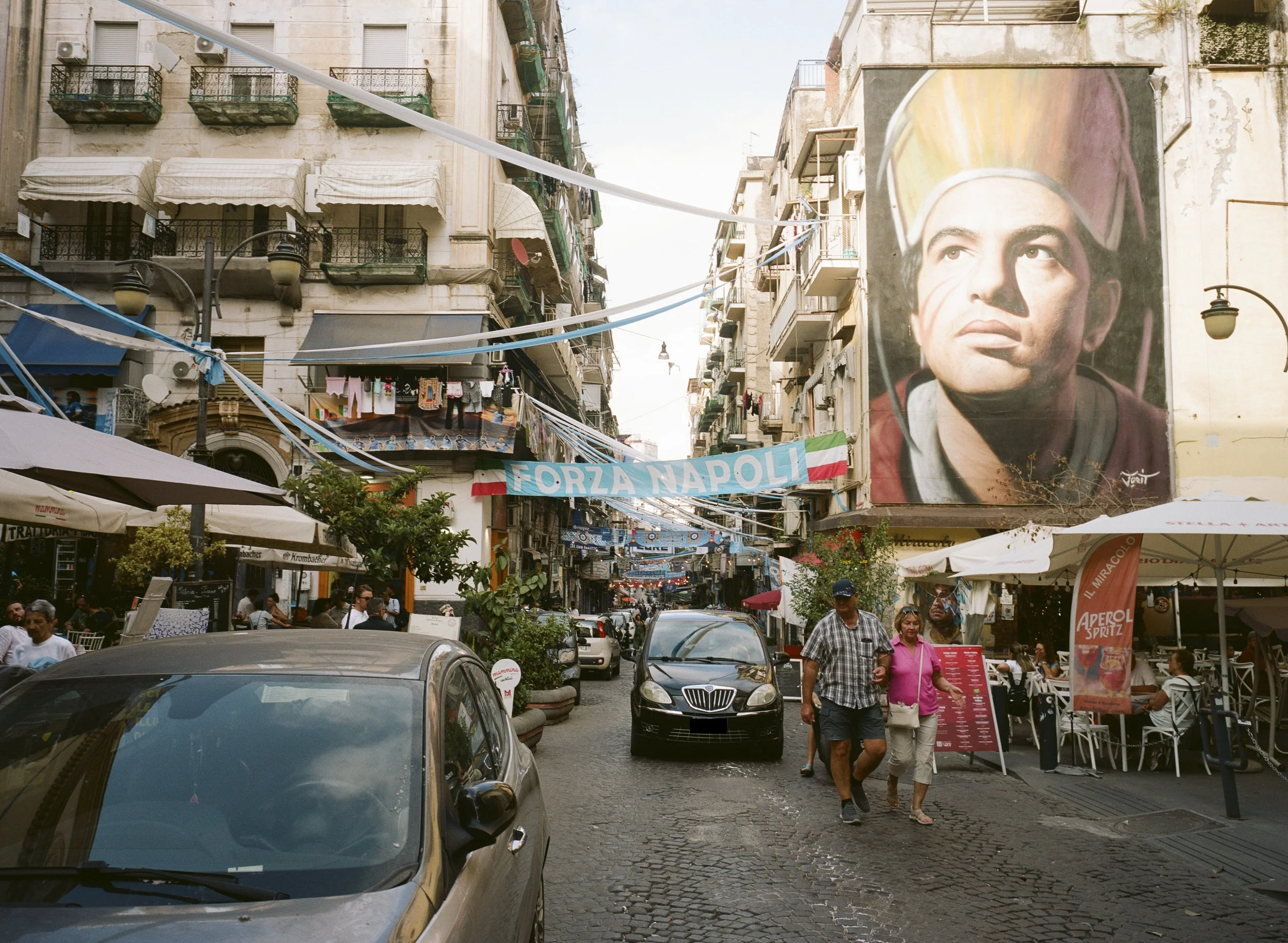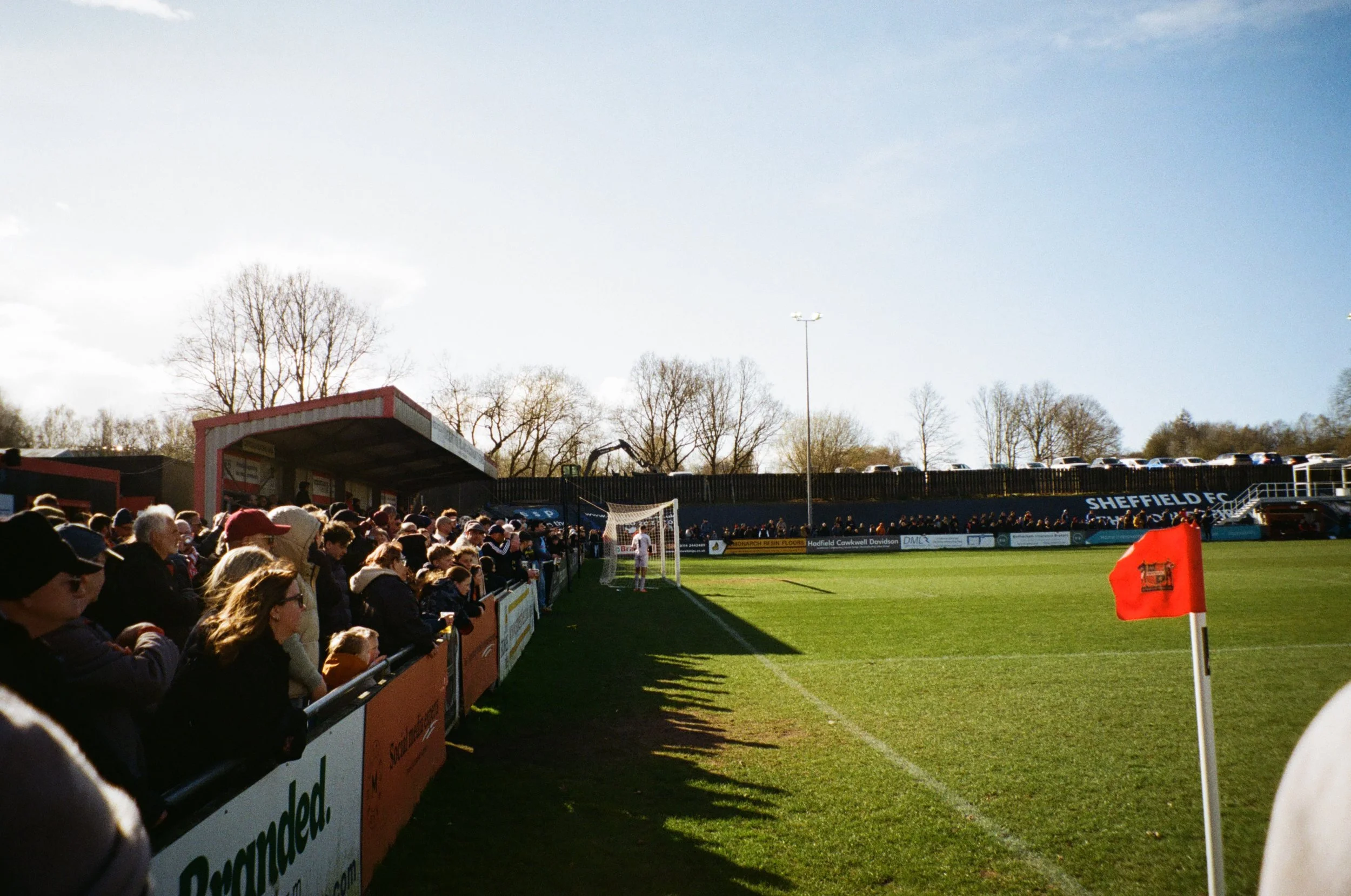
Napoli belongs to the people
Words: Maracante
Images: Maracante
ONE HUNDRED YEARS
What are a hundred years, after all?
The story of a passion that, around here, comes remarkably close to religion. At times, perhaps, even to obsession.
Few European cities share such a powerful bond between a place and its football club as Naples does with Napoli.
And that means one thing above all:
©Maracante.
PRESSURE
In every bar, every office, every street in this city, sooner or later the conversation always comes back to the same thing: Napoli.
The match just played. The one still to come. A new signing, a departure, a referee’s mistake, the wrong starting eleven. People argue over who should play, who should leave, and who should stay forever.
The places change.
The people change.
The generations change.
The subject hardly ever does.
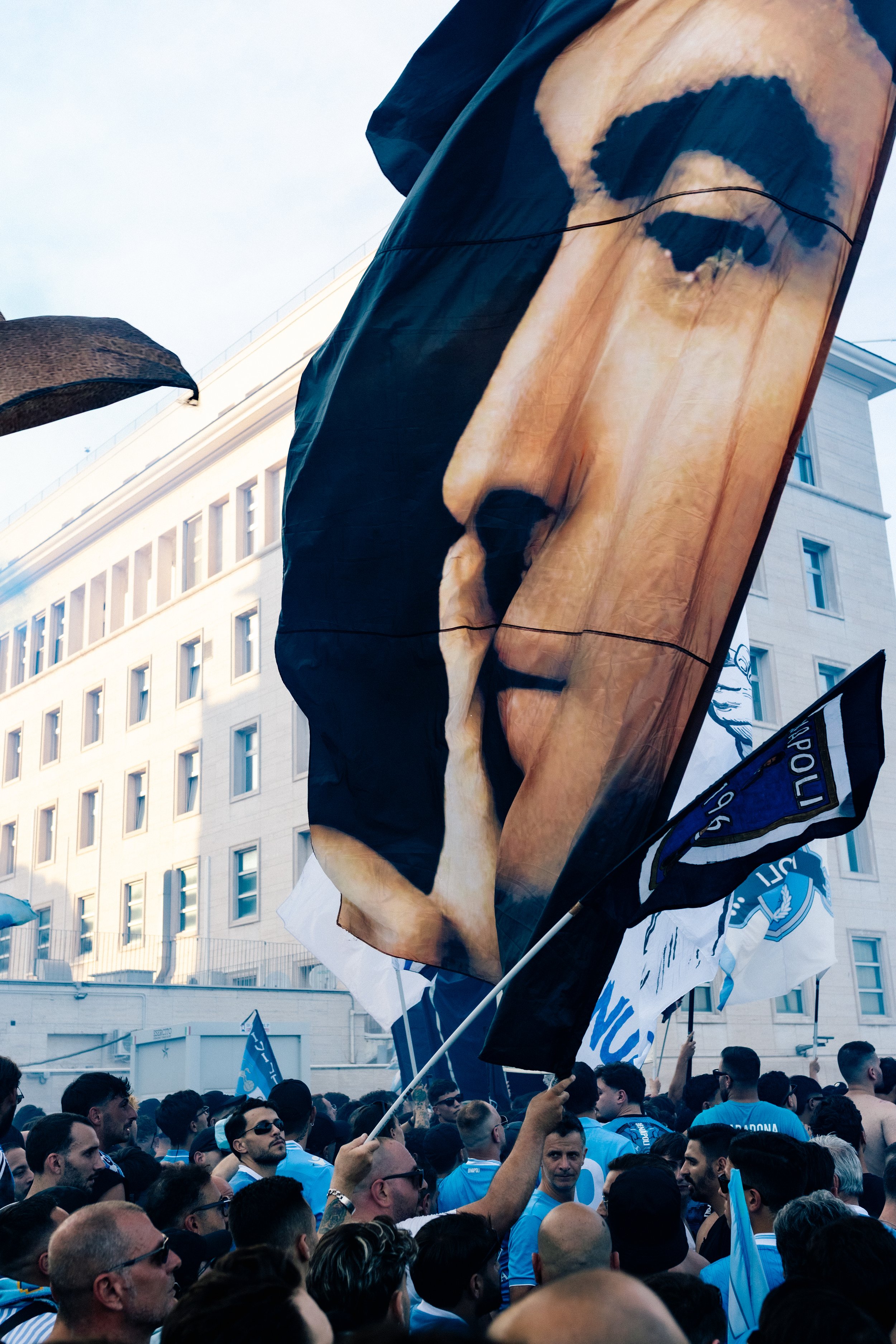
©Maracante.
Because in Naples, Napoli is not just a football club.
Perhaps no football club is ever just a football club. But here, the sacred and the profane blurred into one another a long time ago.
After all, this is the city of D10S.
Yet a city this vast, united by the same colours, could never be expected to think with one mind.
And perhaps that is one of the most fascinating things about it.
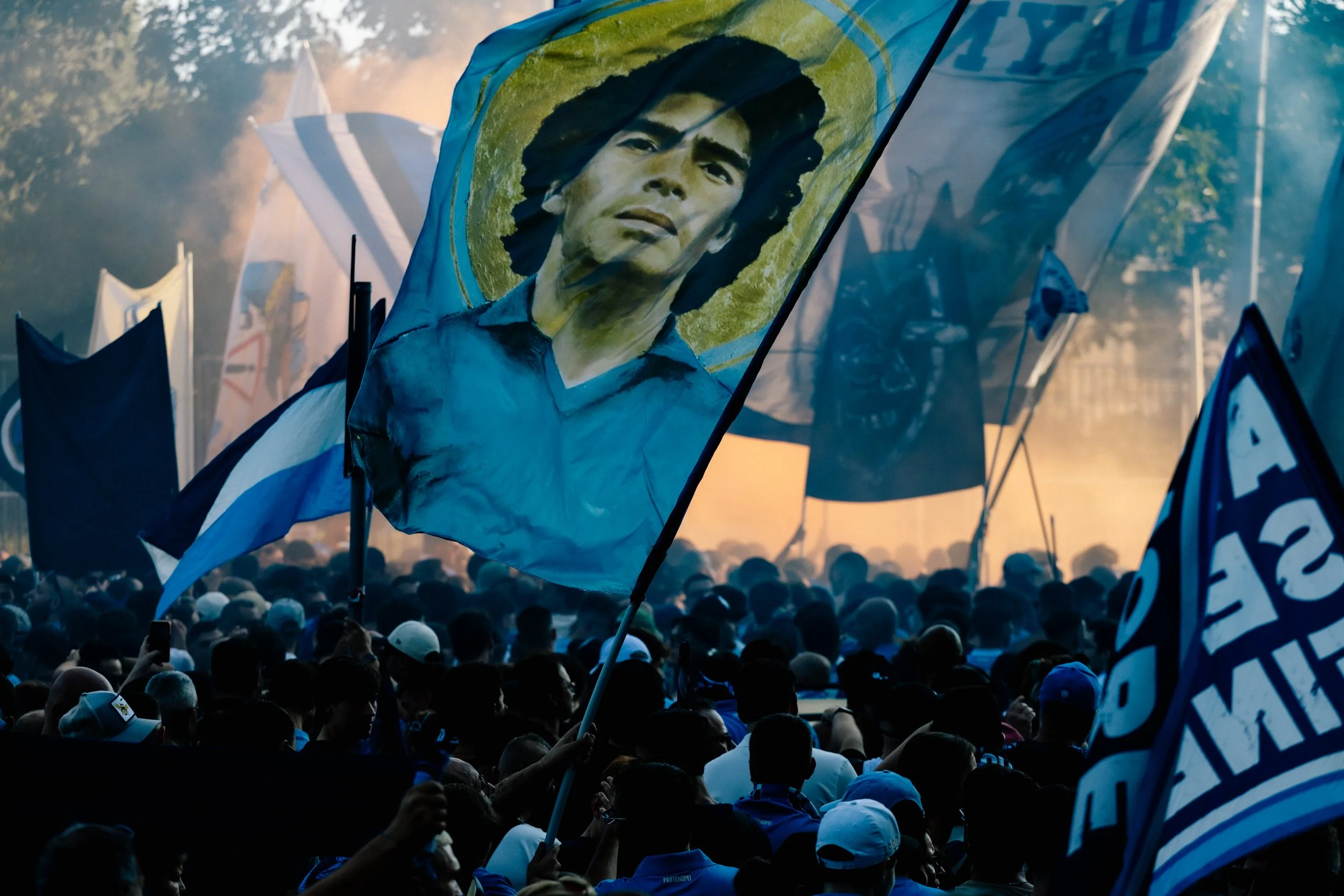
©Maracante.
Within the same passion live completely different ways of understanding football, support, the club and even the city itself.
You can see it clearly in the stands.
Dozens of ultras groups. Different histories. Different neighbourhoods. Different generations.
Each with its own name, its own symbols, its own ideas, its own way of living the Curva and understanding what belonging means.
Sometimes distant.
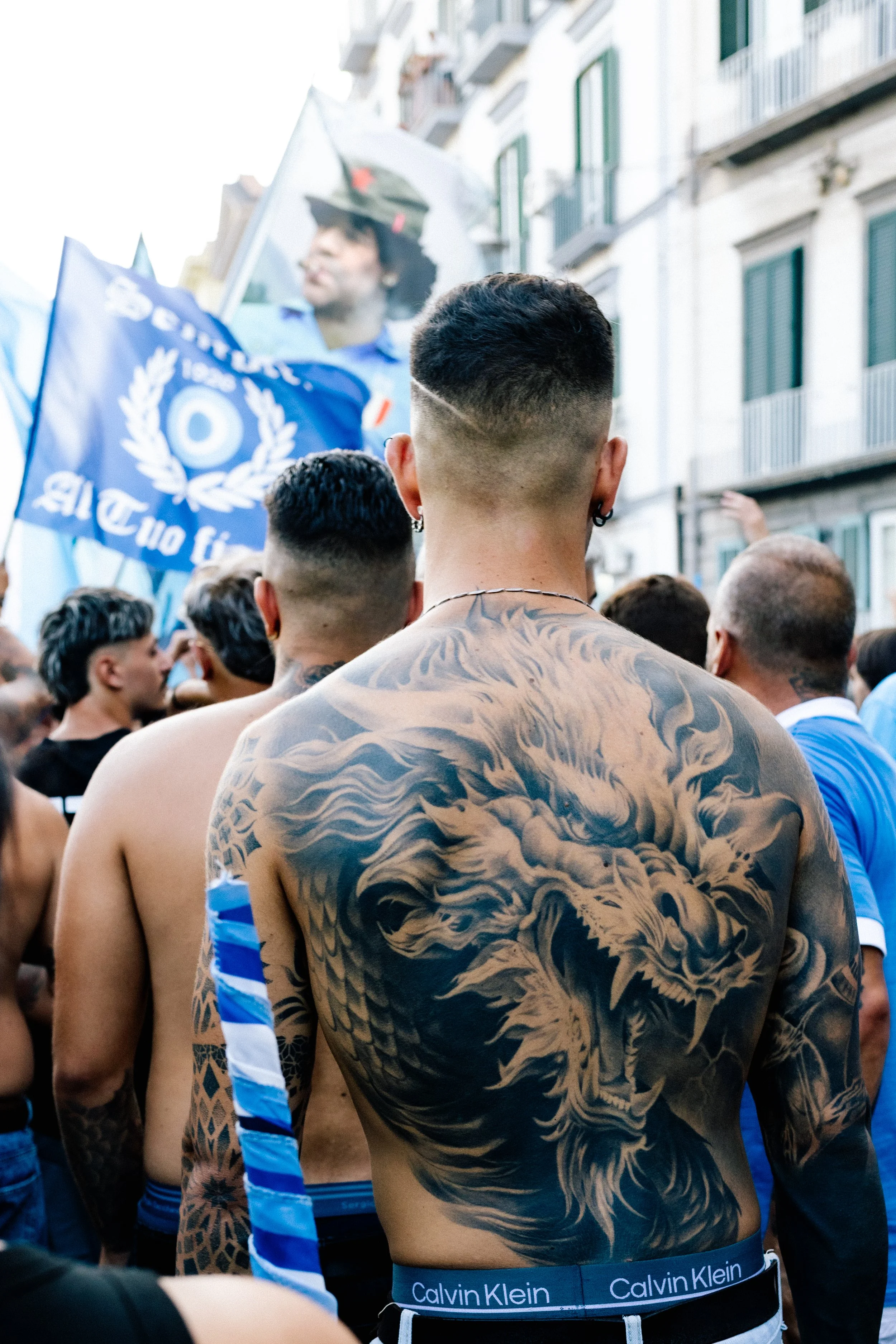
©Maracante.
Sometimes TOO distant.
And yet, in the end, they all sing for the same colours.
Because banners may change.
Groups may change.
Ideas may change.
Even the way people love this club may change.
©Maracante.
But the faith remains one.
On 31 July 2026, on the eve of Napoli’s hundredth anniversary, all those differences were put aside.
For one day. One entire day.
The organised supporters came together, worked side by side and, independently and at their own expense, created their own celebration for the Centenary.
The club had not called them together.
The club had not built a stage for them.
SSC Napoli’s official celebration would come the following day, on 1 August, with its own programme, institutions, guests and all the organisation expected for an anniversary of such importance.
But 31 July was something else.
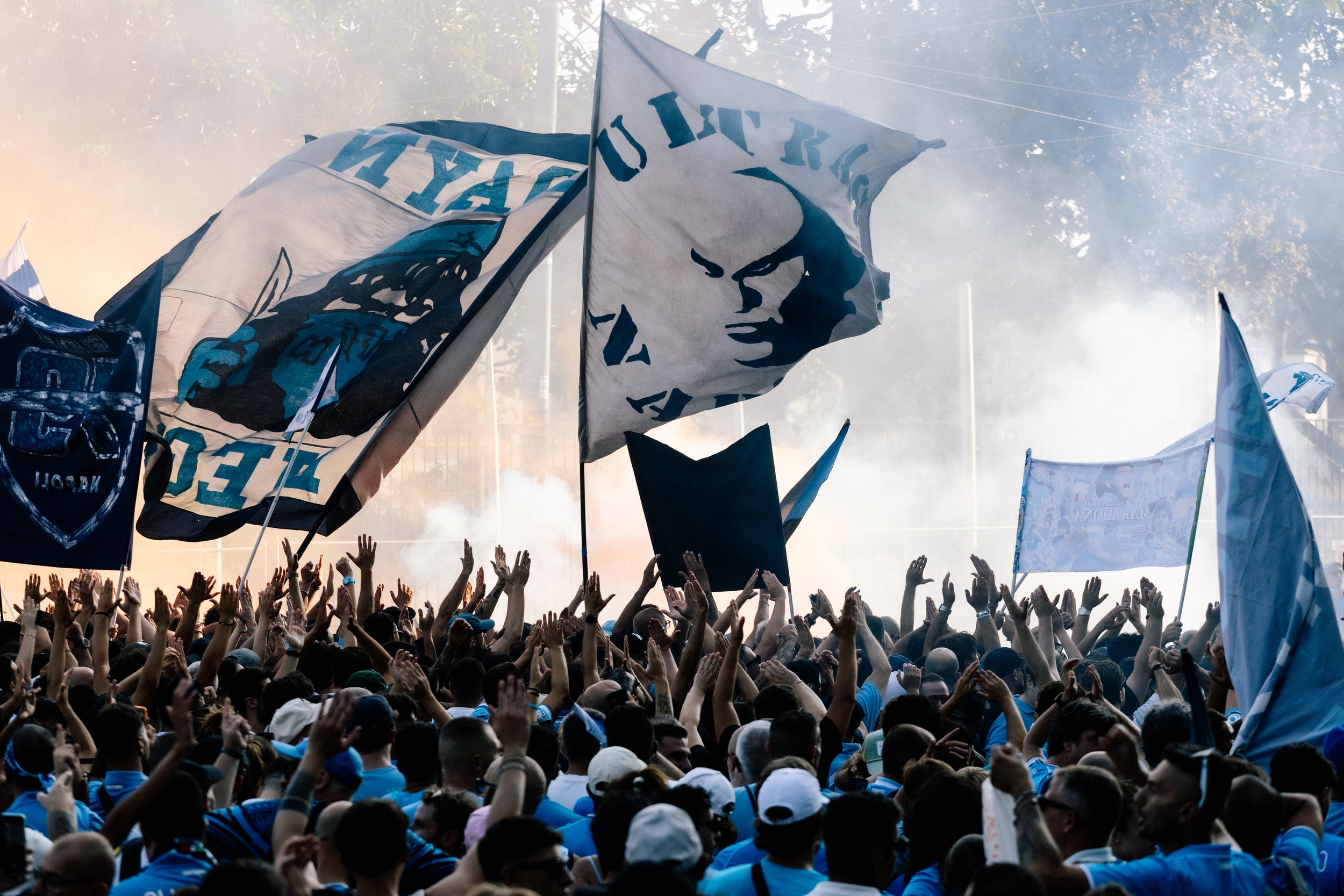
©Maracante.
It was born in the streets.
It was not the celebration of one Curva.
It was not the celebration of one group.
It was not even simply the celebration of a football club.
And, above all, it did not belong only to those who live that Curva every Sunday.
Because, almost without realising it, the ultras had managed to create something that went far beyond the ultras world itself.
They had opened their celebration to the city.

©Maracante.
You did not have to belong to a group.
You did not have to know the chants.
You did not have to prove how many years you had spent in the stadium.
You did not need an invitation.
You simply had to be there.
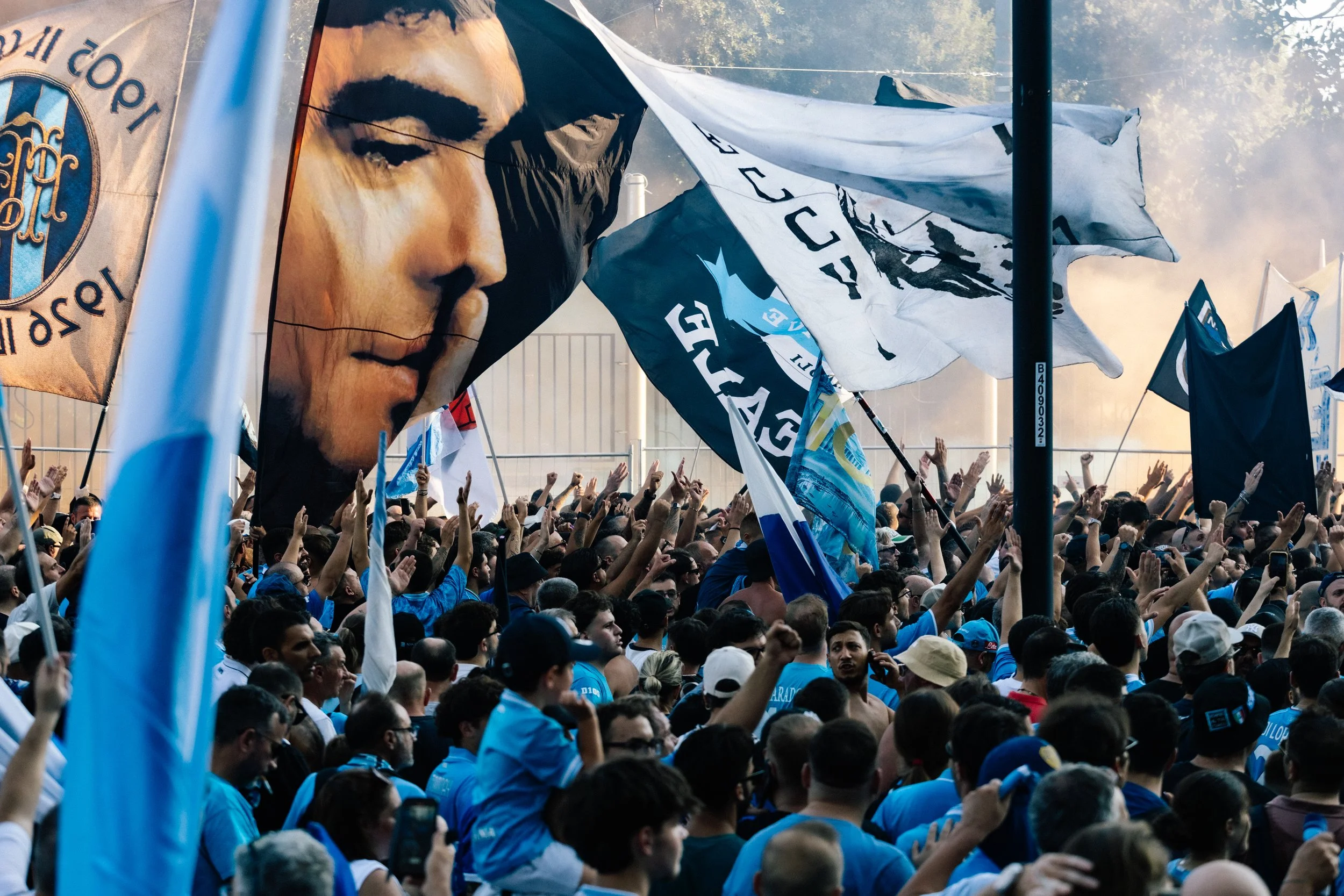
©Maracante.
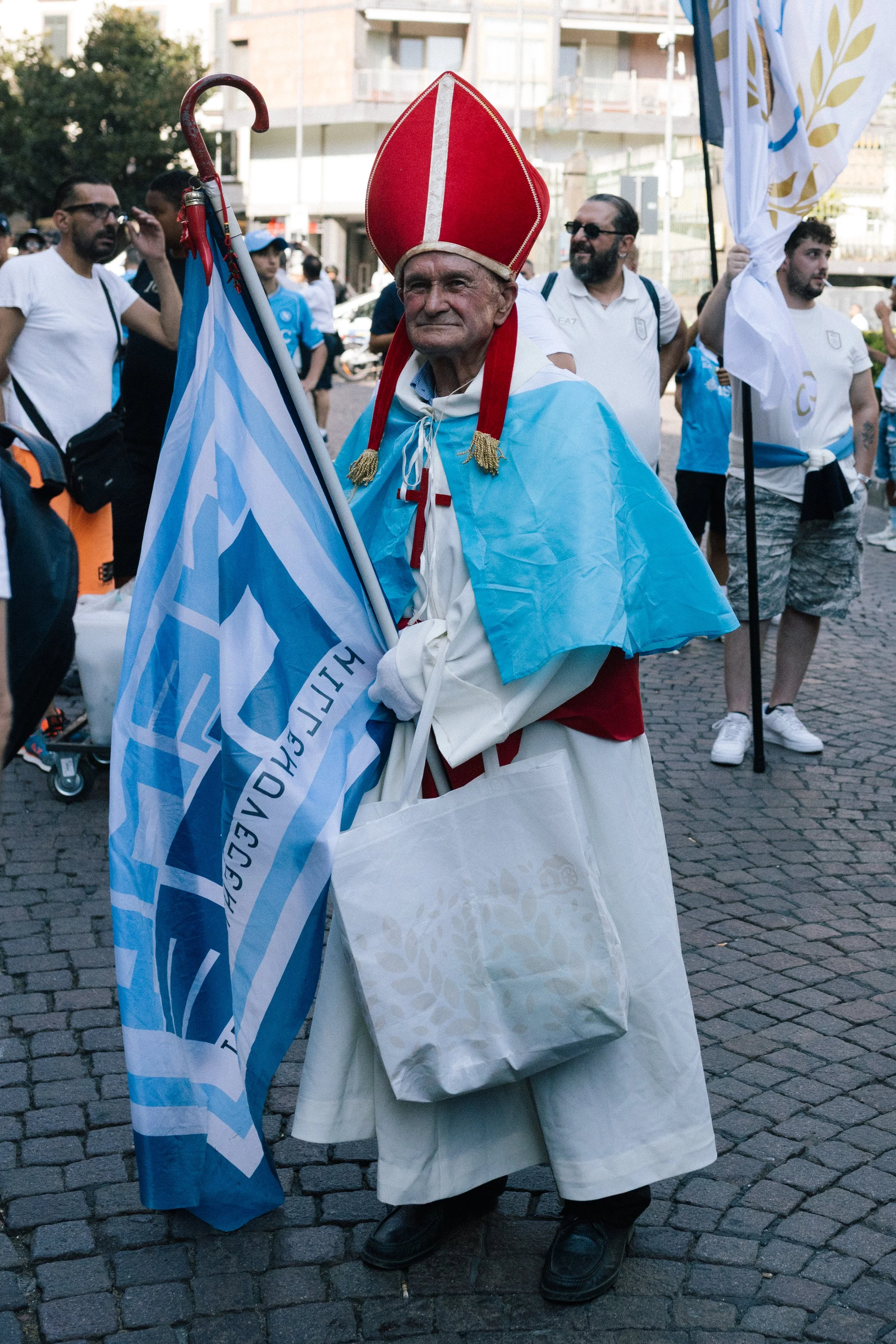
And Naples was there.
The people from the Curvas were there, of course.
But beside them were families. Children sitting on their fathers’ shoulders. Young people who may have first discovered Napoli through their grandparents’ stories. Men who had seen Maradona with their own eyes. Others who had only ever known him through old footage
There were people who go to the stadium every Sunday and others who probably had not been there in years.
That night, none of it mattered.
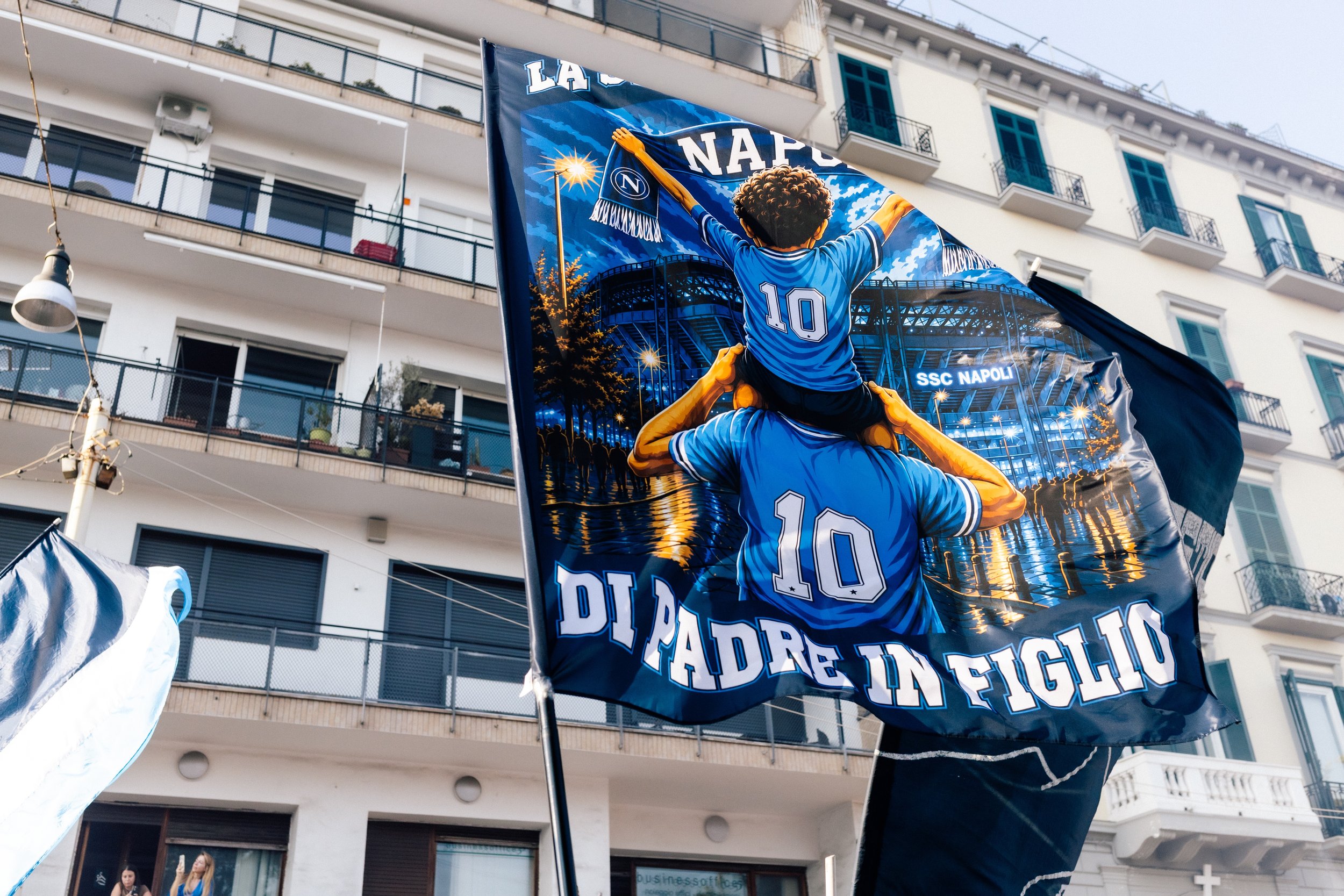
©Maracante.
Because when football still manages to be something more than a spectacle to be bought and sold, this may be its most extraordinary quality: it can bring together people who, in everyday life, might have absolutely nothing to say to one another.
And make them sing the same words.
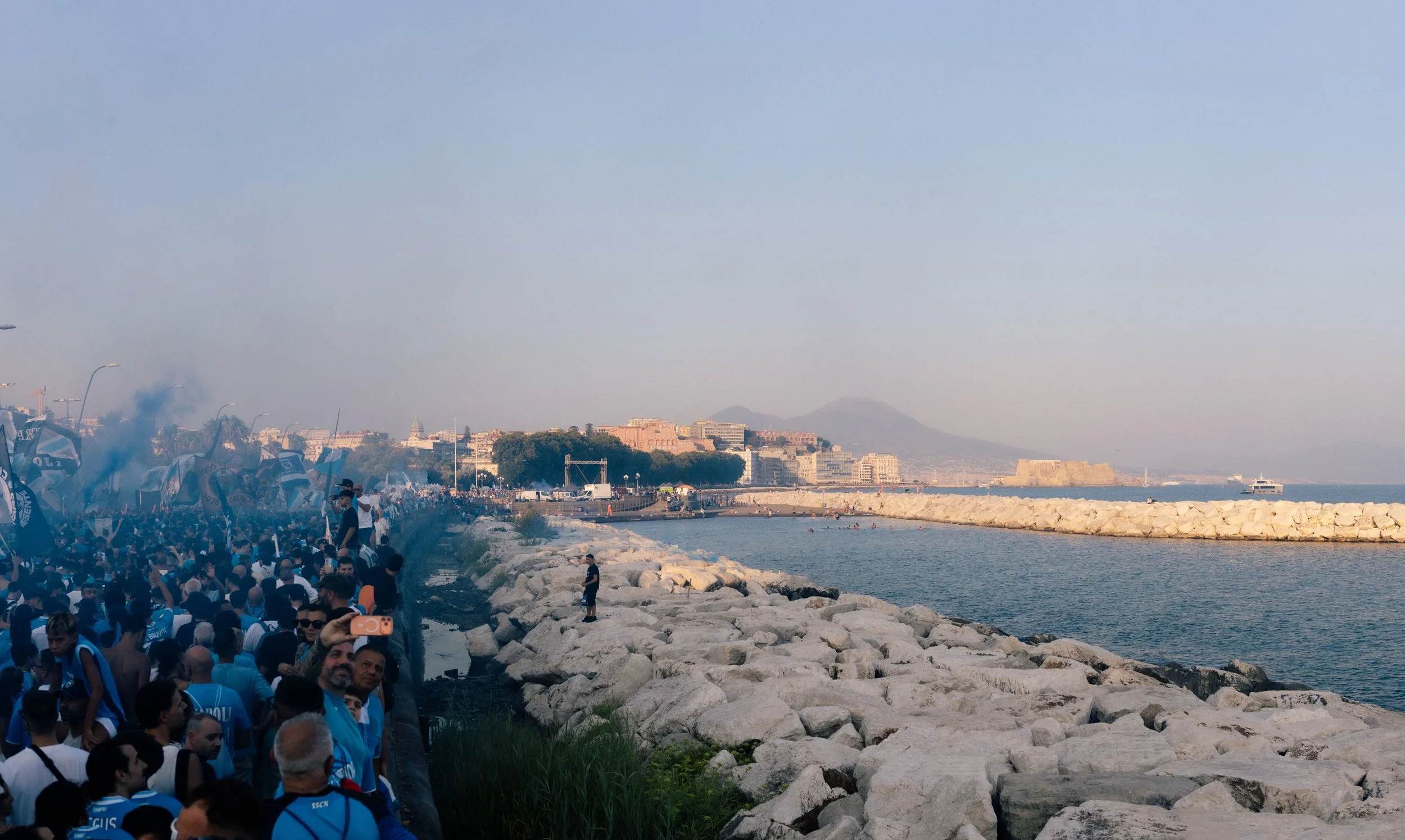
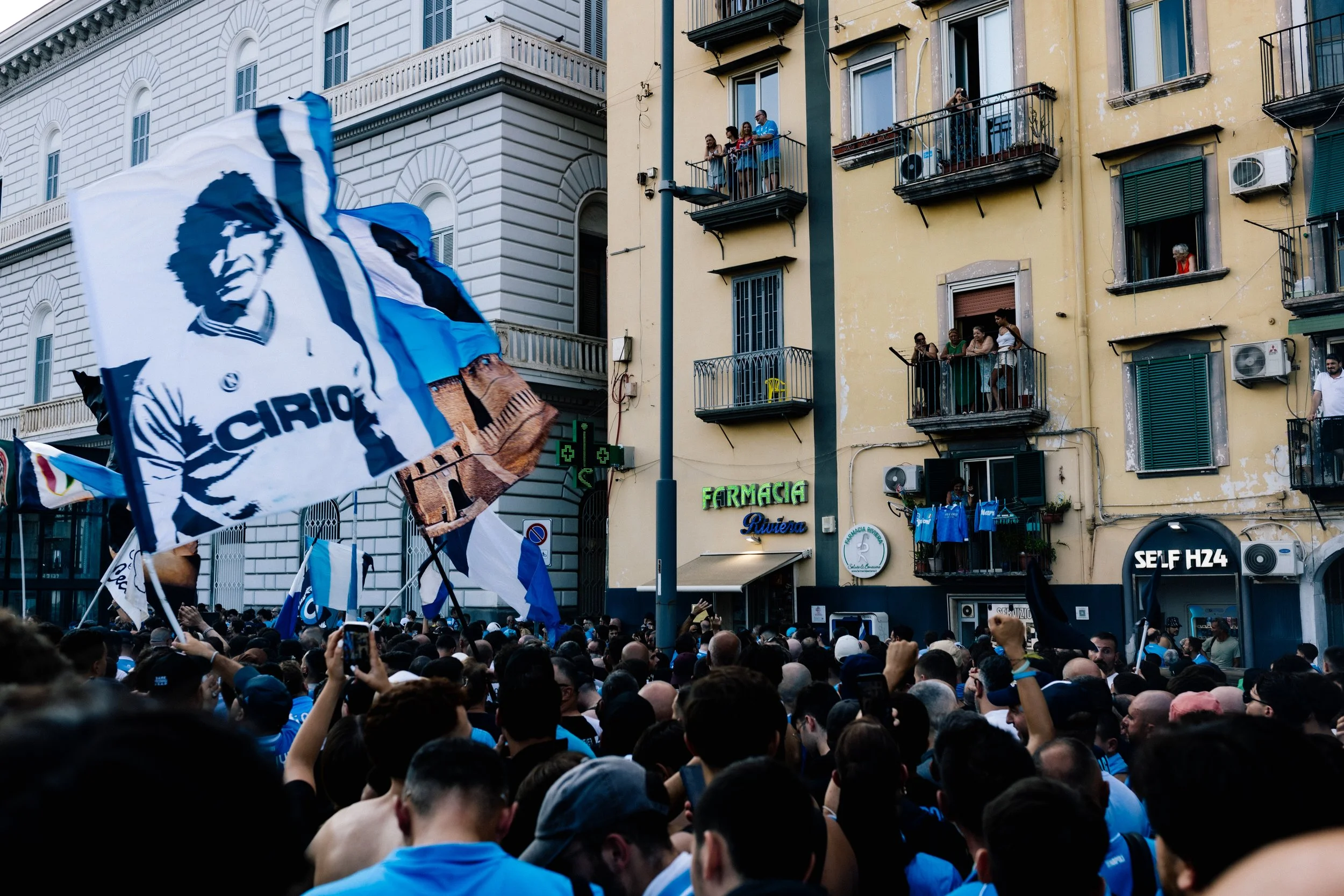
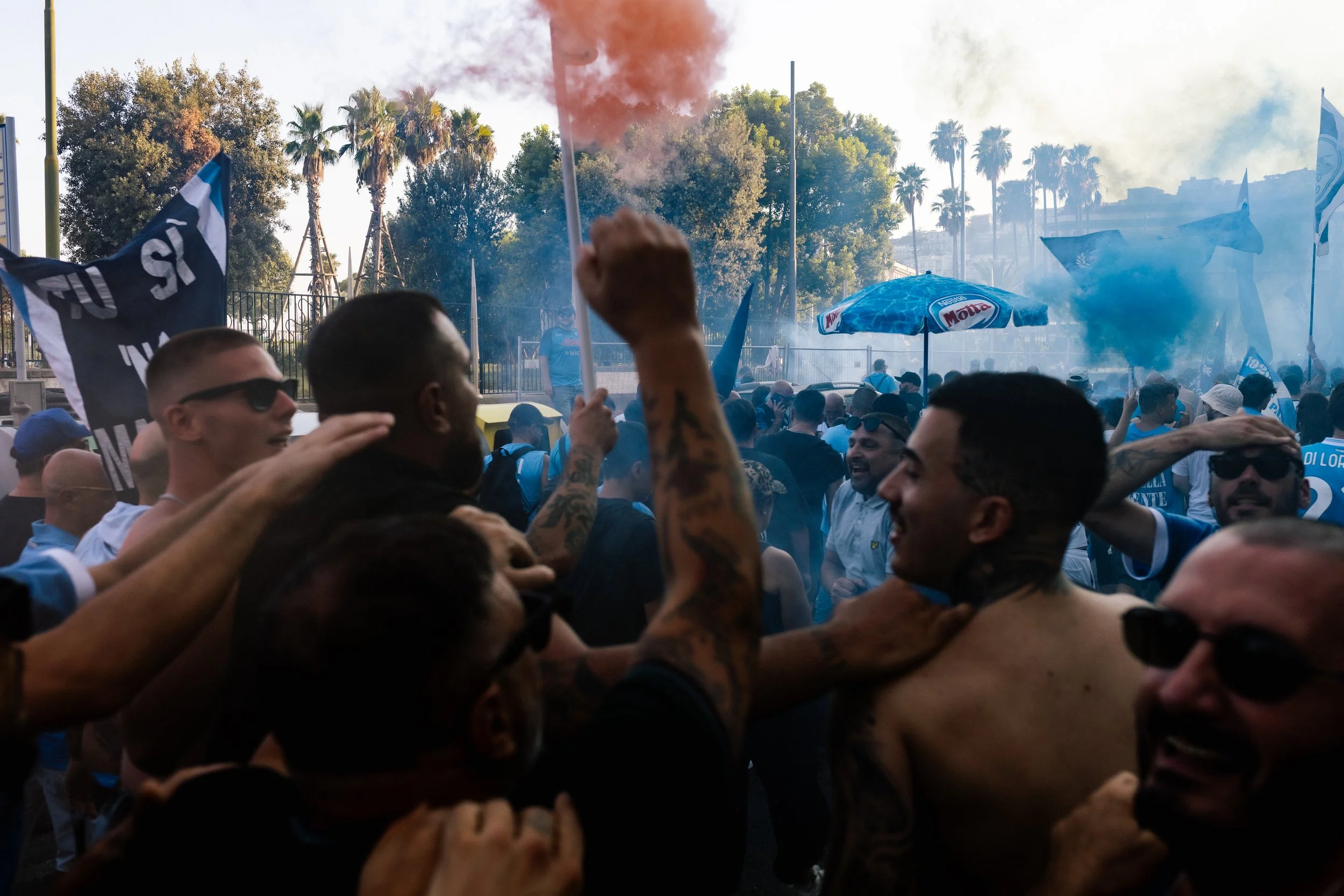
That evening, the seafront did not seem to have spectators.
It seemed to have only participants.
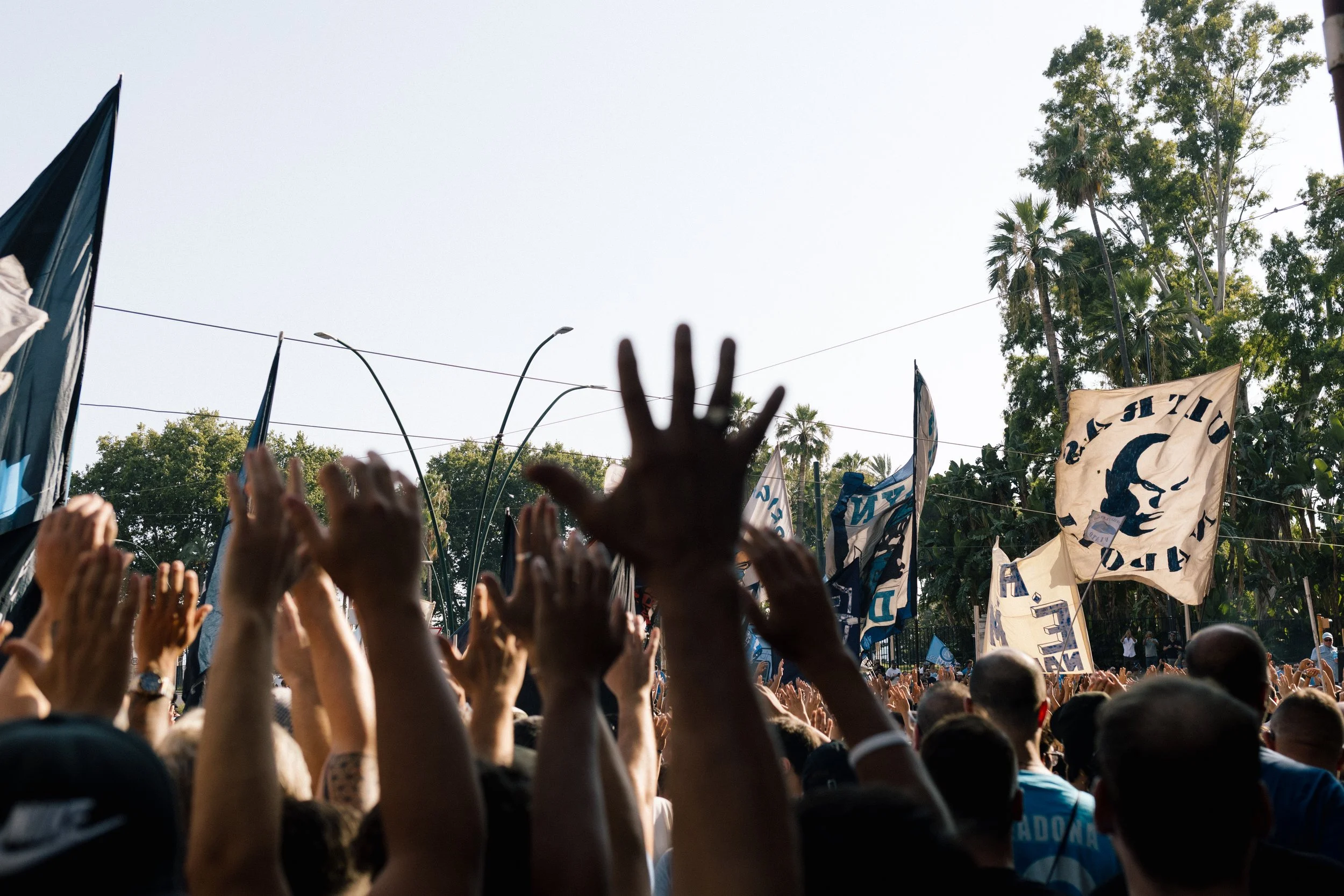
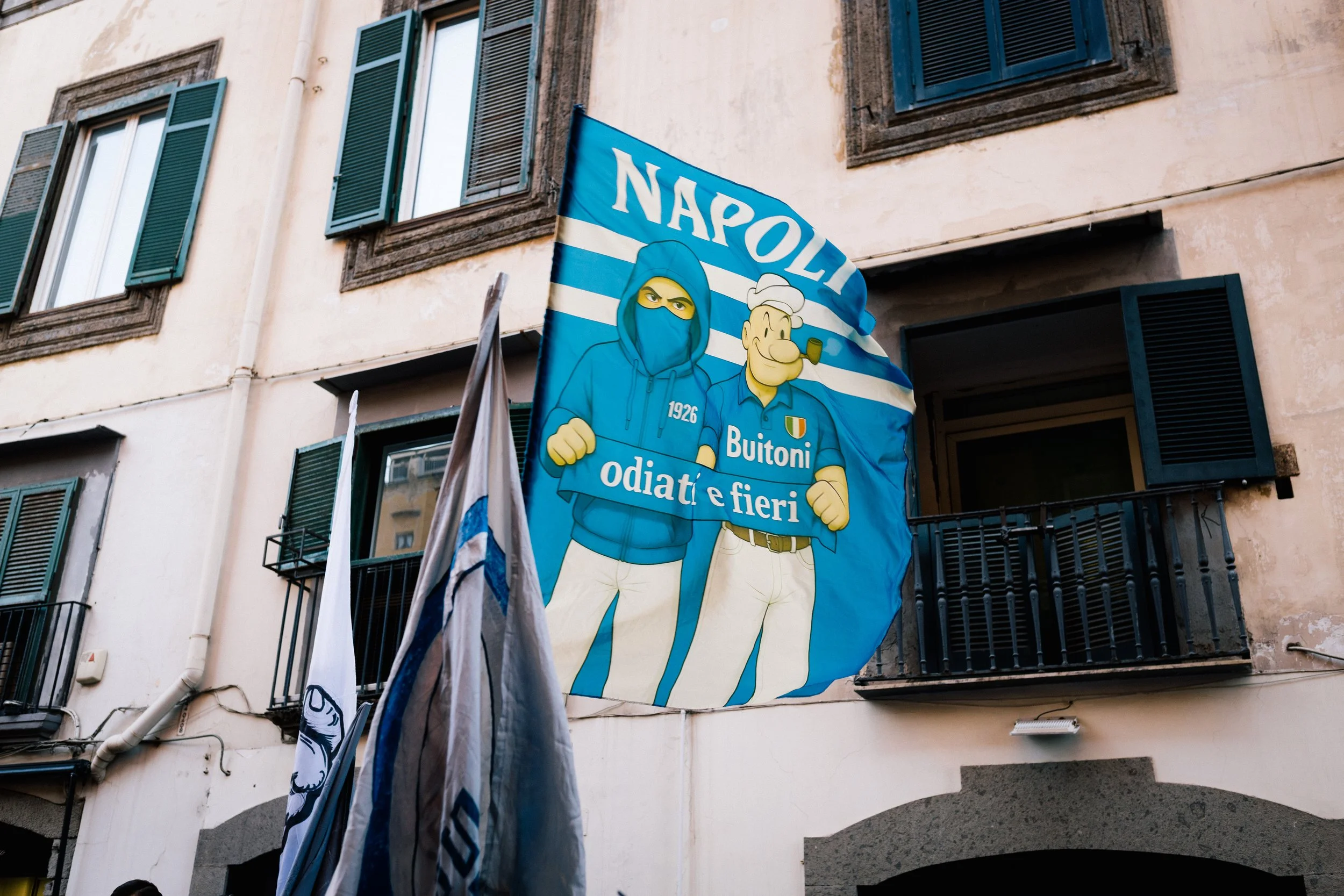
Flags everywhere. Flares. Chants starting in one place and being picked up hundreds of metres further down the road. Phones held high. People watching from balconies. Faces glowing red in the light.
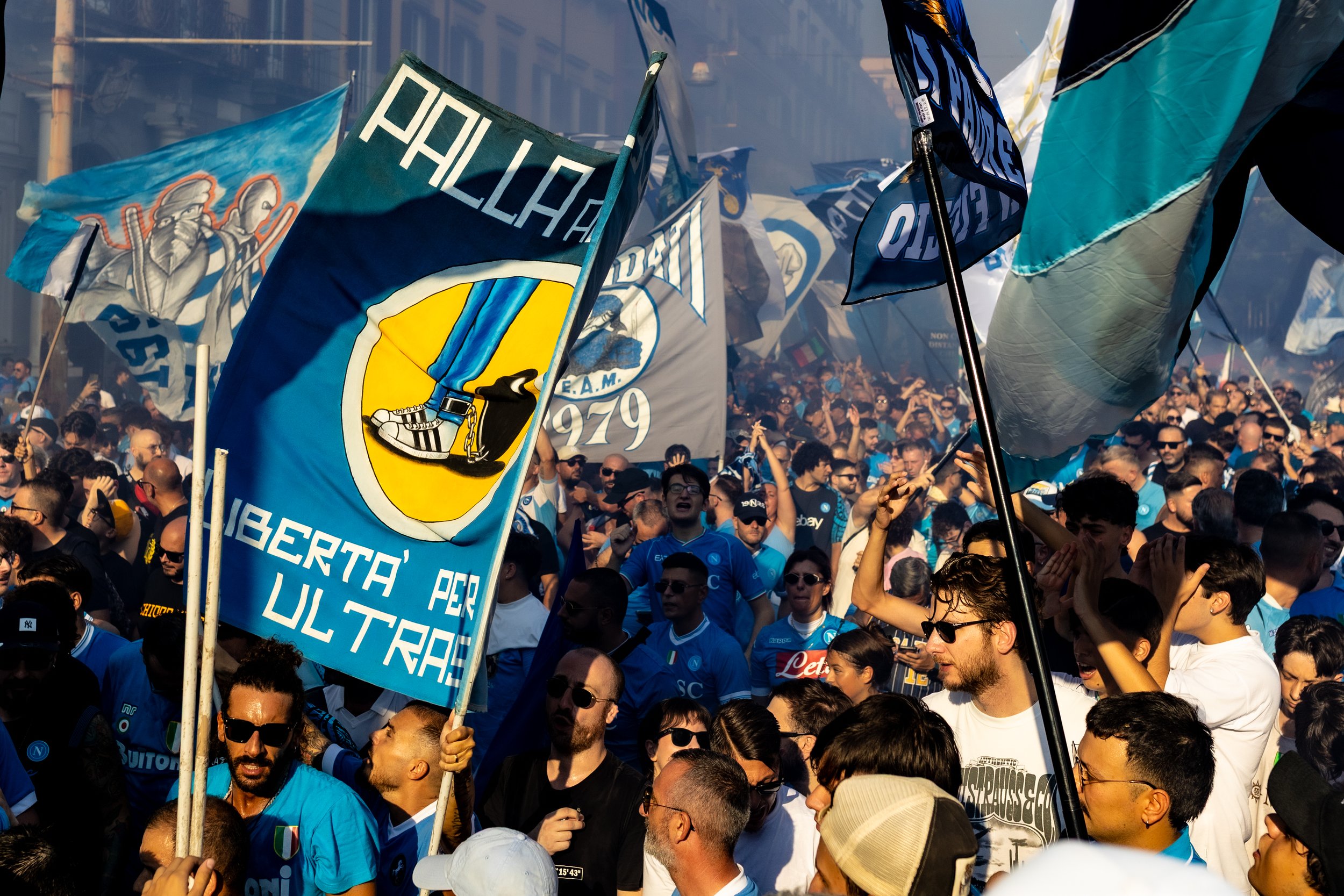
©Maracante.
And then the blue.
Always the blue.
I was there with a camera in my hands.
And perhaps it is only from behind a lens that you realise just how difficult something like that is to tell.
A photograph can freeze a flare, a face, a flag.
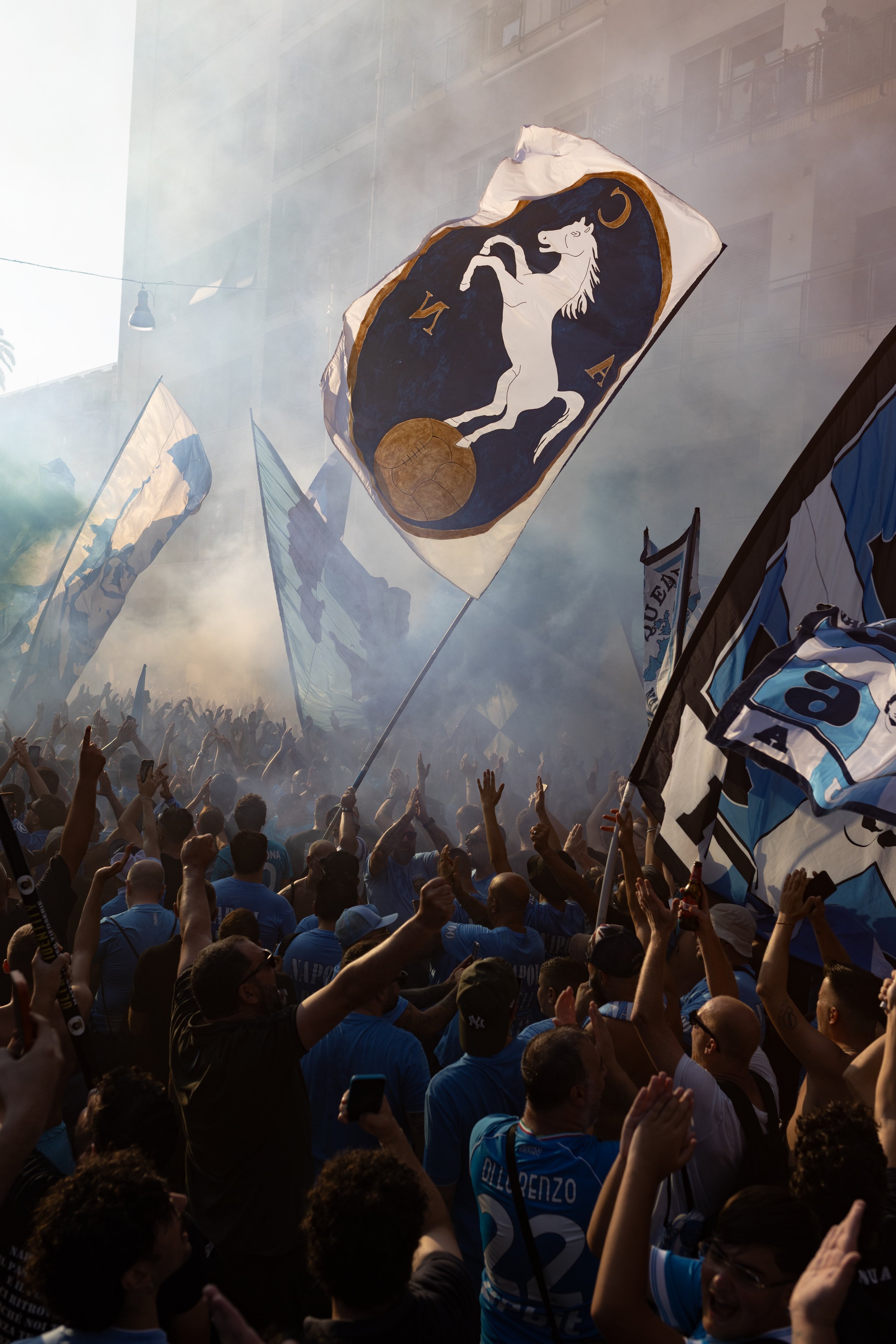
©Maracante.
It can hold, for a fraction of a second, a child sitting on his father’s shoulders.
It can show a street overflowing with people.
But you cannot photograph noise.
It is difficult to photograph anticipation.
And trying to photograph the exact moment when thousands of completely different people seem, for a few seconds, to become one single thing is almost an impossible ambition.
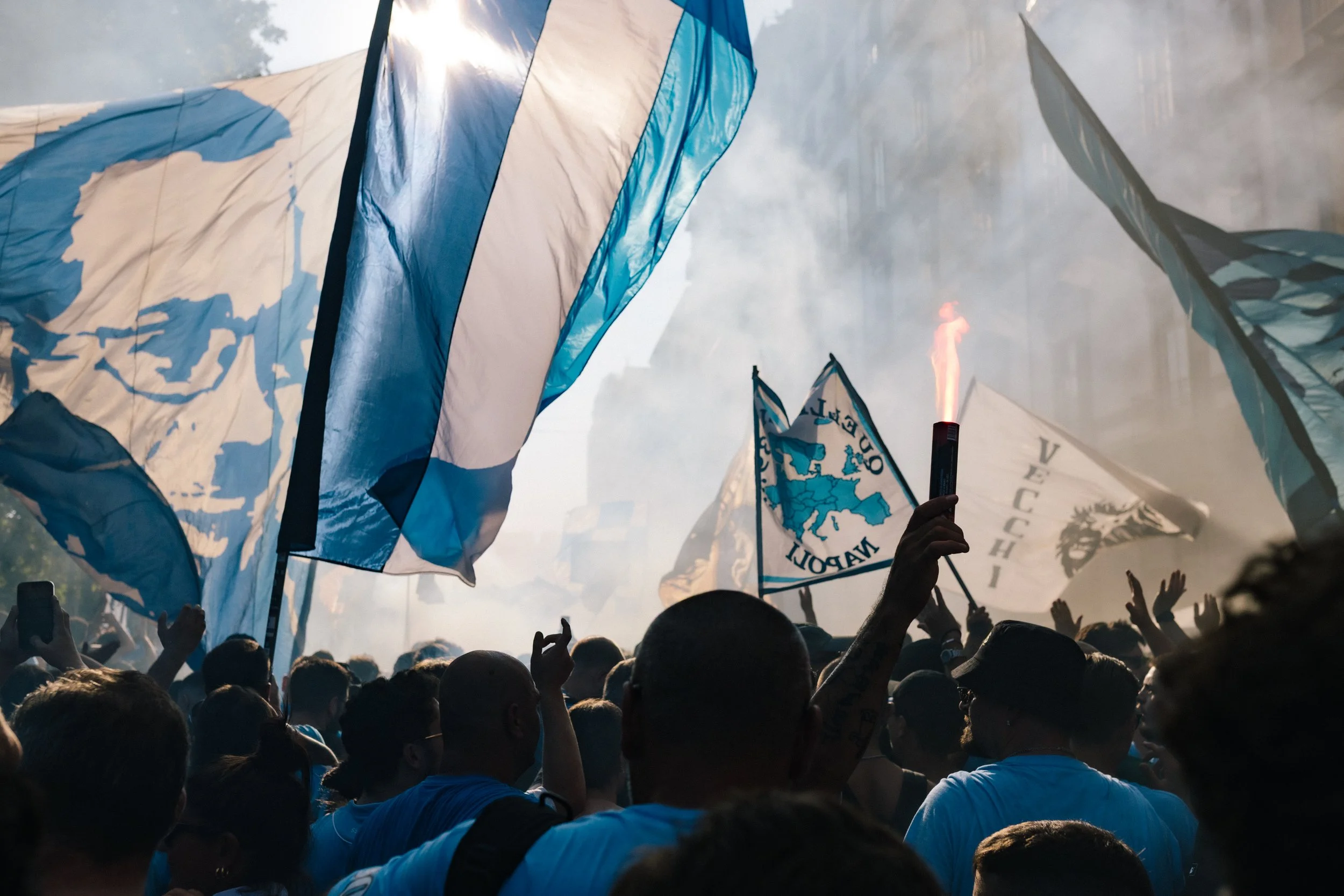
©Maracante.
Still, you try.
You shoot.
You watch.
You move.
You search for one face inside the crowd and, a moment later, try to fit that entire crowd inside a single frame.
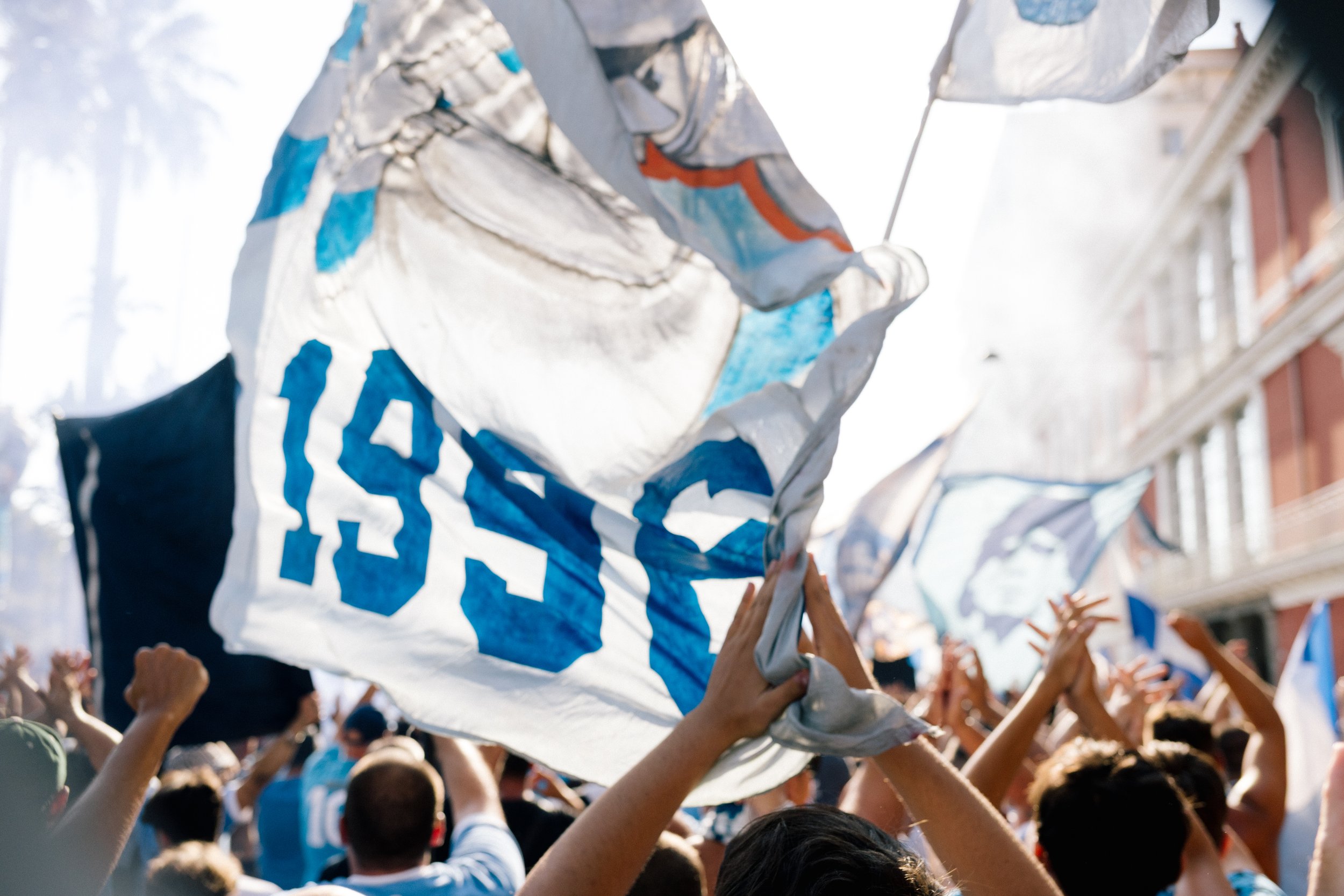
©Maracante.
Perhaps that is what I was trying to do that night.
Not simply photograph the celebration of Napoli’s first hundred years.
But photograph Naples celebrating Napoli.
They may sound like the same thing.
They are not.
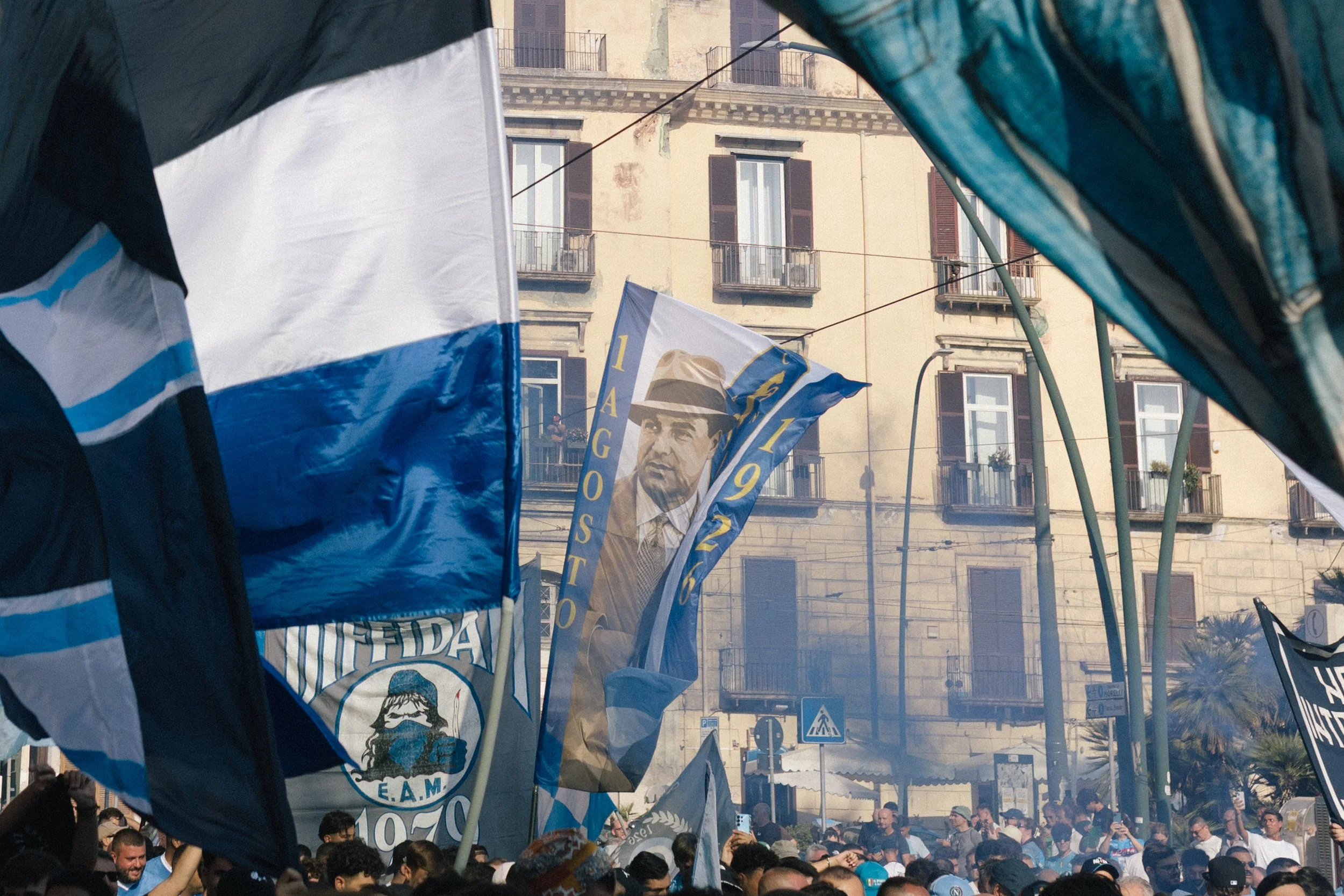
©Maracante.
The slogan chosen for that night was:
“Napoli belongs to the people.”
Usually, slogans need to exaggerate in order to work.
That night, this one did not.
It simply seemed to describe what was unfolding before our eyes.
©Maracante.
The club would officially celebrate its hundredth anniversary the following day.
But on 31 July, the people had already begun.
In their own way.
Without an invitation.
Without asking permission to feel part of the story.
©Maracante.
And perhaps this is where the deepest meaning of a hundred years of football in this city can be found.
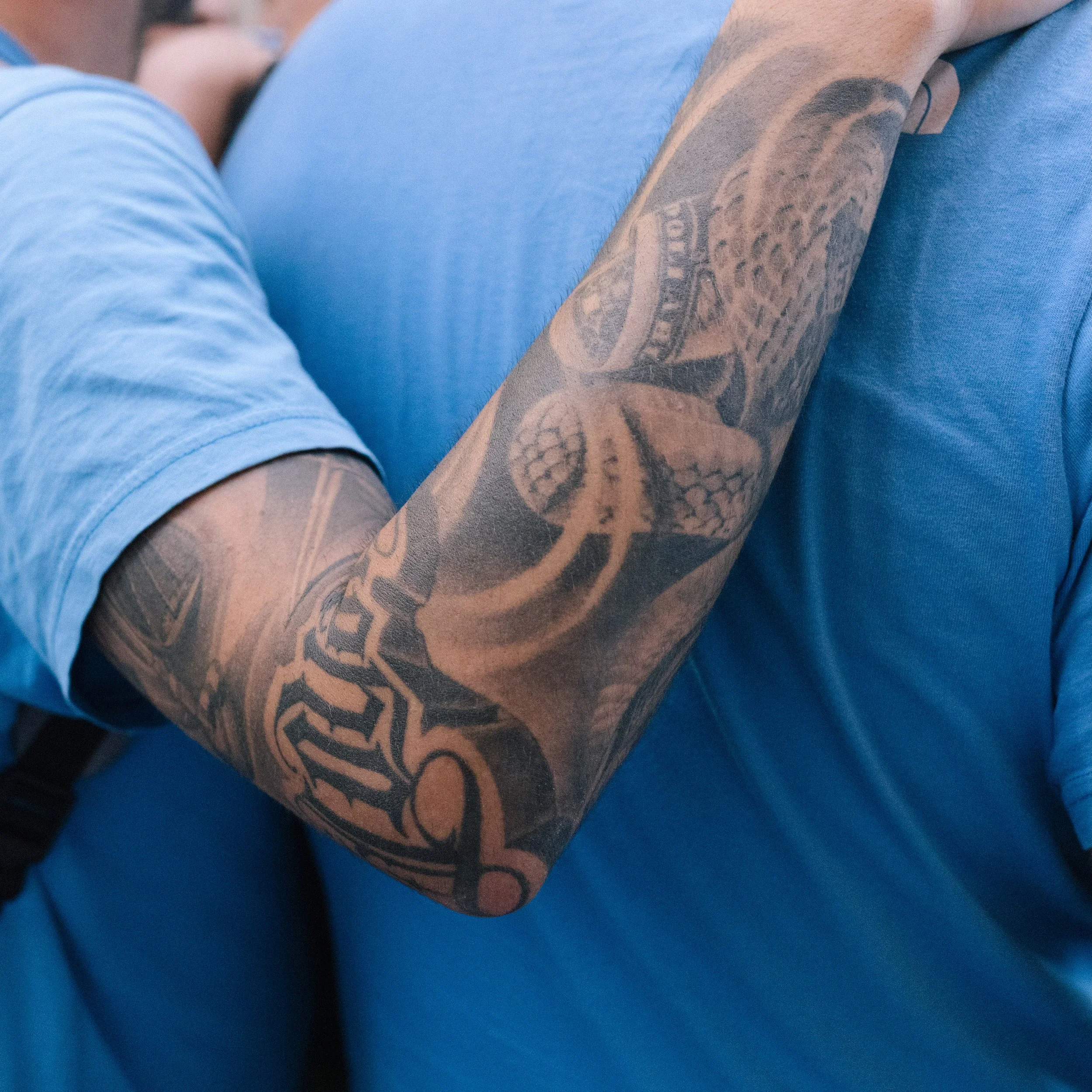
A club can change presidents.
A team can change players, managers and stadiums.
It can win.
It can lose.
©Maracante.
It can live through glorious years and others best forgotten.
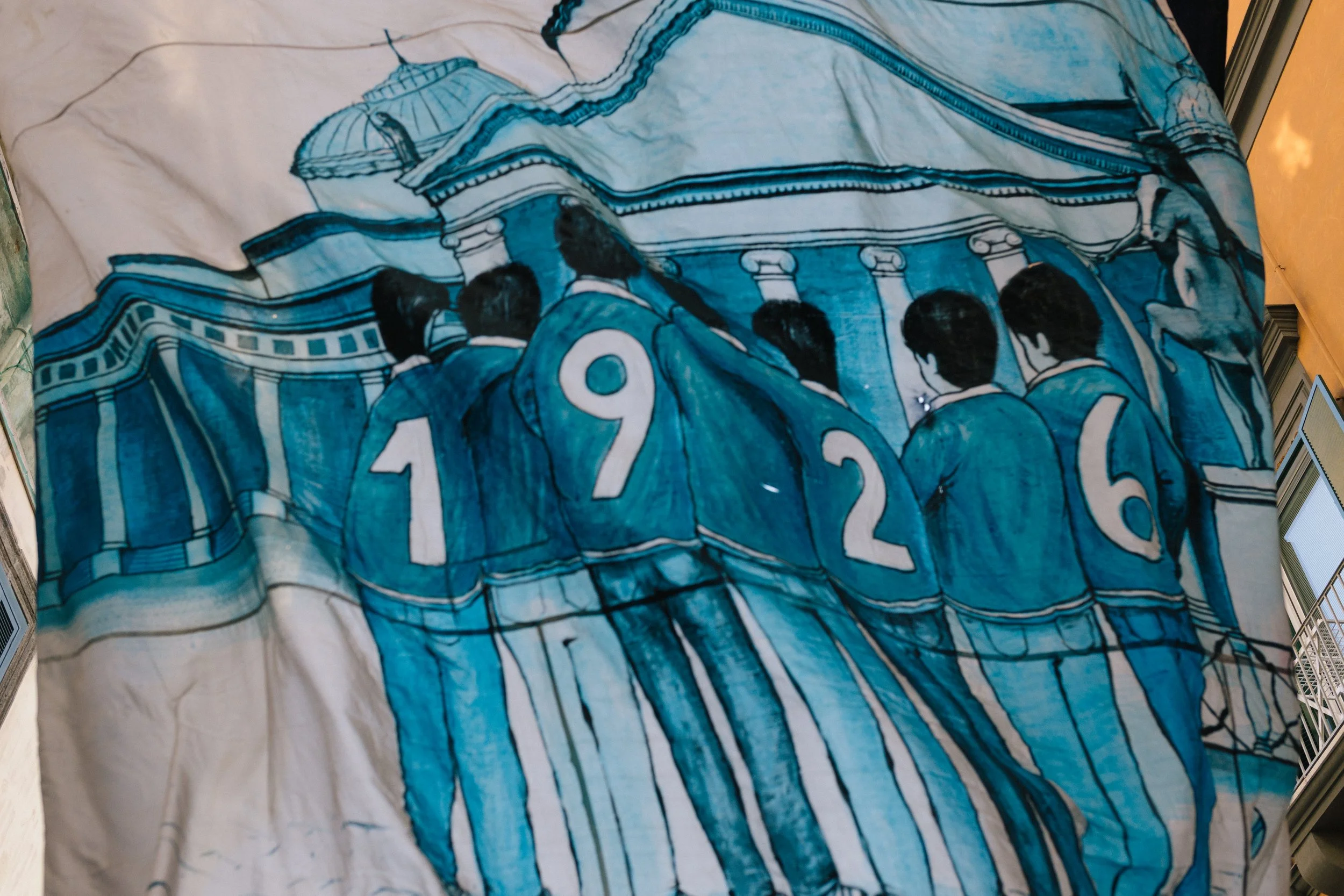
But if, after a hundred years, a father still puts a blue shirt on his child; if a grandfather still tells the story of a goal he saw forty years ago as though it happened yesterday; if thousands of people still feel the need to take to the streets simply to say “we are here”, then perhaps that story no longer belongs to a football club alone.
It belongs to a city.
It belongs to those who were there..
To those who are no longer here.
And to those still to come.
And so I return to the question I began with.
©Maracante.
What are a hundred years, after all?
For a lifetime, they are an eternity.
For a passion capable of being passed from one generation to the next, perhaps they are only the beginning.
©Maracante.
Maracante is on Instagram: @maracante