Auxerre: Time well spent
Words: Guirec Munier
Images: Guirec Munier
You don’t stumble upon Auxerre by accident. The town reveals itself slowly, somewhere between vineyard lined roads and the soft bends of the Yonne river.
Timber-framed houses lean toward narrow streets. Cafés close early. It feels like the sort of place where time moves at its own pace.
Yet, for a few remarkable decades, this quiet corner of Burgundy produced one of the most unlikely stories in European football.
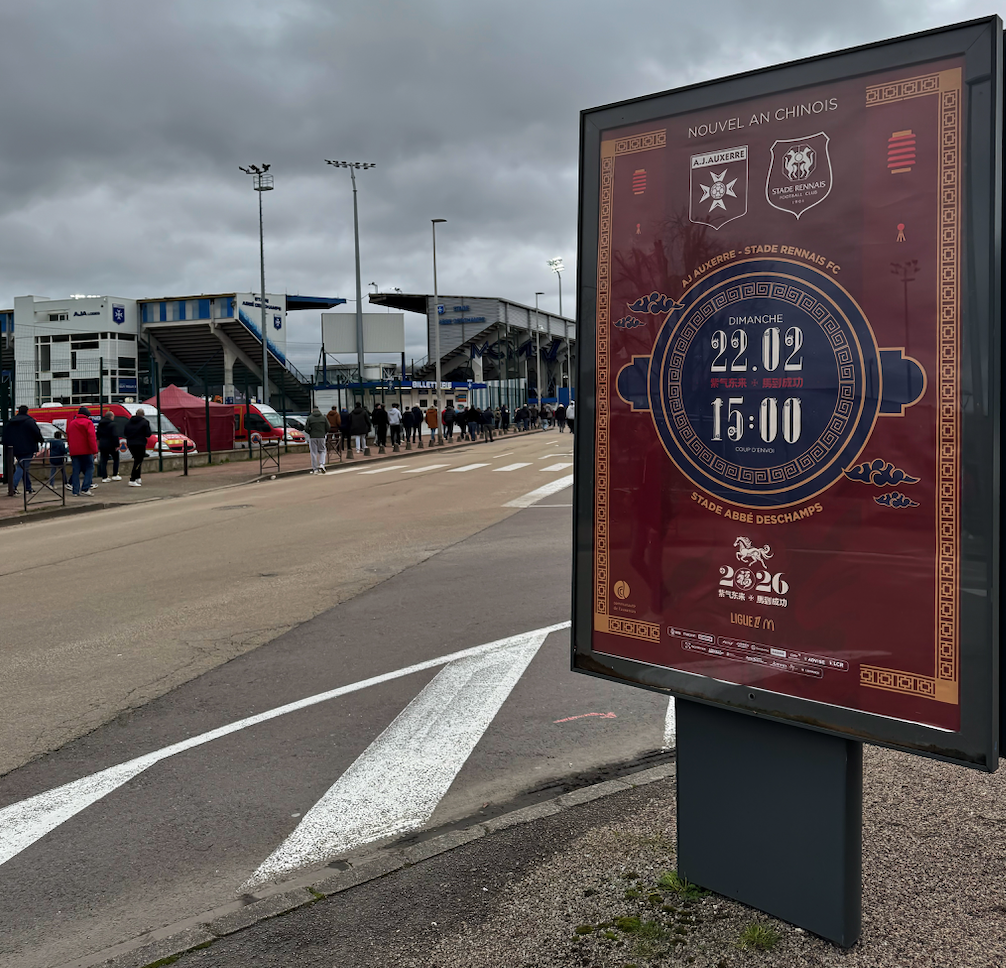
On the banks of the river stands the Stade Abbé-Deschamps. Compact, modest, almost understated. But this small ground has witnessed nights that seemed to defy the natural order of the game.
It is here that AJ Auxerre built its quiet miracle.
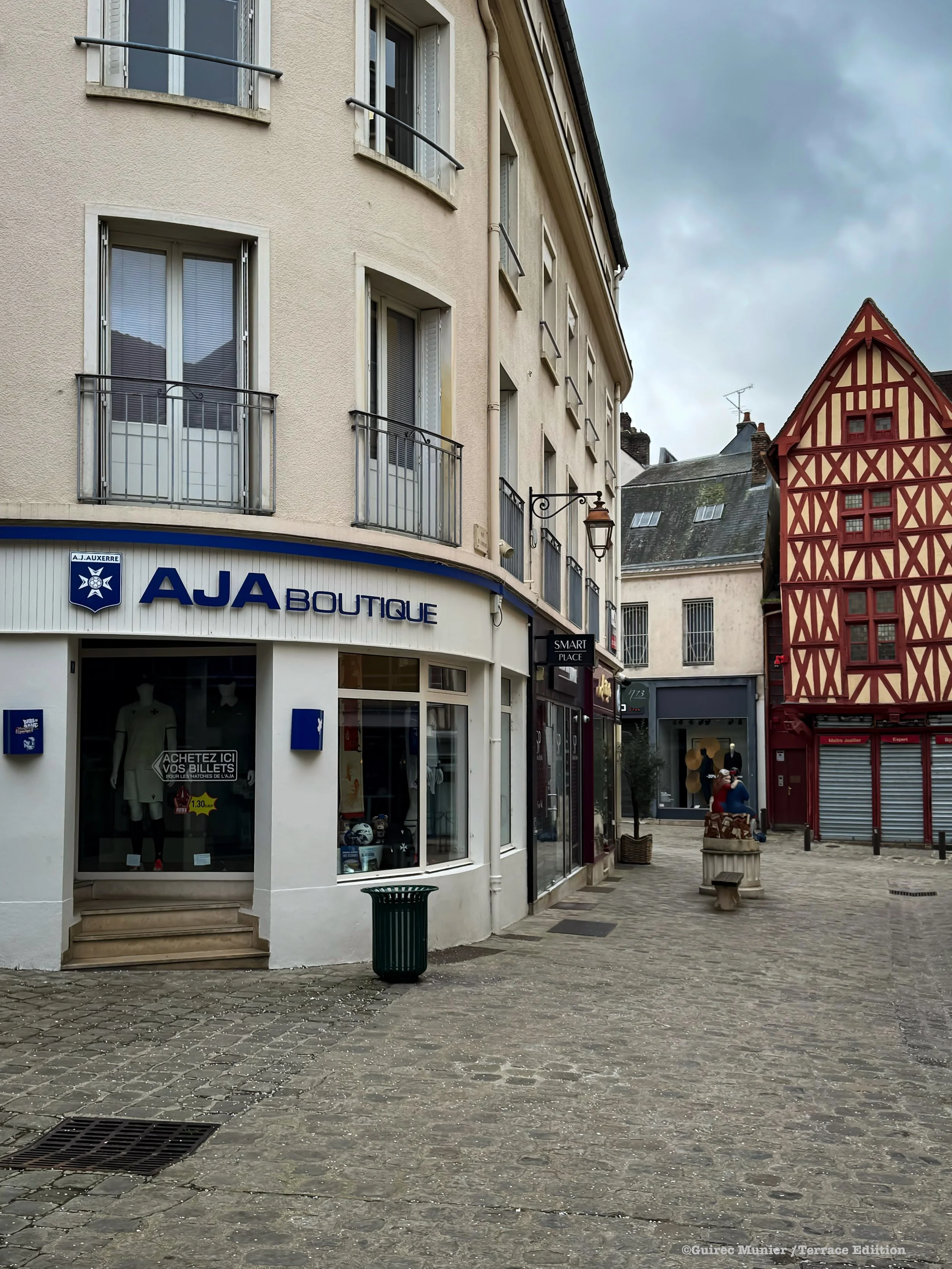
©Guirec Munier/ Terrace Edition. AJ Auxerre store.
Auxerre’s story begins modestly enough. The club was founded in 1905 by a priest, Abbé Ernest-Théodore Valentin Deschamps, who believed sport could shape character as much as competition.
For decades the team drifted through the lower tiers of French football, a local institution rather than a national one — the kind of club that belonged entirely to its town. That sense of belonging would later become its greatest strength.
Everything changed with the arrival of Guy Roux. When Roux took charge in 1961 he was only 23 years old. He would remain on the bench for more than forty years — a tenure that modern football barely allows anymore.
In that time he built something rare in the game: stability. A strong academy. Careful finances. Discipline above all else.
Promotion to the top flight finally arrived in 1980, but by then the club had already been shaped in Roux’s image — patient, organised, and quietly ambitious.
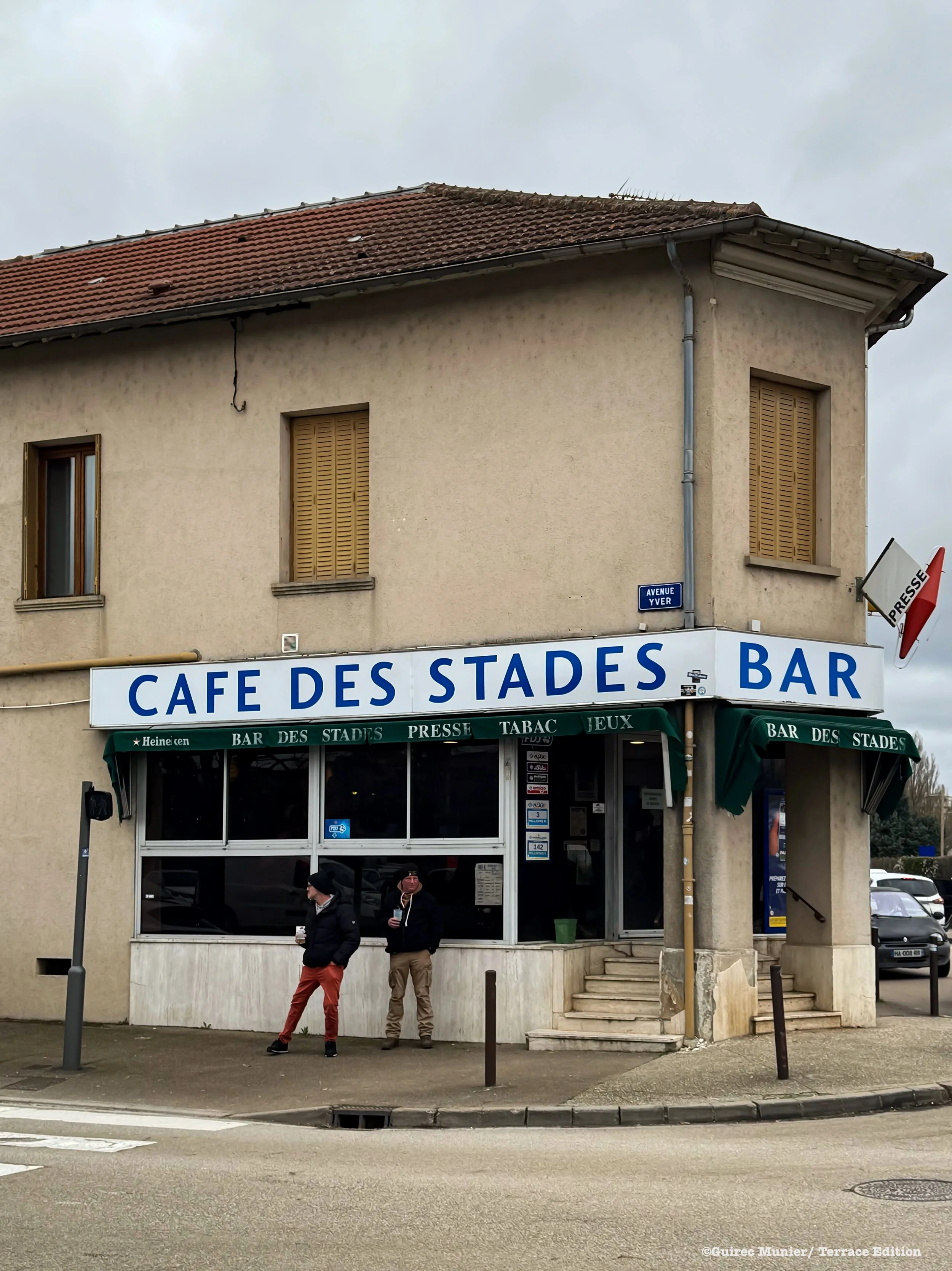
©Guirec Munier. Auxerre Bar.
The system he created was orderly, almost austere. Which made the arrival of a young forward in the early 1980s all the more surprising.
Eric Cantona was a raw talent. Charismatic, unpredictable, occasionally combustible. Yet it was here, in Burgundy, that he made his professional debut in 1983.
Auxerre became the unlikely setting where one of football’s most rebellious figures first encountered the structure of the professional game.
By the early 1990s, the club Roux had patiently built had grown into one of the most respected teams in France.
European nights at the Abbé-Deschamps carried their own atmosphere — tight stands, cold Burgundy air, floodlights reflecting off the slow waters of the Yonne, and a team that seemed to understand exactly how to compete against richer opponents.
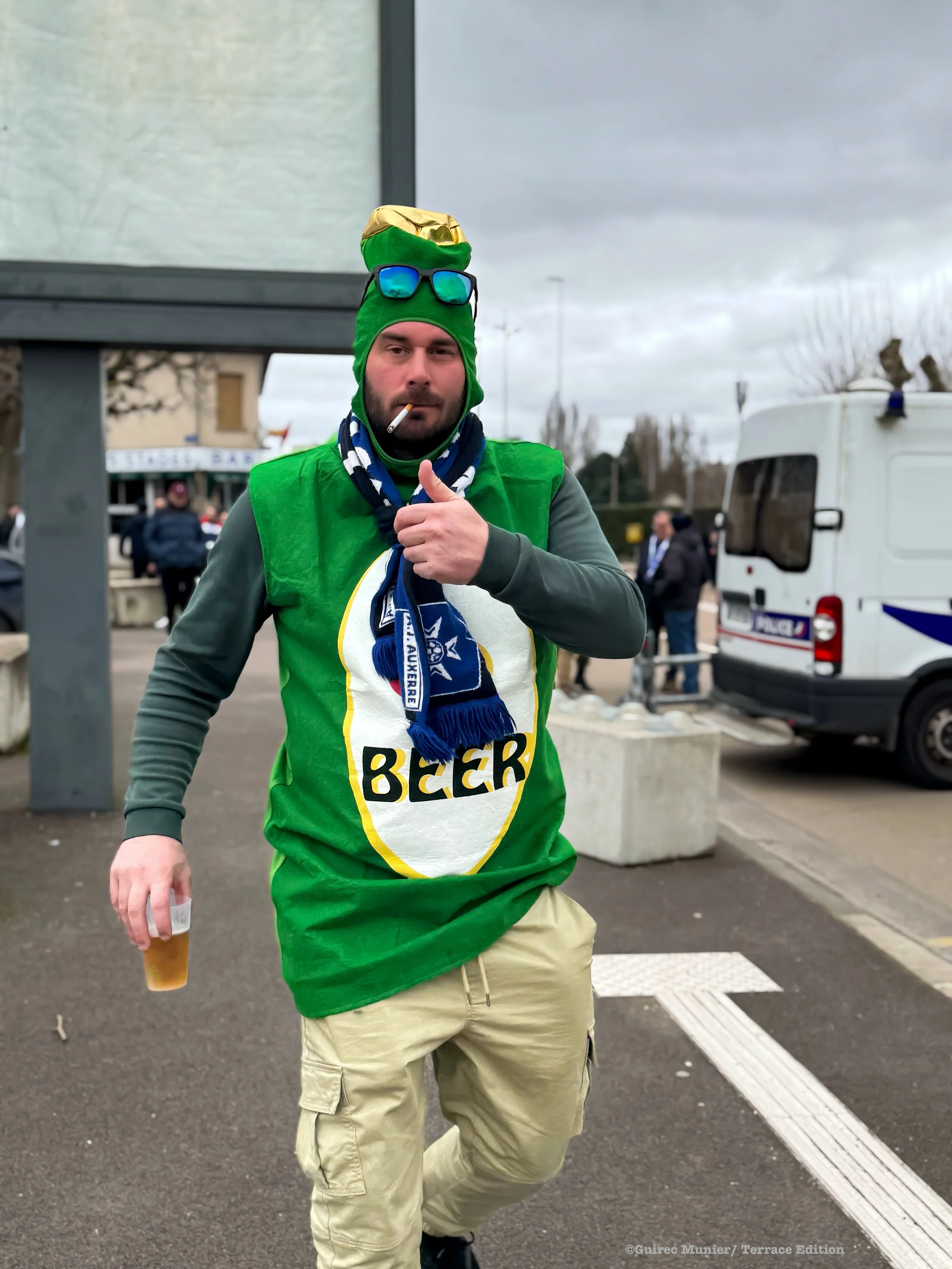
©Guirec Munier/ Terrace Edition. Beer o’clock.
In 1993, Auxerre reached the semi-finals of the UEFA Cup, forcing the continent to take notice of a club from a own many had barely heard of.
Then came 1996.
Auxerre won Ligue 1 and the Coupe de France in the same season — a domestic double achieved by a town whose population barely filled a large stadium elsewhere. It remains one of the most improbable achievements in modern French football.
The club’s identity continued to revolve around youth. In the early 2000s, a rapid, explosive striker emerged from the academy: Djibril Cissé. With his blistering pace and unmistakable hairstyles, he became twice the league’s top scorer — another reminder that Auxerre’s greatest strength had always been what it could quietly produce
Football, however, rarely stands still. In 2016, Chinese businessman James Zhou purchased the club, a sign of how even the most locally rooted institutions must now exist within the sport’s global economy.
And yet, when you walk today around the Stade Abbé-Deschamps, it is hard to reconcile the quiet surroundings with the history they hold.
Auxerre remains what it has always been: a small town by the Yonne, far from the usual strongholds of French football. Which may be precisely why Auxerre’s miracle still feels so improbable.
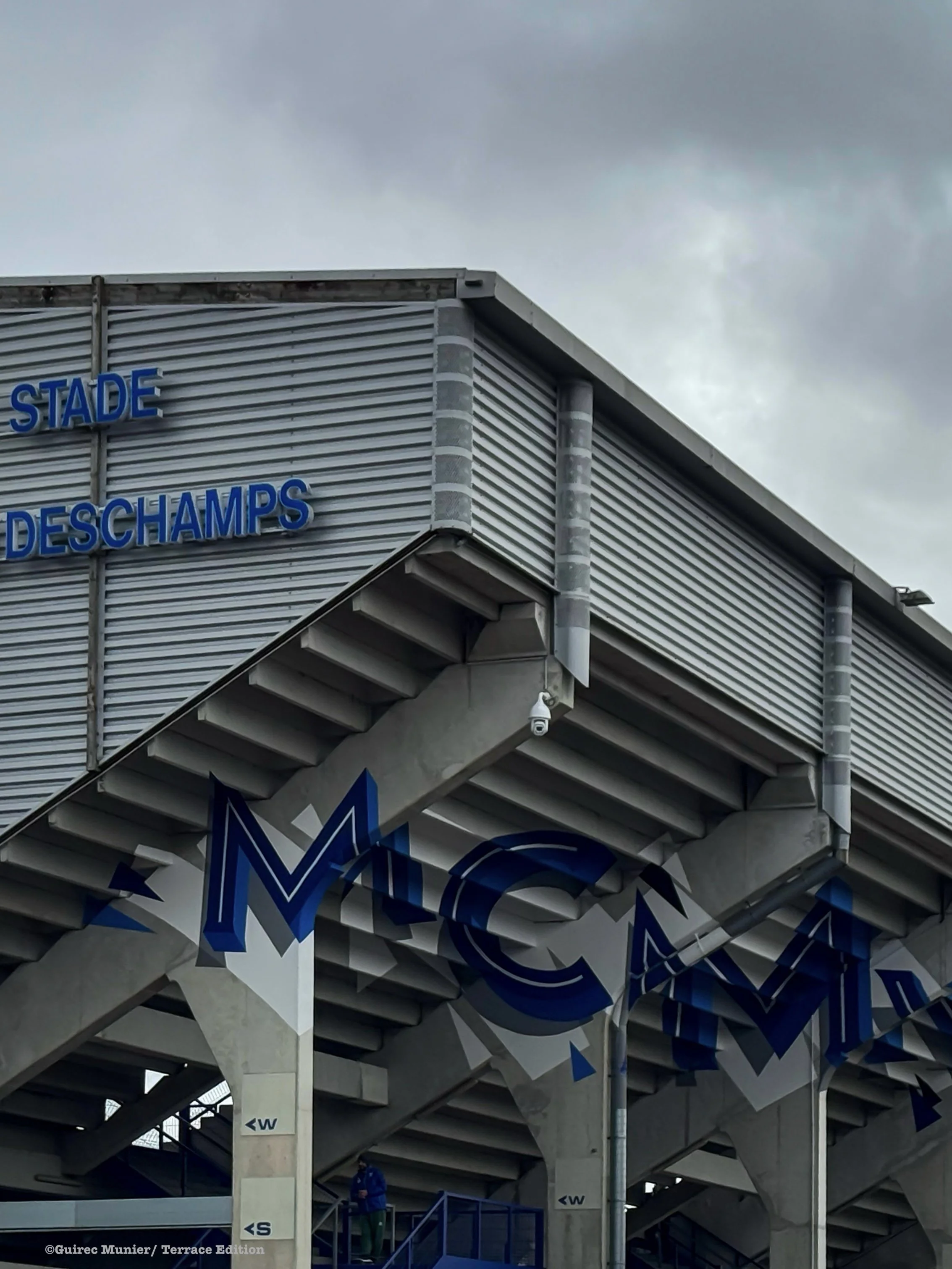
©Guirec Munier/ Terrace Edition. Stade Abbé-Deschamps.
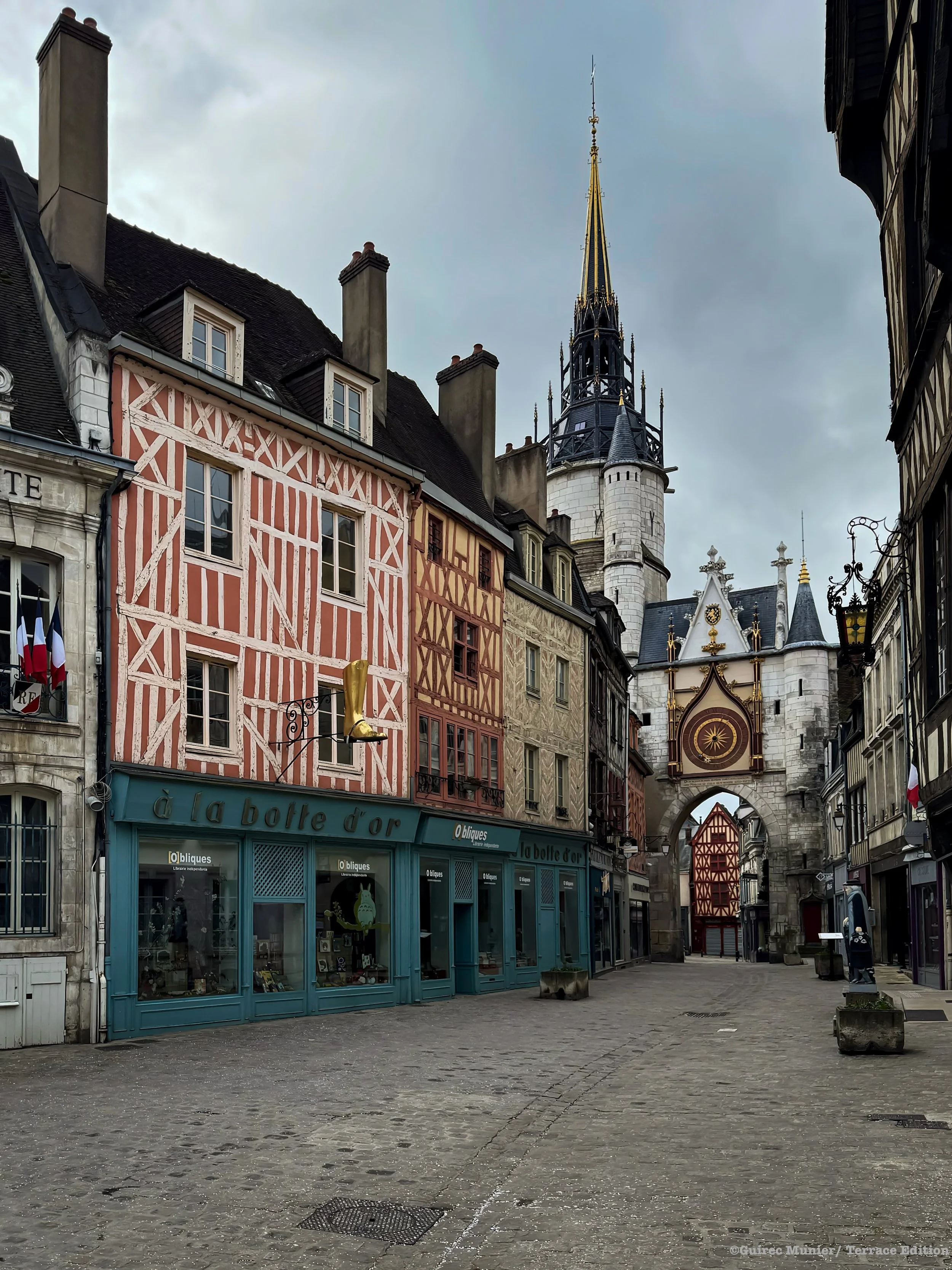
©Guirec Munier/ Terrace Edition. Auxerre street scene.
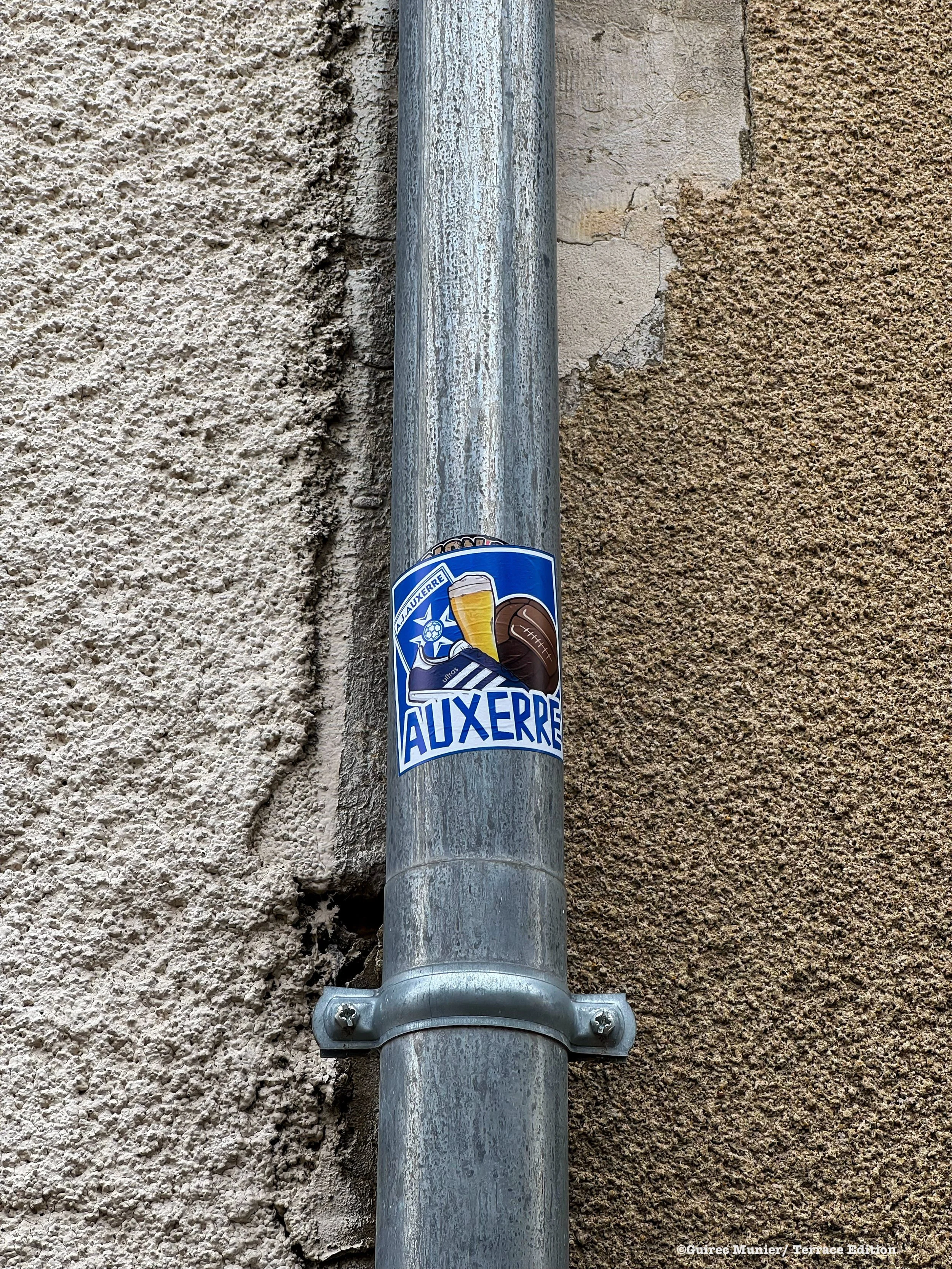
©Guirec Munier/ Terrace Edition. AJ Auxerre sticker.

©Guirec Munier/ Terrace Edition. Super Bourguignon.
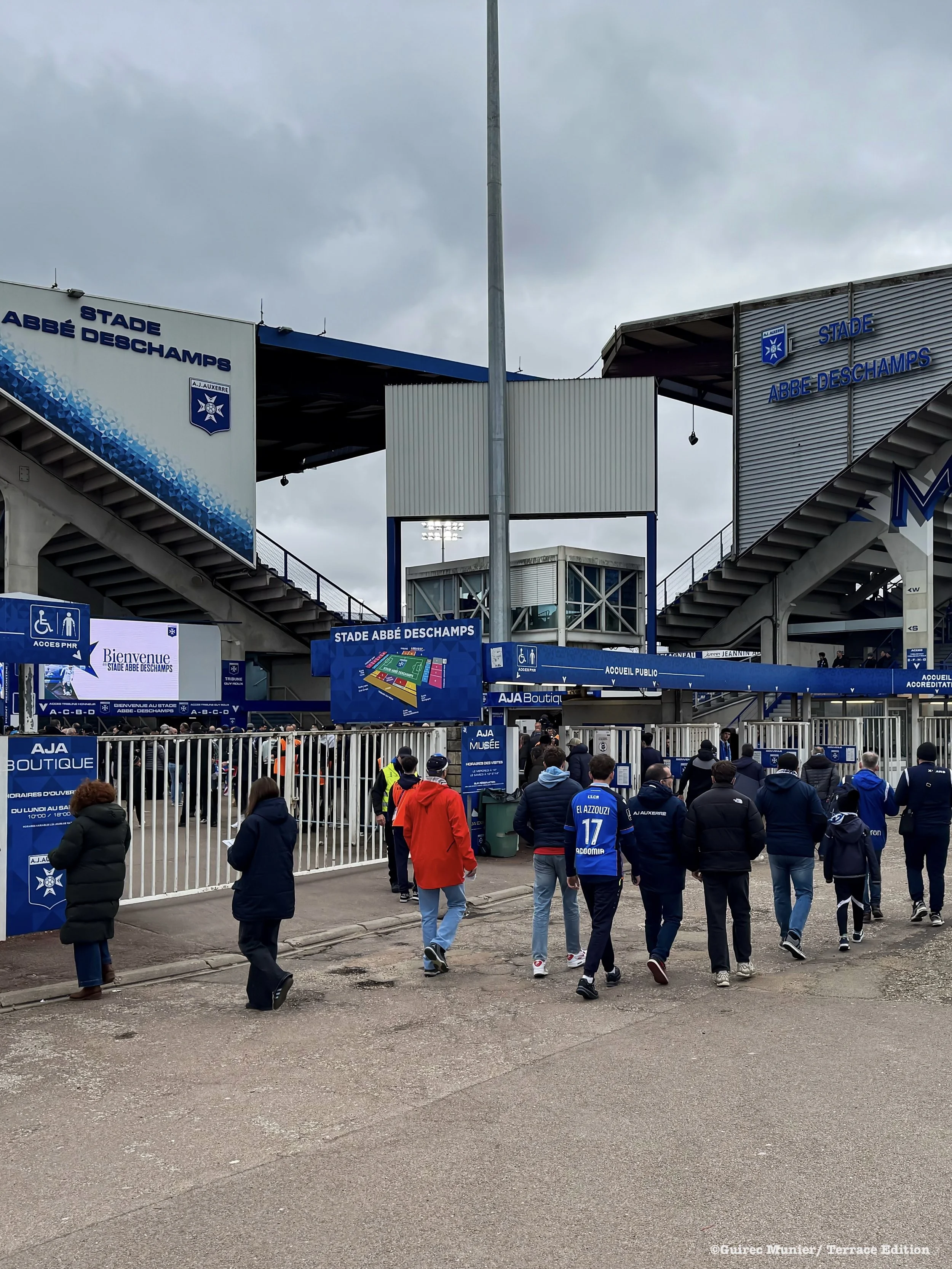
©Guirec Munier/ Terrace Edition. Stade Abbé-Deschamps.
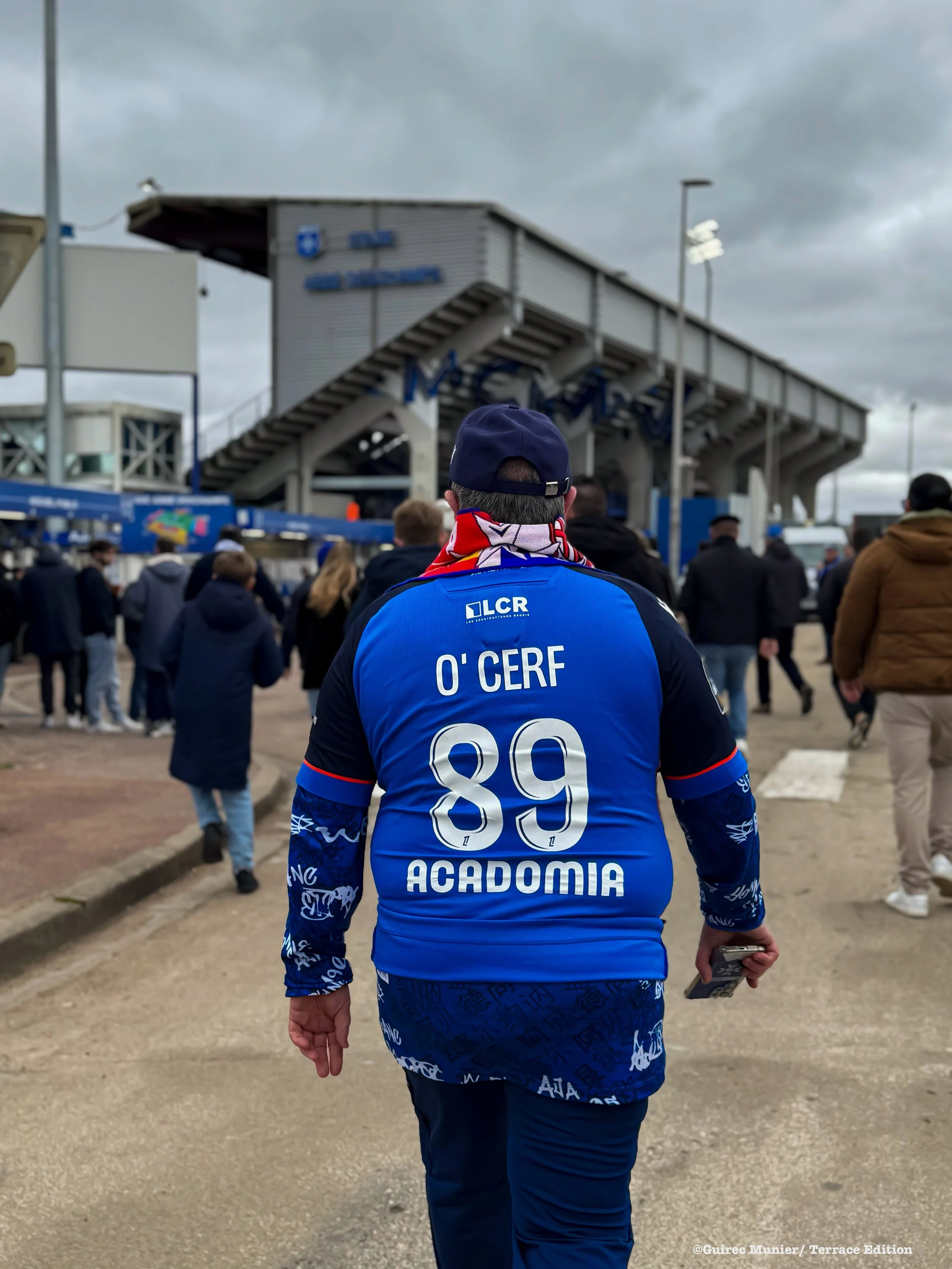
©Guirec Munier/ Terrace Edition. AJ Auxerre supporter.
Guirec is on Instagram: @jeanprouffisonfire