
Uncommon People
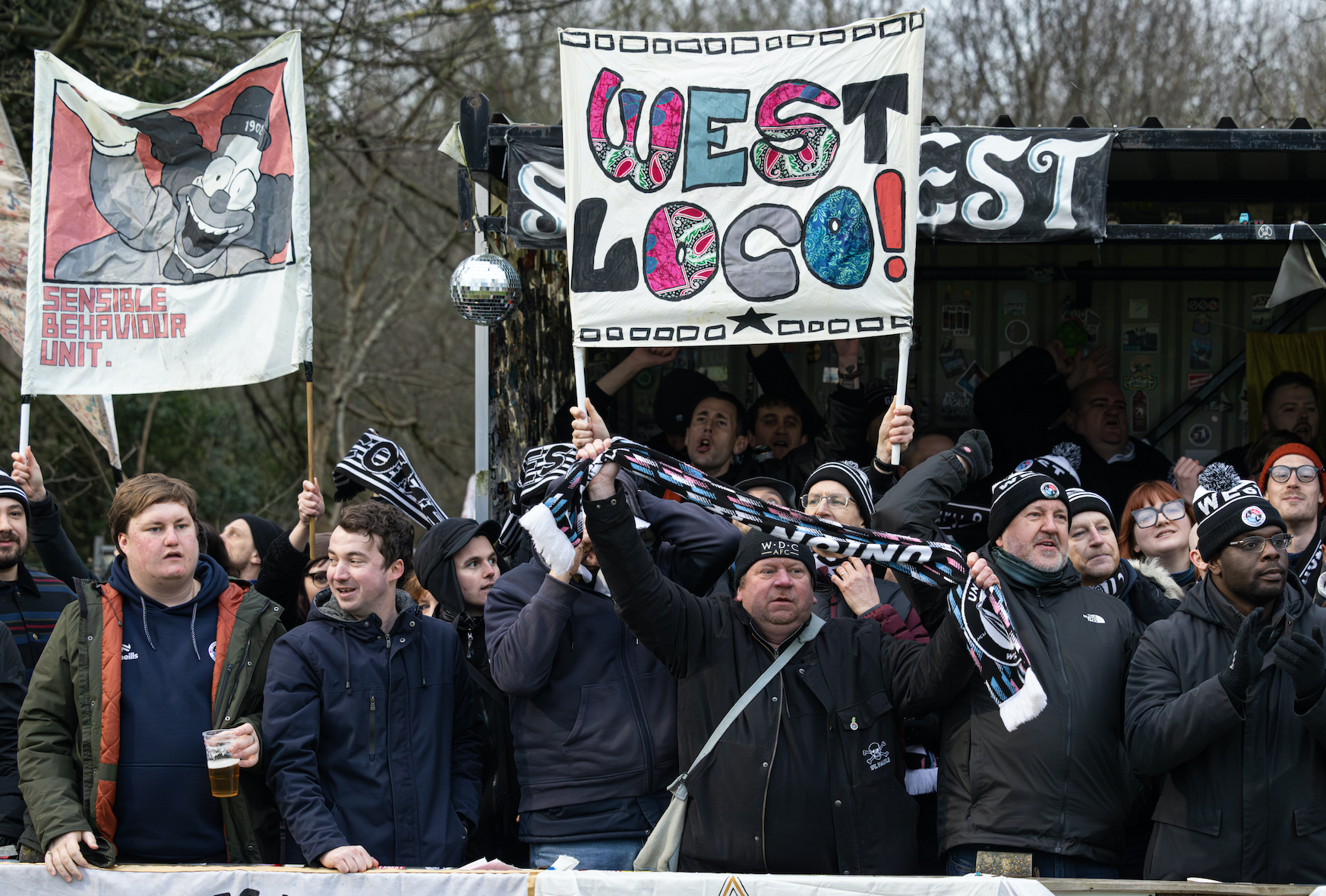
Words: Mike Bayly
Images: Mike Bayly
Chorlton-cum-Hardy in Manchester is an unlikely place for a football revolution.
The affluent suburb in the southwest of the city is home to West Didsbury & Chorlton FC’s (WDCFC) Brookburn Road, a semi-rural non-League ground inconspicuously nestled between tree- lined residential avenues and open woodland.
The area developed in the nineteenth century as a bucolic retreat for well-heeled Mancunians, away from the noise and factories that furnished the sinews of Cottonopolis.
Today, houses in the eponymous Brookburn Road sell for over three-quarters of a million pounds. There are polite signs in grass verges asking not to tread on the daffodil bulbs.
It is another world from L. S. Lowry’s Going To The Match.

© Mike Bayly/ Terrace Edition. Union 1908 Tifo.
Brookburn Road isn’t a typical setting for a football ground. But WDCFC aren’t a typical club.
Formed in 1908, they spent most of their existence in local amateur leagues, playing to modest crowds. Election to the North West Counties League (NWCFL) Division One was achieved in 2012, gaining promotion to the Premier Division the following year.
After three seasons back in Division One, the club returned to the NWCFL’s top flight in 2022. Pre- COVID, average attendance hovered around 2-300.
Last season, this climbed to 877, and on Boxing Day 2025, 1,869 turned out for a local derby against Wythenshawe, an astonishing figure for the ninth tier of the English pyramid.
It would be tempting to position this upsurge as a response to the cost of watching professional football. To a certain extent, this is a factor.

The non-League game is ripe with anecdotes of priced-out fans embracing cheap entry to watch their local side.
However, as a When Saturday Comes editorial from February 2025 points out, EFL average attendances are more than double what they were 30 years ago, while crowds across all the professional divisions are at their highest since the 1950s.
Economics alone do not account for non- League football’s appeal.
A more nuanced explanation can be found in the matchday experience. Converts to the non-League game cite myriad factors that make it appealing – authenticity, accessibility, local representation – but a recurring theme is the absence of commodification: put simply, being valued as a fan rather than a line item on a balance sheet.
It should be stressed that ‘non- League’ is a rather monolithic term and overlooks the vast difference between a professional, full-time club in the National League and a volunteer-run side in the lower reaches of the regional divisions, where the chairman doubles as a raffle ticket seller or programme editor.
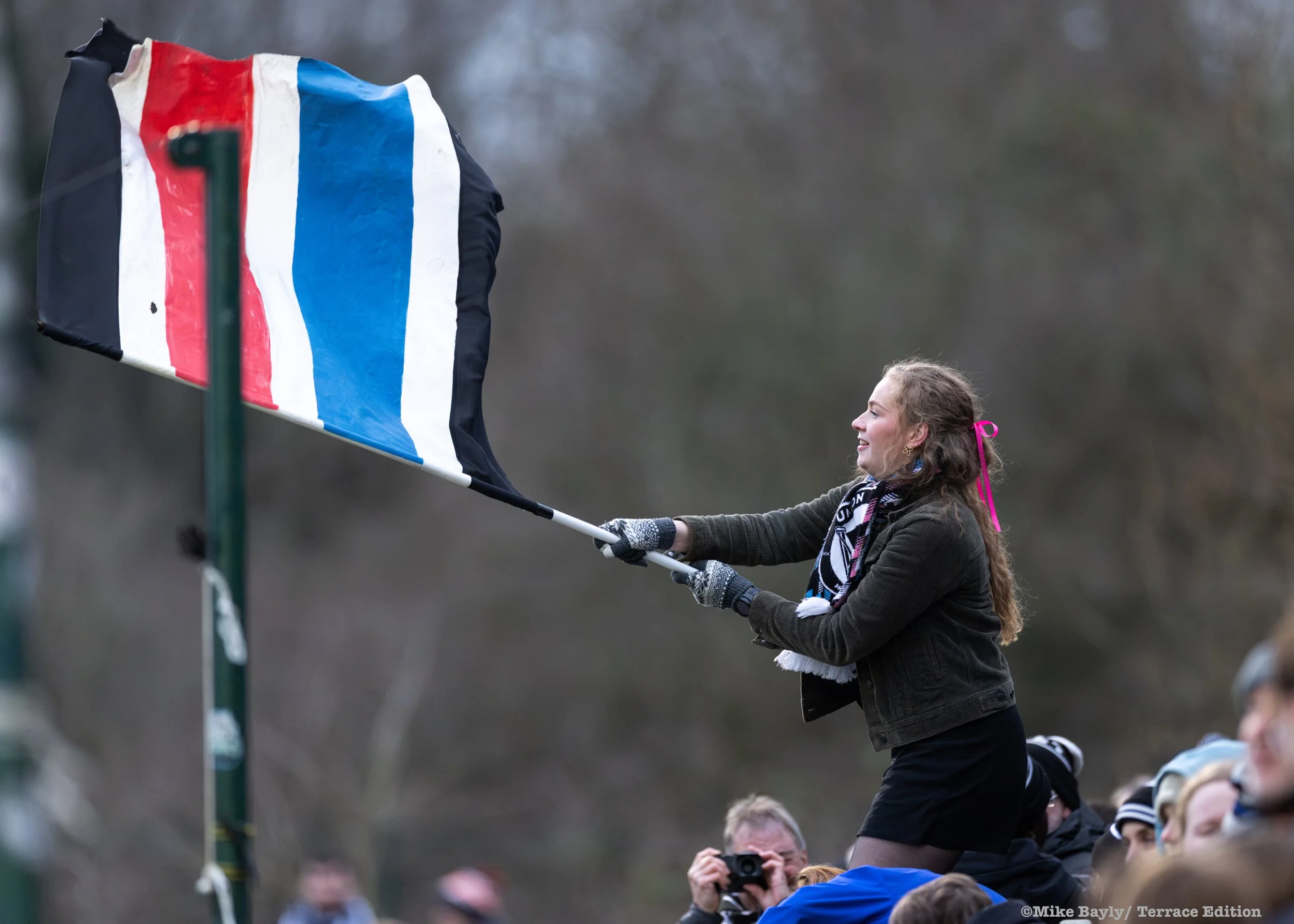
©Mike Bayly/ Terrace Edition. WDCFC flag.
Such ‘experiences’ are markedly different. Ask a cross-section of fans at Brookburn Road why they keep coming back, and you’ll likely get a cross-section of answers.
But one factor probably underpins everything: it’s a lot of fun. A couple of weekends ago, WDCFC entertained Winsford United in the last sixteen of the FA Vase, a national knockout competition for clubs at Step Five and Six of the National League System.
Initiated in 1974 as an effective replacement for the FA Amateur Cup, 623 entrants were accepted this season, all vying for a chance to play at Wembley in the showpiece final.
Some of the entrants are so obscure they don’t even warrant a Wikipedia page, but there is a rich history amid the assembled ranks.
In an earlier round of the FA Vase, WDCFC defeated Lincolnshire outfit Brigg Town, which dates back to 1864.
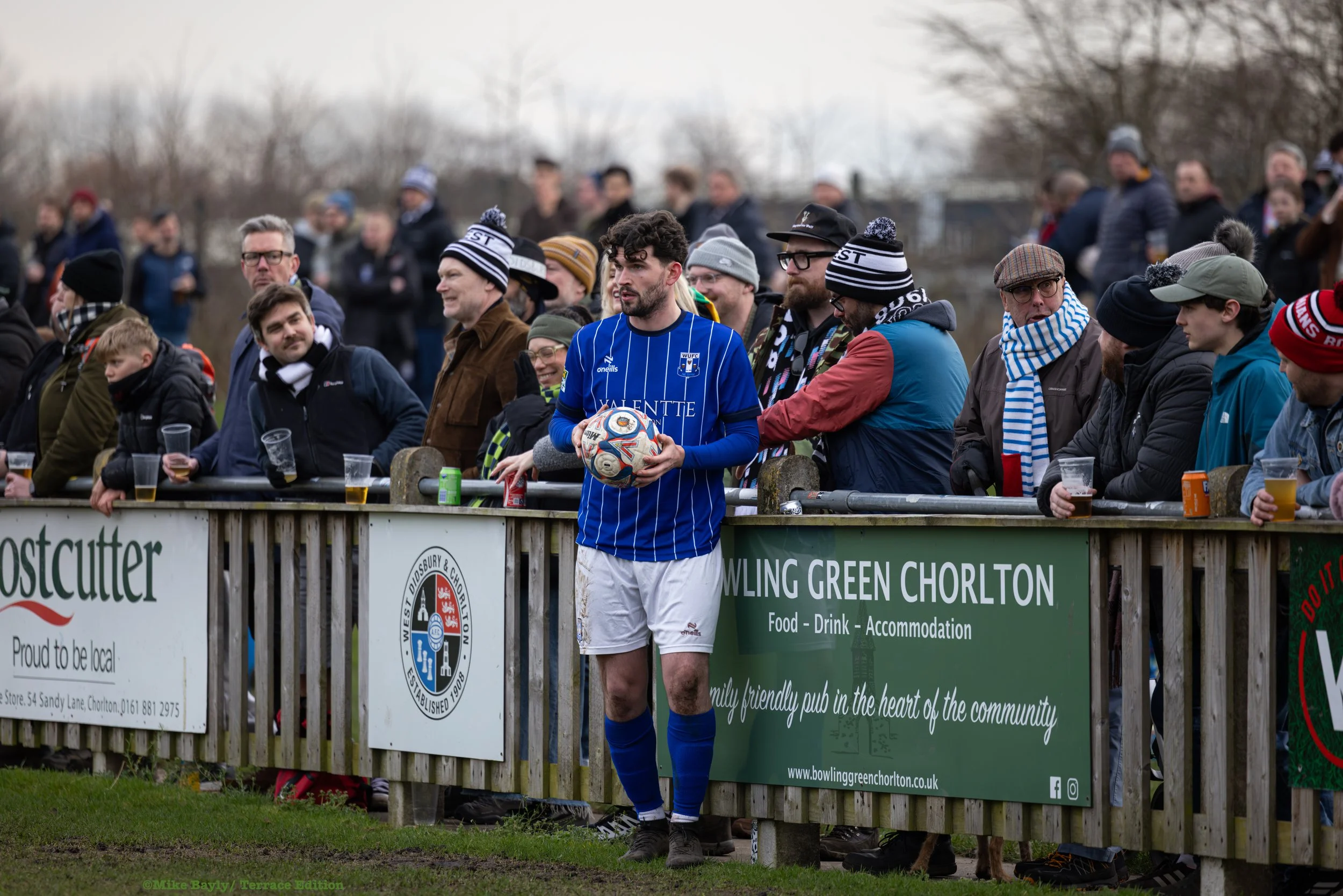
©Mike Bayly/ Terrace Edition. West Didsbury and Chorlton FC vs Winsford United.
Of the more recent additions to the competition, Eaton Socon, of the Spartan South Midlands League, was formed in 1867. One of the earliest accounts of the club can be found in the St. Neots Chronicle and Advertiser from 1868, which states “ The game of football, (which is recognised as being one of the most manly of English sports,) was very little played in this neighbourhood till the present season, when Surtees Wilkinson, Esq., organised a club, for the purpose of ensuring a series of matches.”
With a quarter-final place at stake, a large crowd was anticipated at Brookburn Road. Given WDCFC’s location, the club’s burgeoning fan base reflects the local demographic.
Supporters have embraced this, self-deprecatingly playing up to their ‘middle class ultras’ tag by singing about organic food, or creating withering artwork about curtain-twitching neighbourhood watch schemes.
There’s even a club-branded Session IPA. It’s vegan- friendly. Obviously.
Before kick-off, an impressive array of flags and banners was supplemented by a giant tifo.
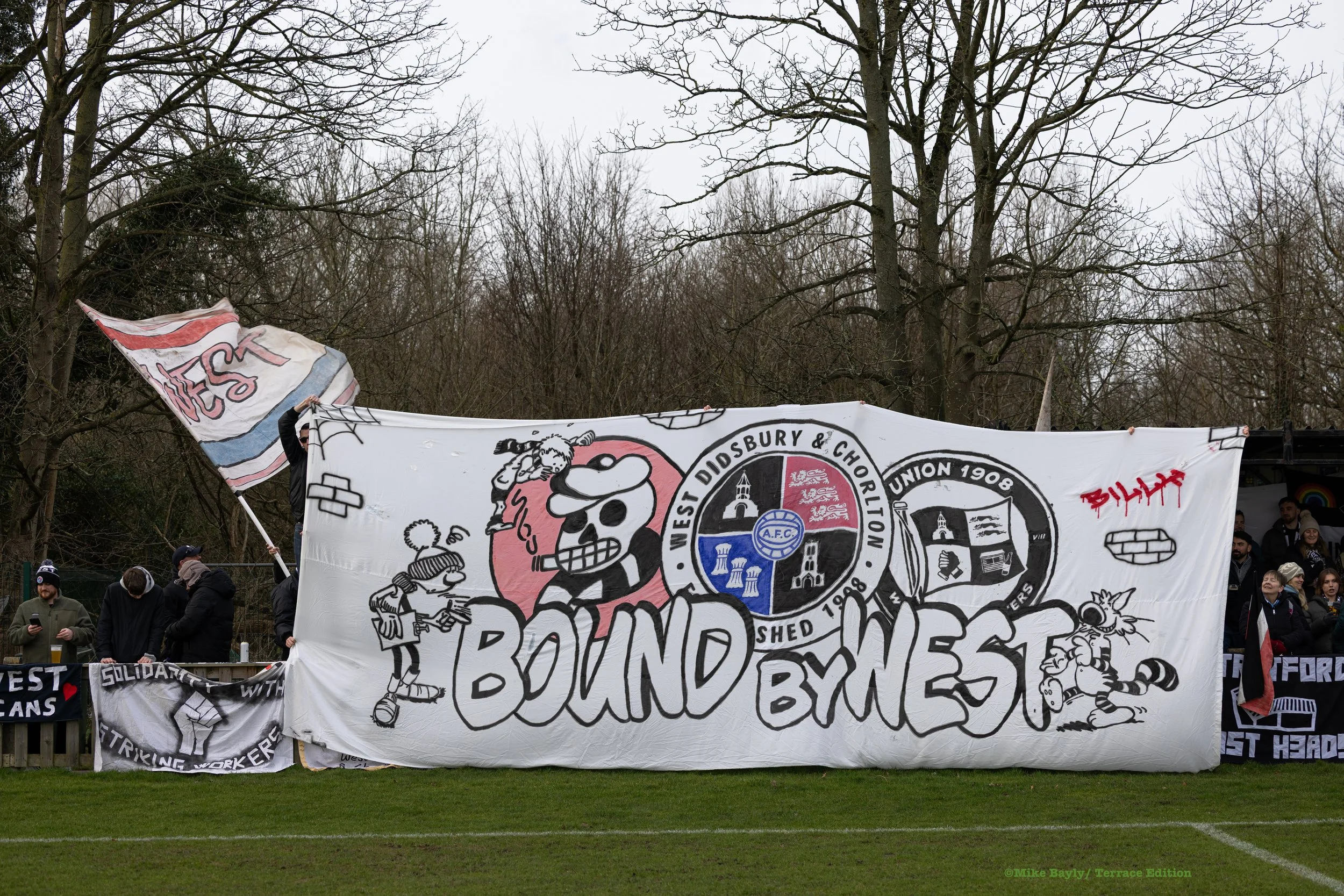
©Mike Bayly/ Terrace Edition. Union 1908 tifo.
Much of the supporters’ activity is co-ordinated by two fan groups, Union 1908 and Sensible Behaviour Unit 1908.
Crucially, the creative terrace songs prioritise a love for West Didsbury above goading the opposition. It’s a refreshing change, given that football culture can be disproportionately defined by animosity towards a rival.
One chant, to the tune of Pulp’s Disco 2000, recently went viral on social media.
“Let’s all meet up when the crowd’s 2000
Won’t it be strange when we’re all getting old?
Be there, three o’clock
Down at Brookburn Road
What are you doing Saturday, Baby?
Would you like to come and see West Didsbury?
You can even bring your baby”
No wonder the locals are buying into it. Moreover, any incendiary or discriminatory behaviour is self-policed and instantly stamped out.
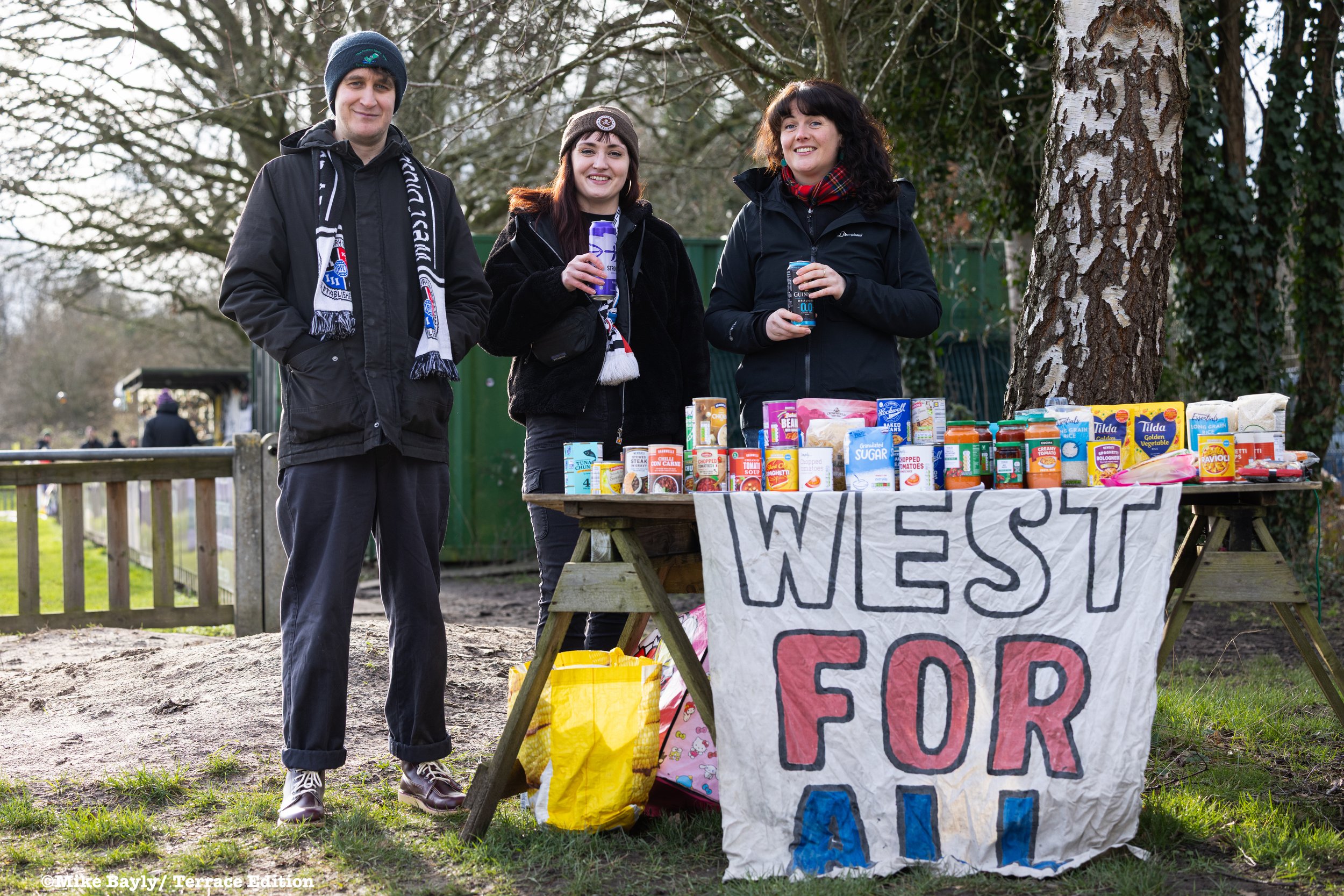
©Mike Bayly/ Terrace Edition. WDCFC supporters.
Consequently, Brookburn Road fosters a positive, inclusive atmosphere, reflected in large, diverse crowds spanning the generations.
The 1,151 fans in attendance against Winsford United were rewarded with a 4-1 win and lengthy post-match celebrations.
An away trip to Hallen FC in South Gloucestershire awaits in the quarter-final. Only three games stand between them and an appearance at Wembley.
North West London’s craft ale bars and ethically sourced eateries will be on high alert.
It is difficult to pinpoint a single reason for WDCFC’s success in growing its fanbase. As numerous non-League clubs with stagnant crowds will testify, there is no magic bullet.
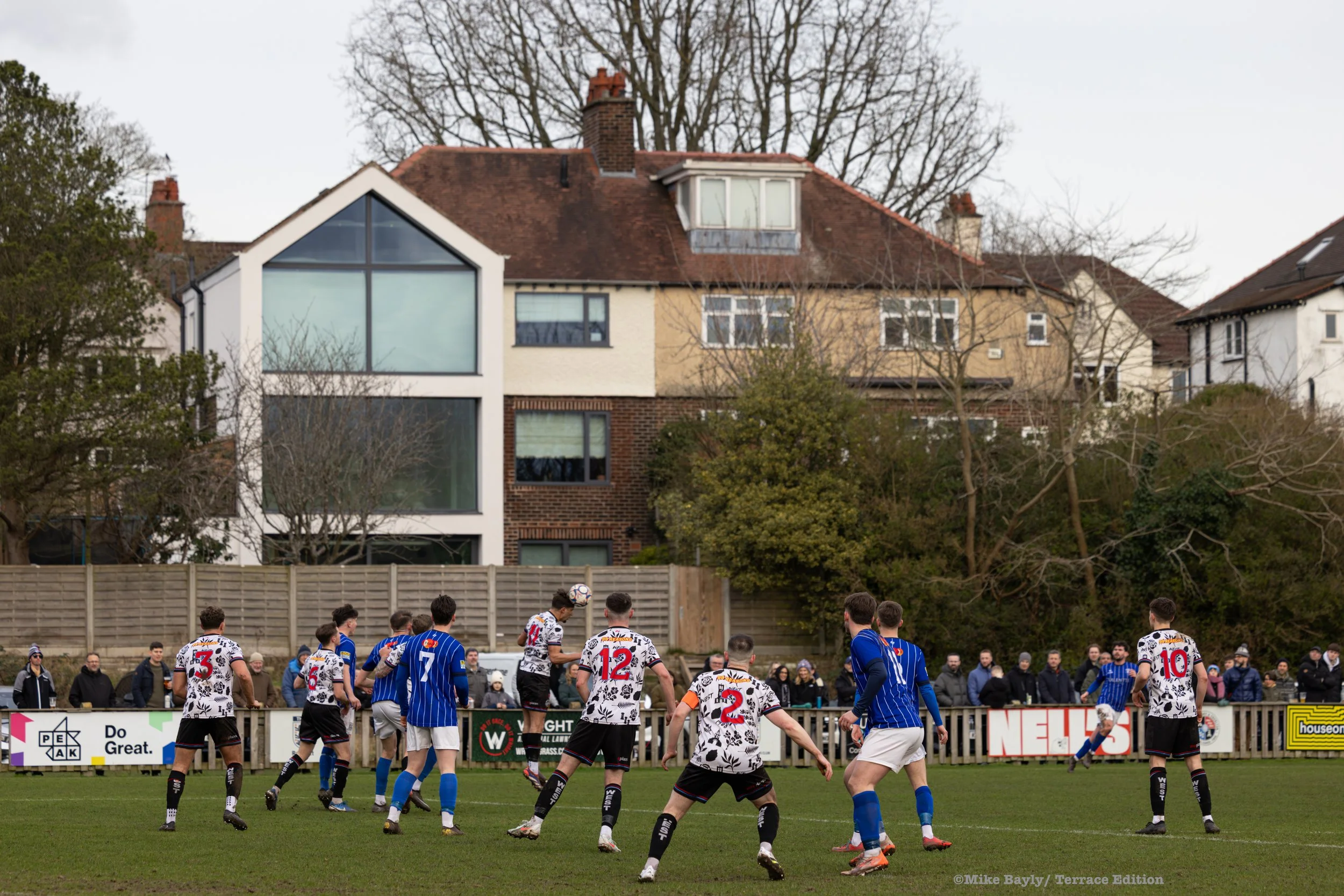
©Mike Bayly/ Terrace Edition. West Didsbury and Chorlton FC vs Winsford United.
Sometimes a confluence of external factors intervenes, from local socio-economic trends to the fortunes of neighbouring clubs.
What can be said with certainty is that WDCFC didn’t build this following overnight. The club has been running initiatives for over a decade, including non-League dog day, which made national headlines back in 2017 and has since become a regular fixture in the calendar.
No single event can guarantee returning support.
However, an ongoing commitment to offering something different and life-affirming at a family-friendly price can go a long way toward encouraging it.
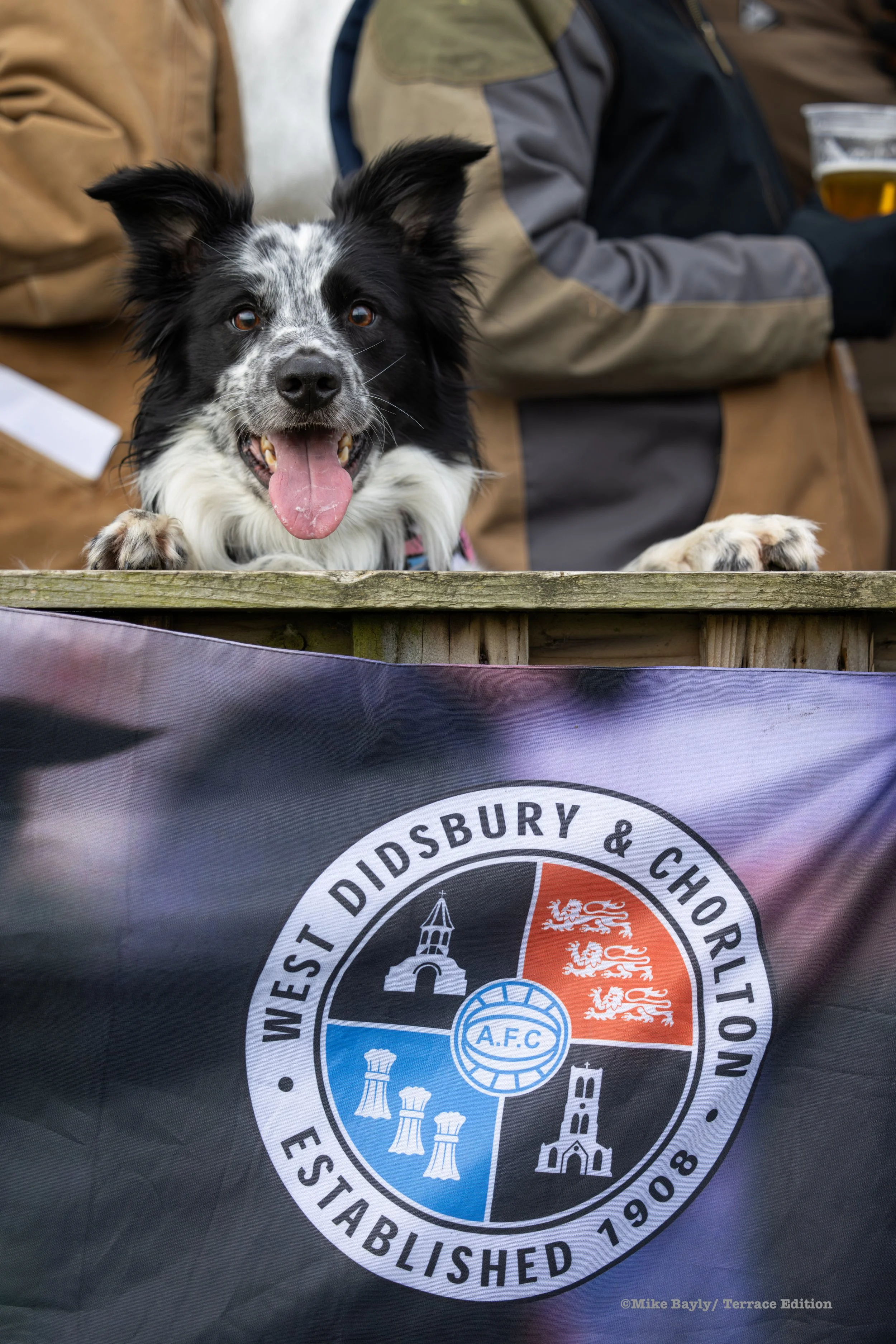
©Mike Bayly/ Terrace Edition. West Didsbury and Chorlton FC vs Winsford United.
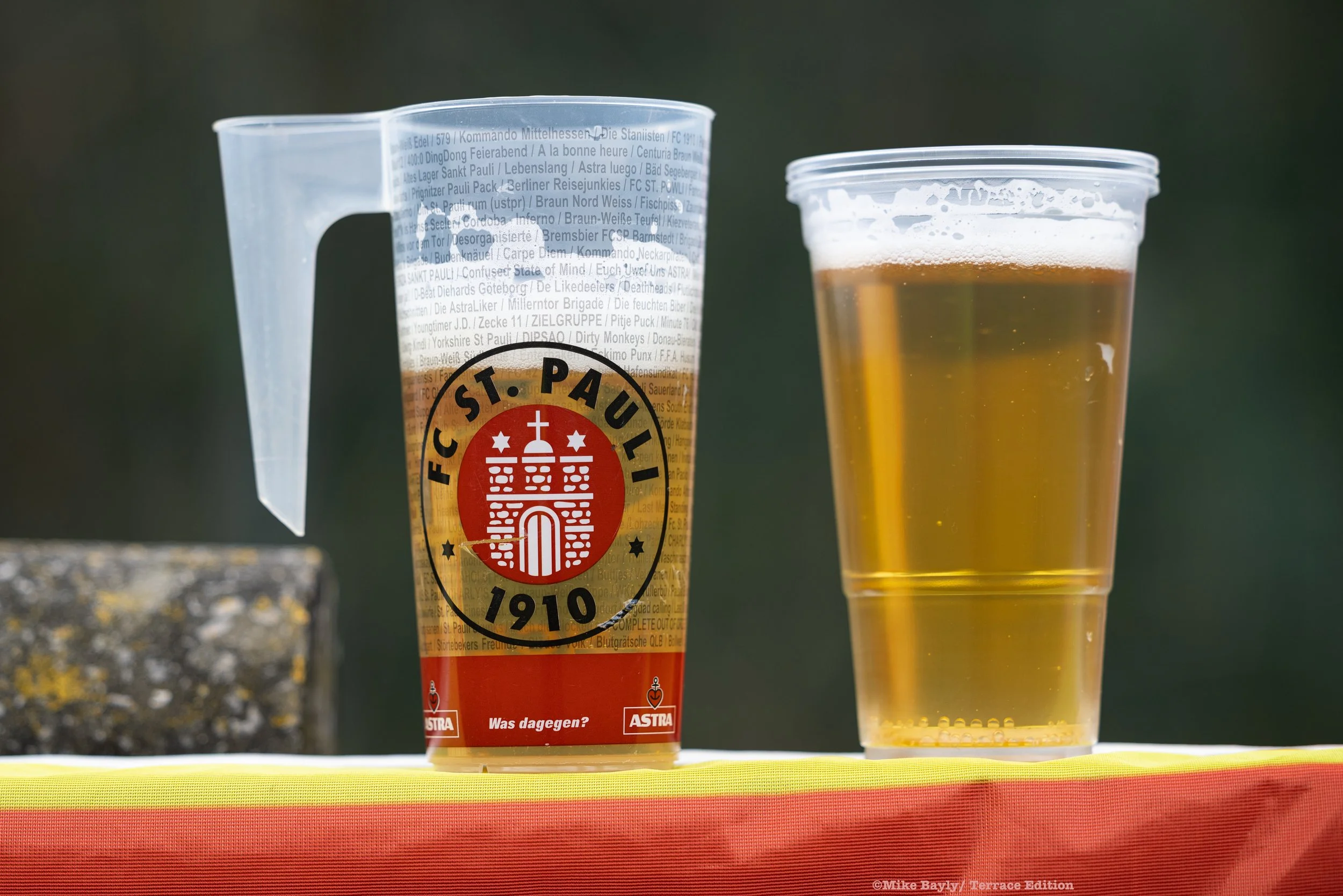
©Mike Bayly/ Terrace Edition. Beers with friends.
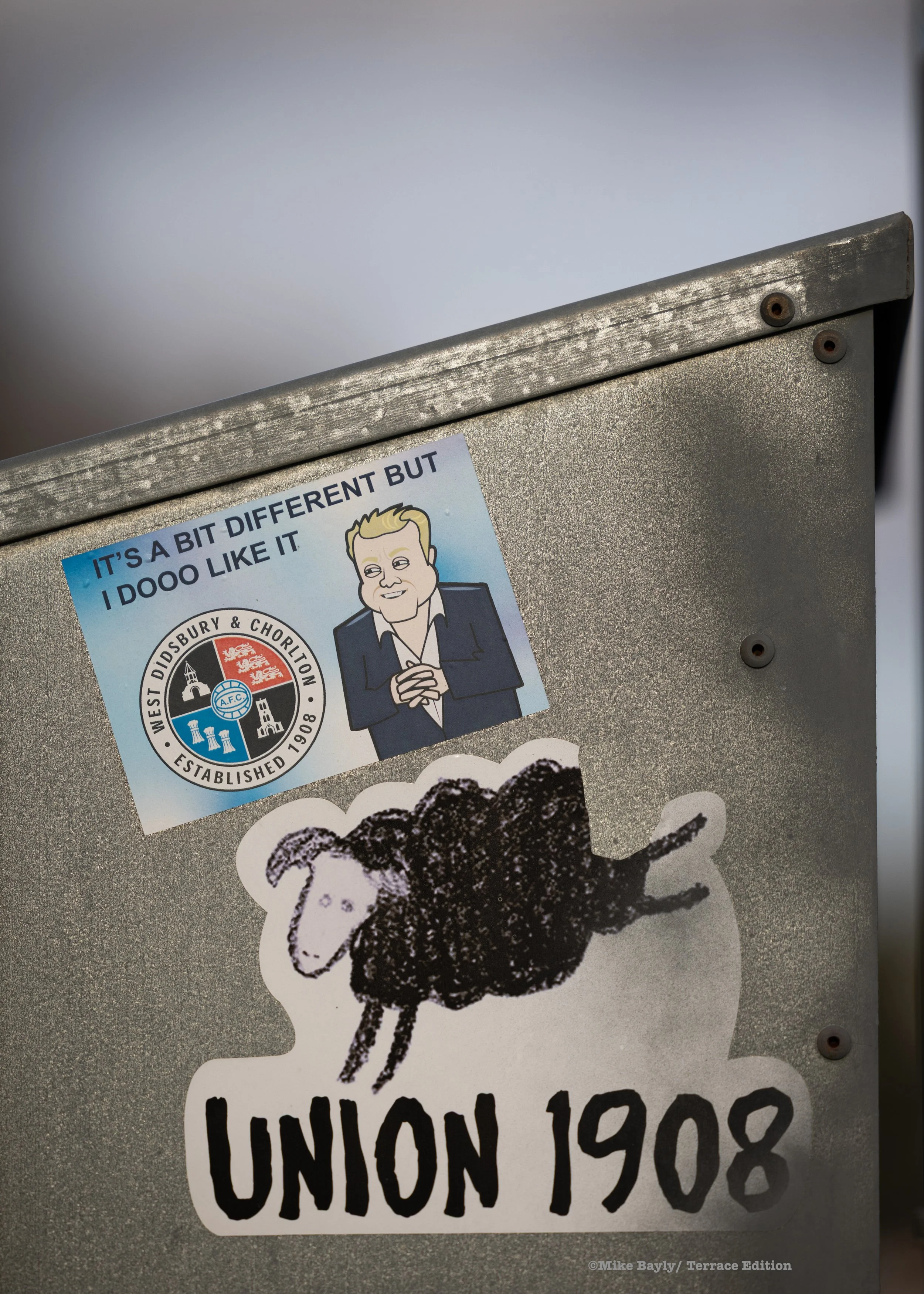
©Mike Bayly/ Terrace Edition. Union 1908 sticker.
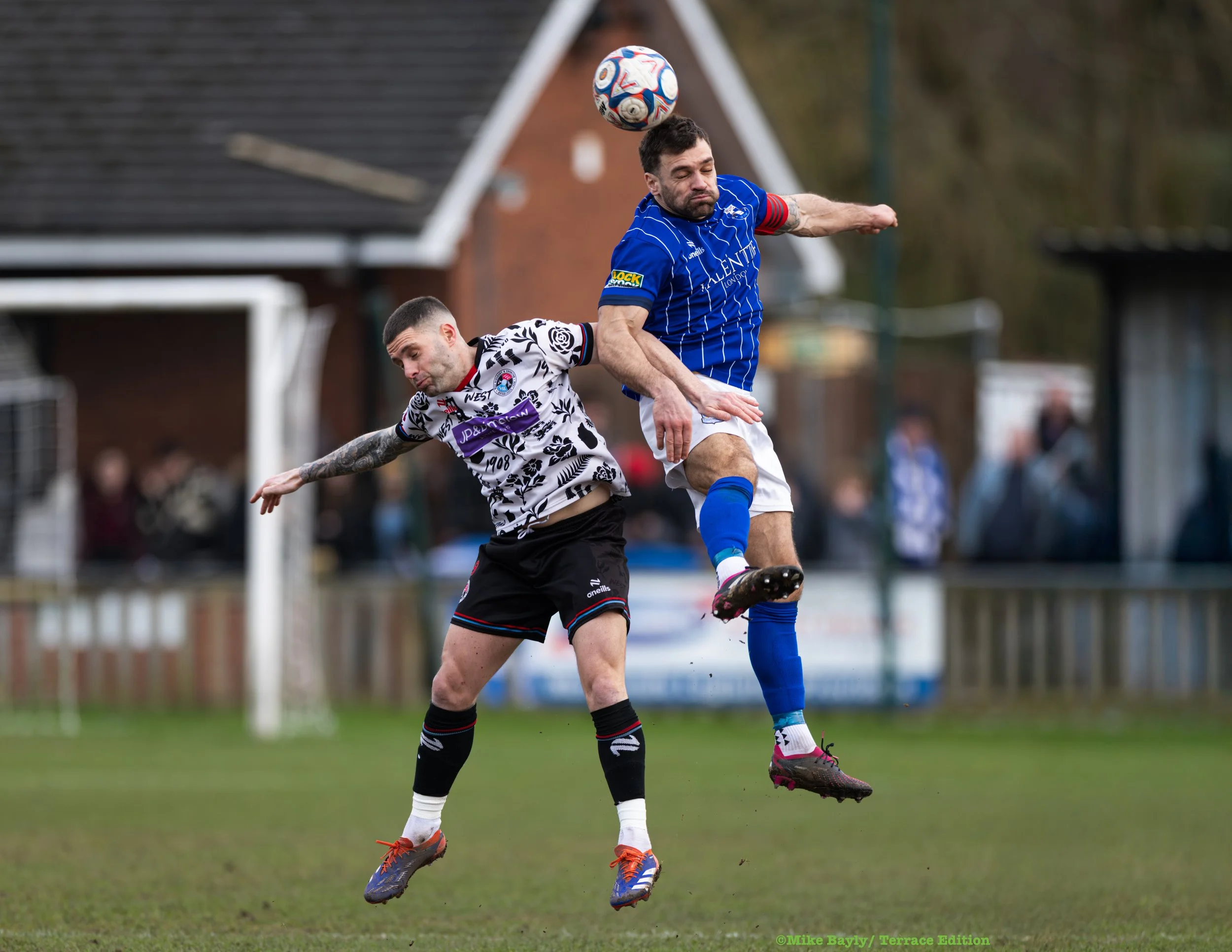
©Mike Bayly/ Terrace Edition. West Didsbury and Chorlton FC vs Winsford United.
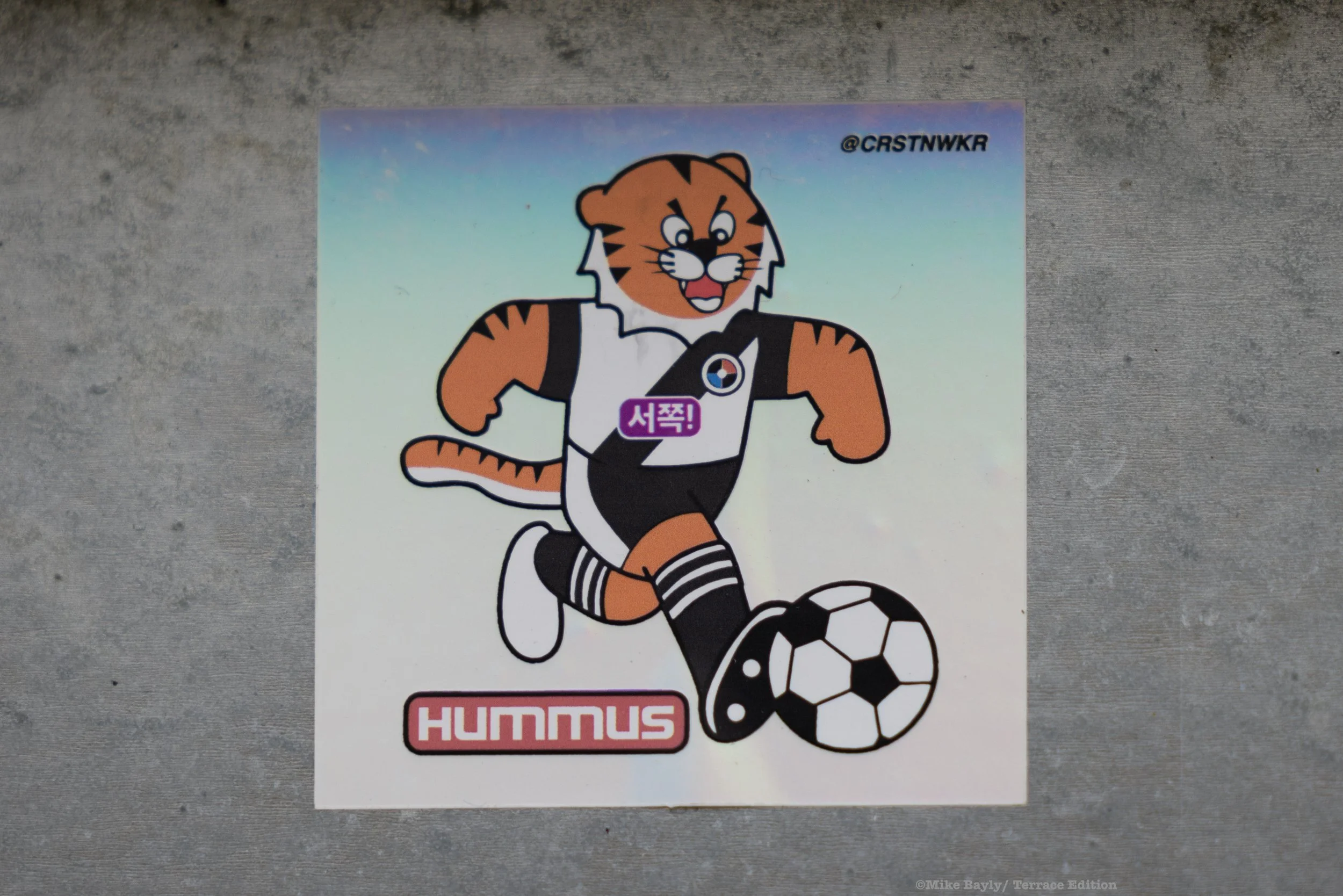
©Mike Bayly/ Terrace Edition. WDCFC sticker.
Mike is on X and Instagram: @mike_bayly.
West Didsbury and Chorlton FC’s website is www.wdcfc.co.uk
The club is on X and Instagram: @wd_cfc


