Ultras
Words: Tom Reed
Images: Stills from the film
Final graffiti image: Tom Reed
Low value bank notes.
Tifos made by tough guys with sowing machines.
Flags of countries that don’t represent us.
Mama’s table cloth soaked with pre-match beer.
Blue hospital trolley sheets in unknown towns.
Rip-stop nylon for over-the-head coats.
Pub carpets that give static shocks.
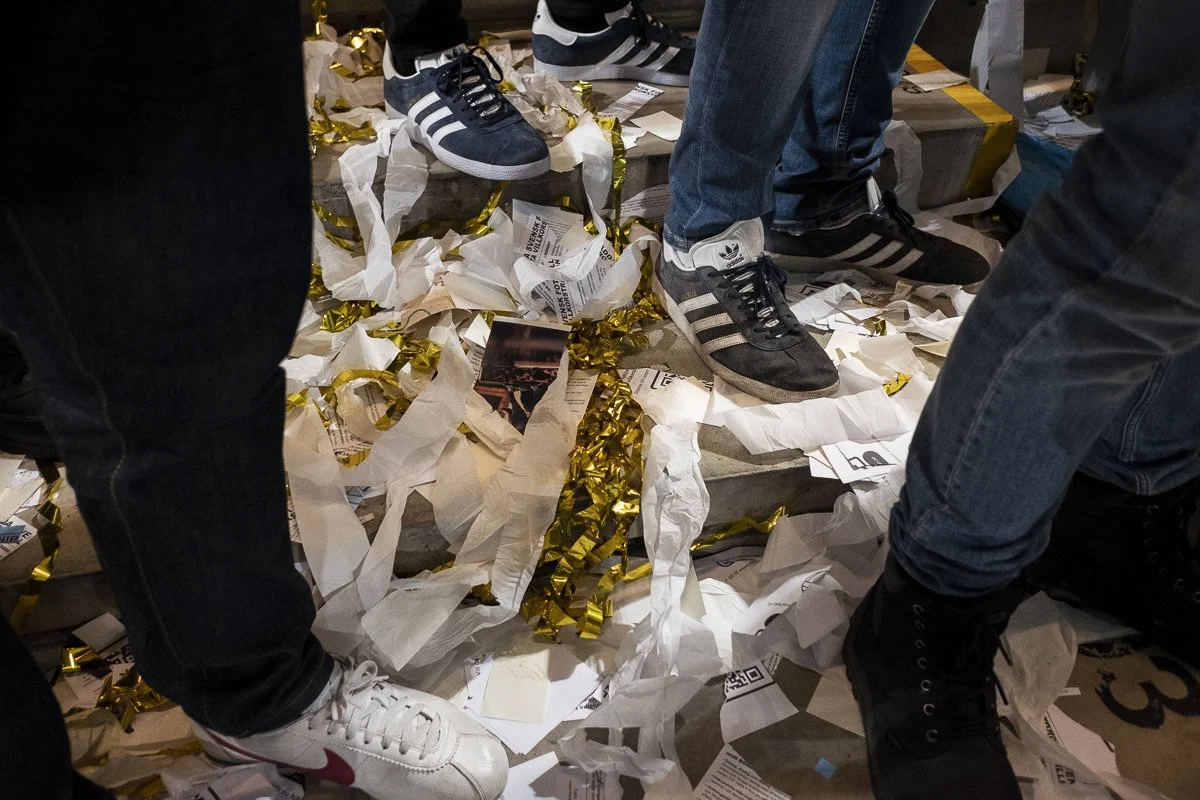
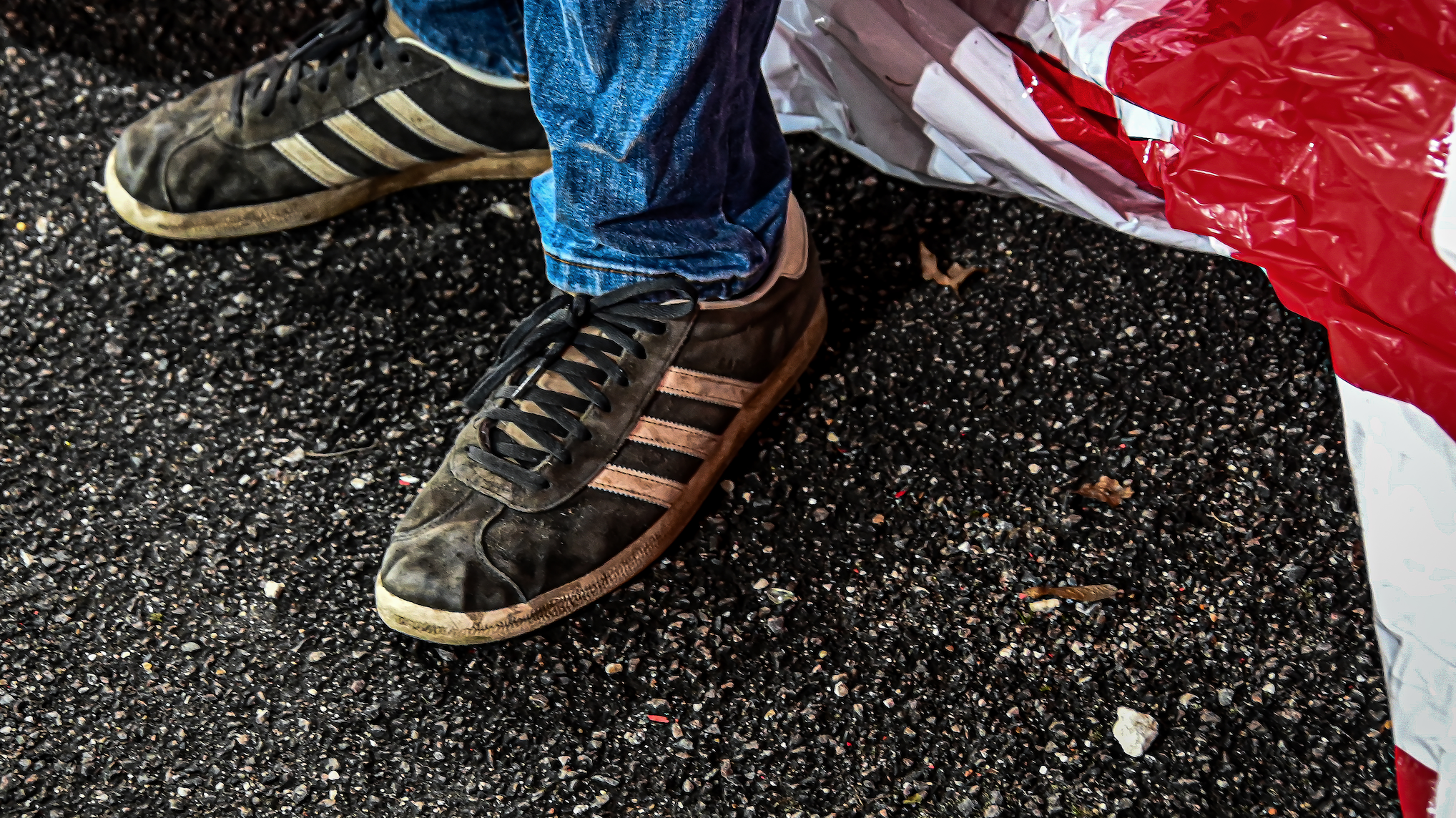
Scuffed up leather on an Adidas.
Piss splashed jean bottoms.
Spinning scarves brushed against faces.
Back tabs on baseball caps that come apart.
Smelly felt seats on long coaches home.
These are the fabrics of our game.
Ultras have been a part of football in Europe for a long time, but also, not long at all.
The origins are as hazy as an afternoon on the terraces after one too many beers. Some say the first ultras appeared at Hajduk Split with the advent of the Torcida group in 1950, even though they would not have called themselves that.
Others point to Sampdoria in Italy and a late 60’s acronym of “Uniti Legneremo Tutti I Rossoblù Ancora Sangue (together we’ll beat all the red and blues to blood”) and their city rivalry with Genoa CFC.
But ask in Torino and you may hear the Ultras Granata of 1967 pre-dated the 1969 Ultras Tito Cucchiaroni of Samp.
You could use references from the Italian press in the 60’s to the sort of groups emerging at Sampdoria and Torino, to say that Ultras only became anything approaching a tangible concept when the media took an interest.
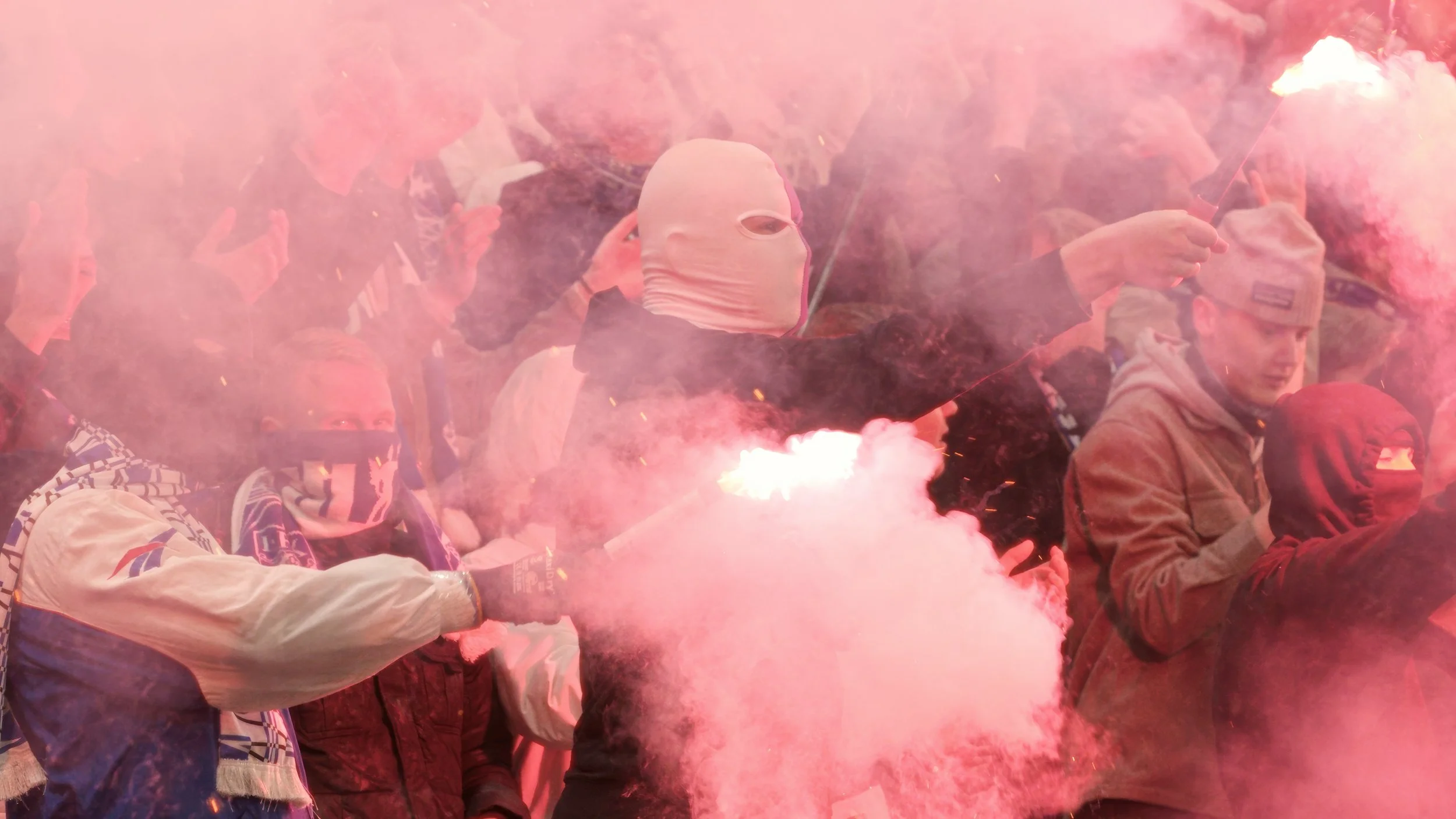
IFK Göteborg by Ania_Winiarska.
Yet, flags were being waved on the Italian curvas as early as 1931 in Florence and a year later, Lazio were said to be the first to show a rudimentary tifo display.
Meanwhile, supporters in Brazil and England can lay claim to their own terrace influences in terms of chanting and visual displays of support going way back to the early game of the 1920’s.
It matters where ultras came from and also not at all.
This was the challenge for documentary film-maker Ragnhild Ekner’s 2025 documentary “ULTRAS”, which is showing across the UK and Europe this Spring and distributed by Bulldog Films.
Ekner is, first and foremost, a supporter of IFK Göteborg in Sweden and that is as good a place to start as any. She begins the film with the dictionary definition of “ultra” being “beyond, further, more than” which is an effective way of describing of where their supporterhood exists.
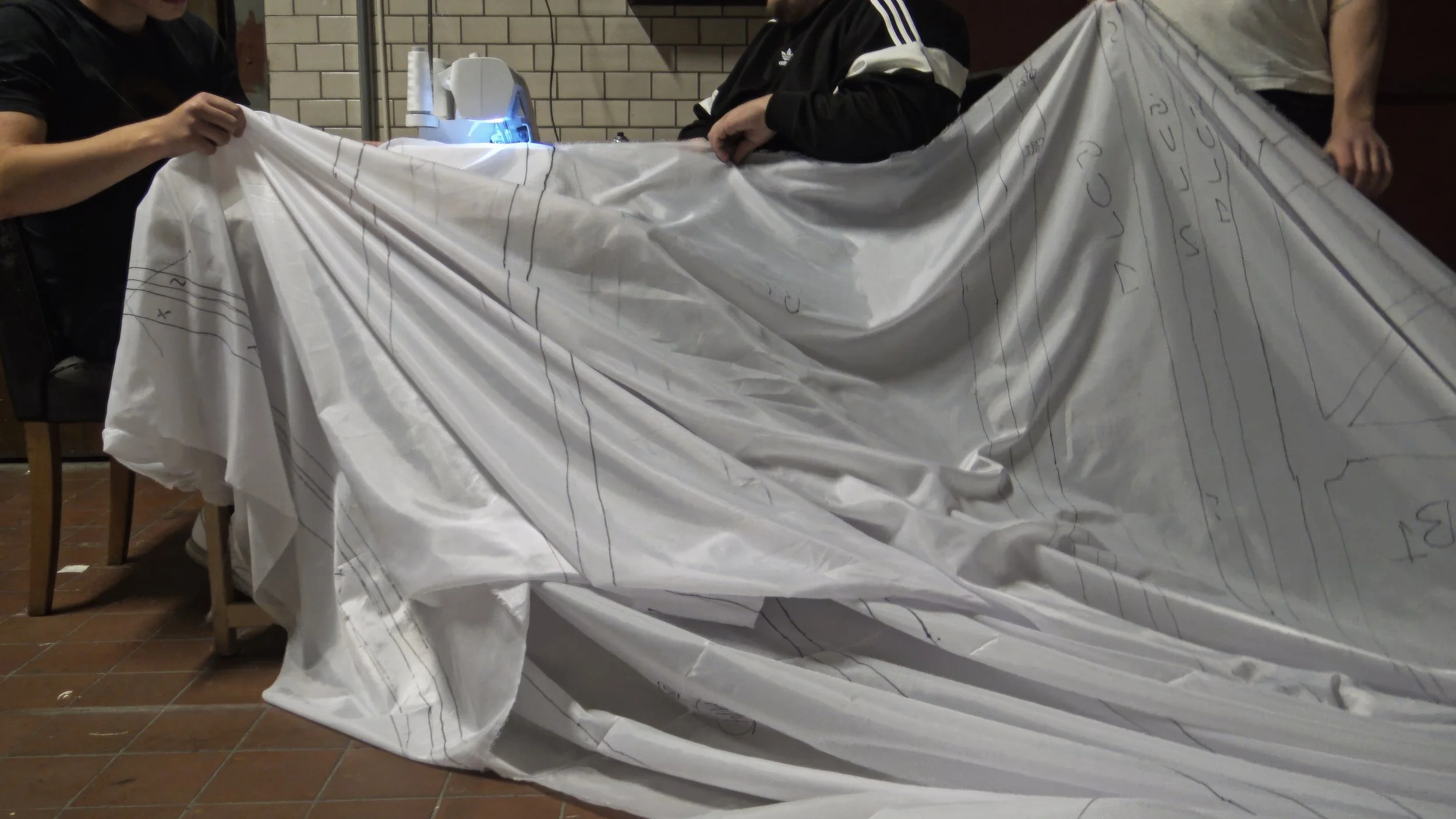
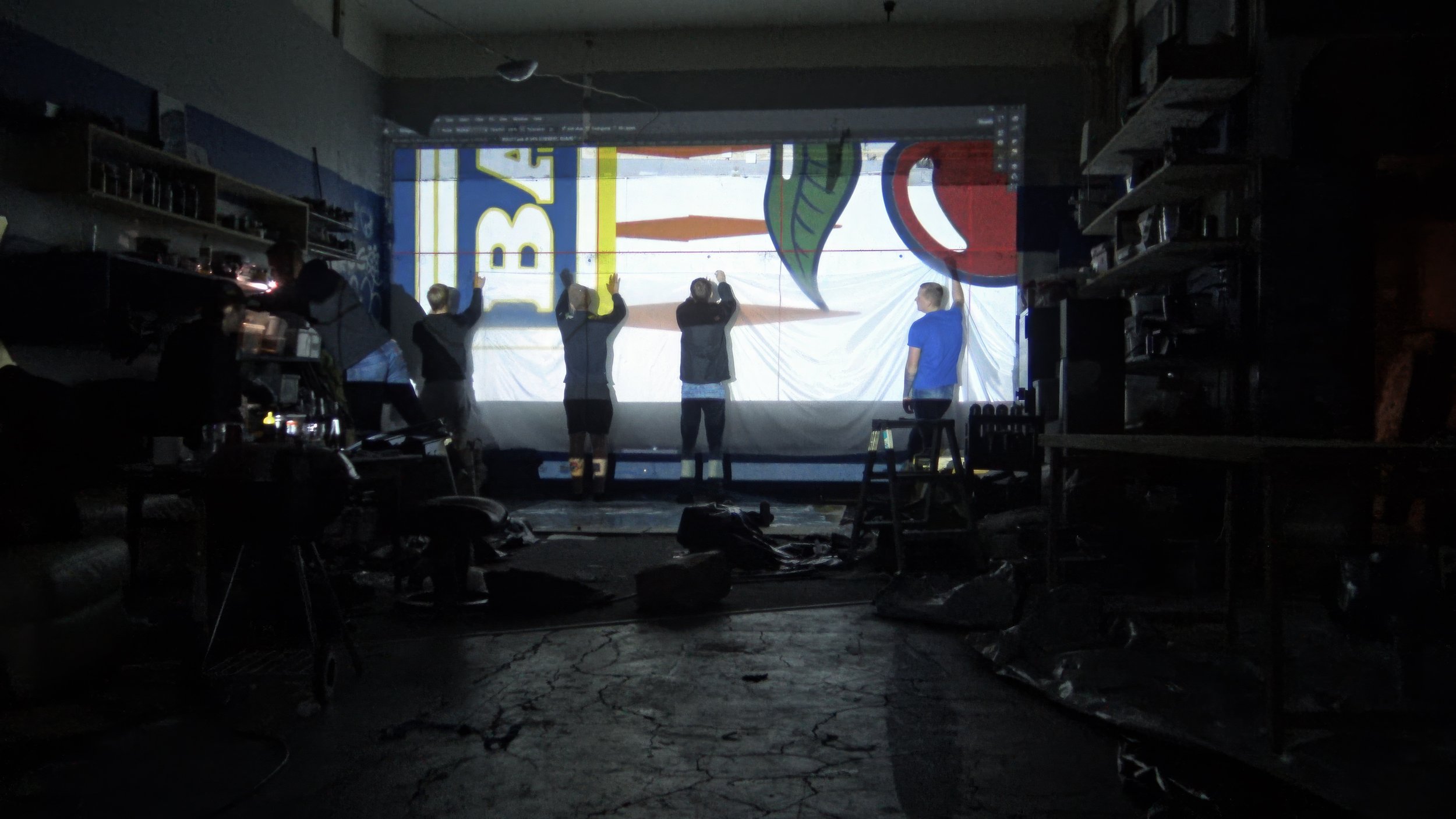
Tifo creation at IFK Göteborg by Ragnhild Ekner.
The first section of documentary focuses on the creation of a large tifo at IFK, which can be described as textile porn, with gorgeous sounds of sowing machines, scissors cutting through fabric and marker pens drawing outlines.
It’s a timely reminder of the sheer dedication it takes to create what is considered a “real tifo” as opposed to the club-funded, laser printed versions that are cropping up at the top clubs more and more.
Everything is done by hand by a team of volunteers, so much so, that Ekner’s voice-over suggests that the display would cost upwards of 36,000 Euros if charged back to the club in terms of materials and time.
The scene is football stripped back to its basics, showing the quiet that is often ignored in representations of the ultras’ scene. It culminates with the showing of a superlative IFK tifo featuring a fruit machine and spinning reels which settle on club crests as a jackpot.
Ekner’s Swedish lilt is calming accompaniment to the visuals and she describes Ultras as “an uprising against loneliness, the only constant and the radical happiness”.
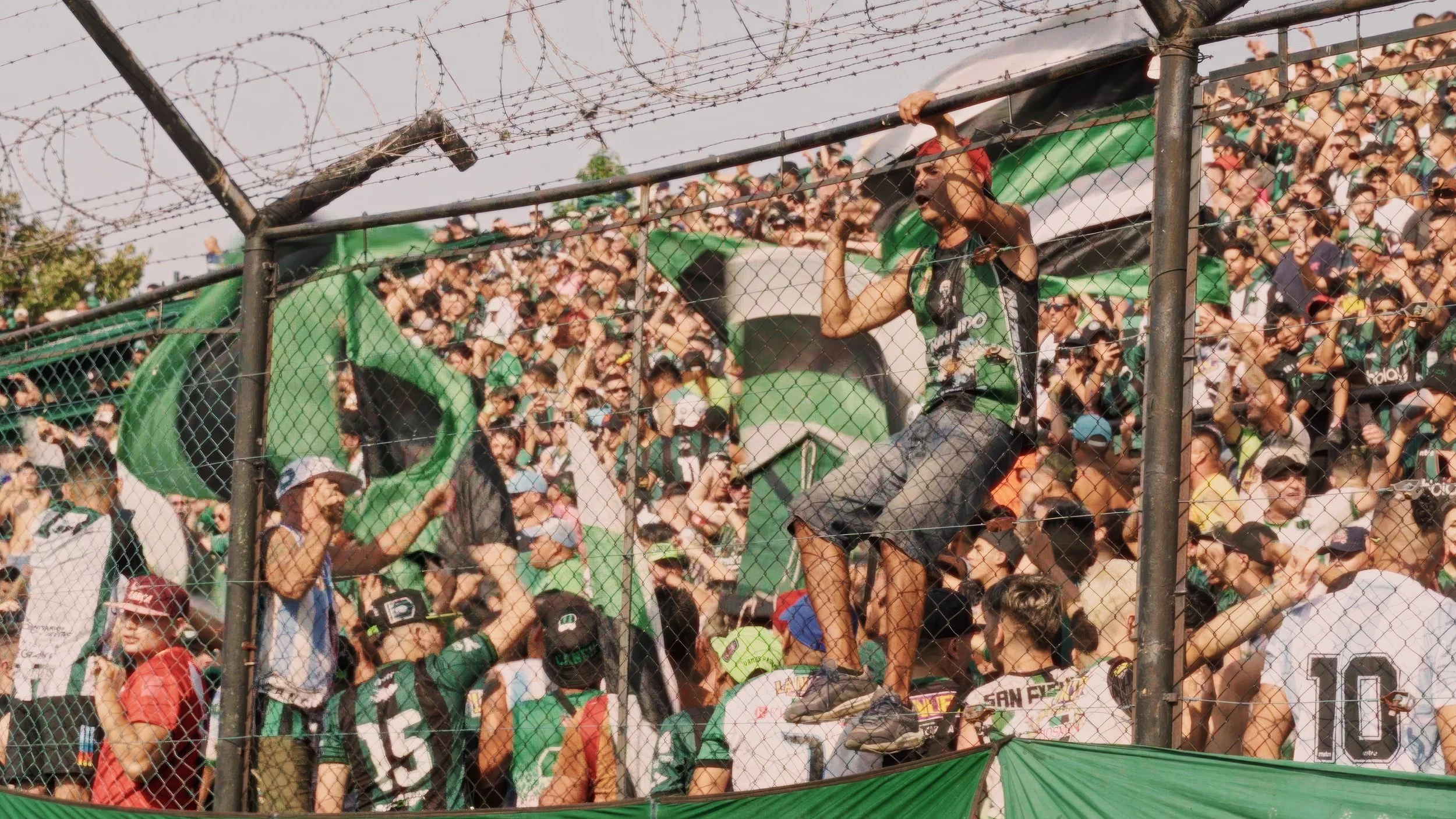
Nueva Chicago by Joel Viksten Abrahamssonn.
Indeed, she goes to Whitehawk, Clapton CFC and Eastbourne Town in England, Nueva Chicago and Boca Juniors in Argentina and Lech Poznan in Poland, in search of this pure form of contentment.
It is in Indonesia and Morocco, where this is best shown, with terrace scenes enough to bring a tear to the eye of even the most jaded of football casuals.
At Perserikatan Sepakbola Sleman in Indonesia, the film shows both wide shots and close ups of the supporters singing their anthem in a soulful, haunting manner and that that their dedication is beyond question.
“Have you ever seen, your life getting brighter, a dream that could come true, our team will become champions, through all the years that passed, We never gave up on you. Day after day, the desire in our hearts is always there, it is an honour, to stand by the side of our heroes, to always fight to never lose our hope. We will celebrate comrades.”
They sing, with supporters hanging off fences, including women in headscarves and lads dancing on the top of an adjacent building that looks like the spiral San Siro stairs.
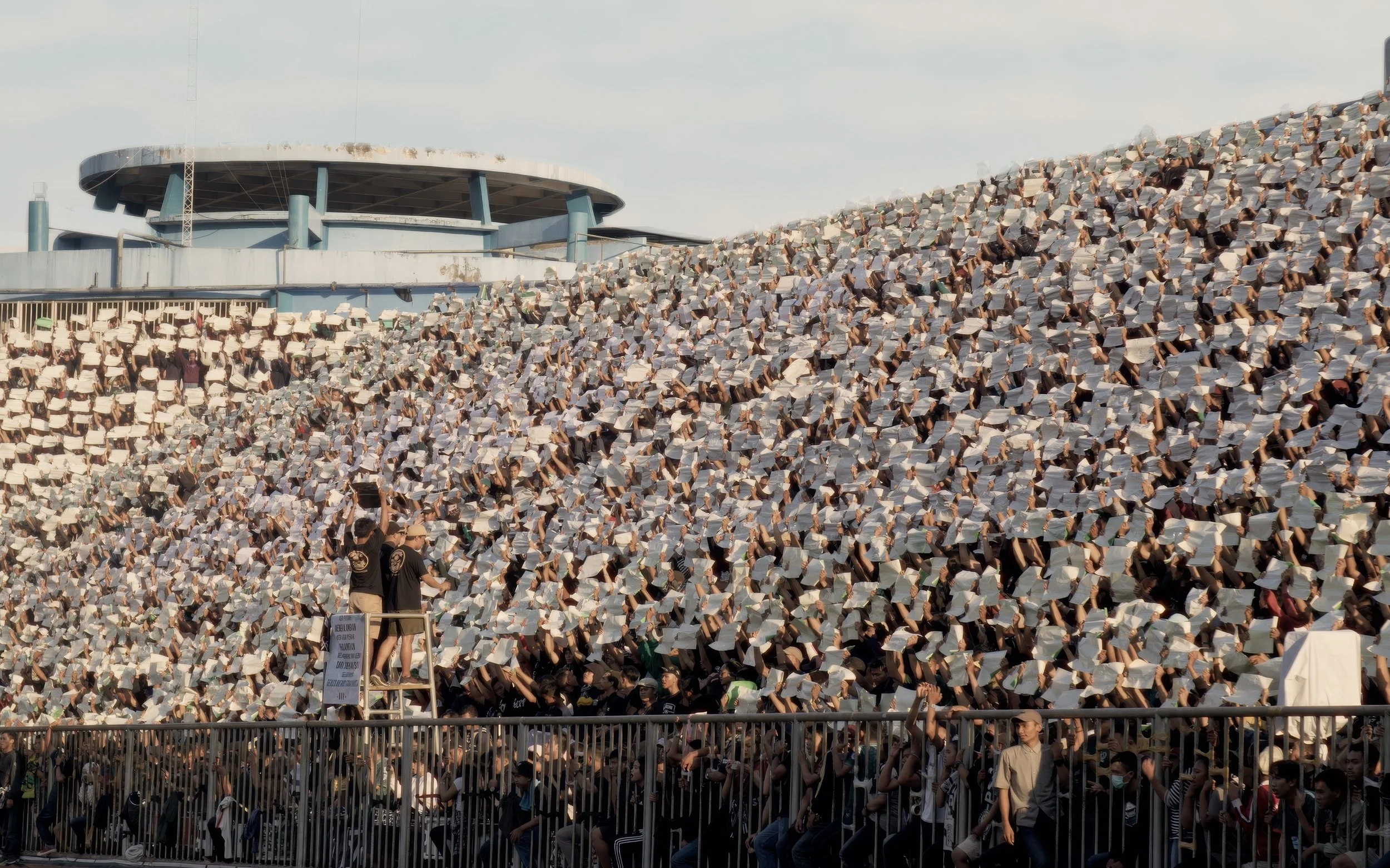
Perserikatan Sepakbola Sleman supporters by Fabian Sigurd.
The Sleman curva also shows innovative choreography featuring pulsing paper displays, proving they are not just content to borrow from other countries but keen to take the game to them.
In Morocco, at Raja Club Athletic, the home end moves likes the chest of a person breathing, who happens to be wearing a blanket of green.
Everyone standing there has a role and each supporter knows what to do when it comes to the unique singing and arm movements. You’’ll see a band embedded in the stand, which has become an emerald city in the sky.
“The only thing that matters is god, family and the team.”
In conversation with Terrace Edition, Ekner said “that first trip to Morocco, I don’t know if it was my stage of life, I’d separated from my son’s father, picking myself up again, my first film had premiered, it was like, my life peaked when Raja were going to play a game…That energy carried me through the whole process. The Moroccan chants are so beautiful, so melancholic…The feeling was like taking MDMA or something. I don’t think I’ve ever been so happy”.
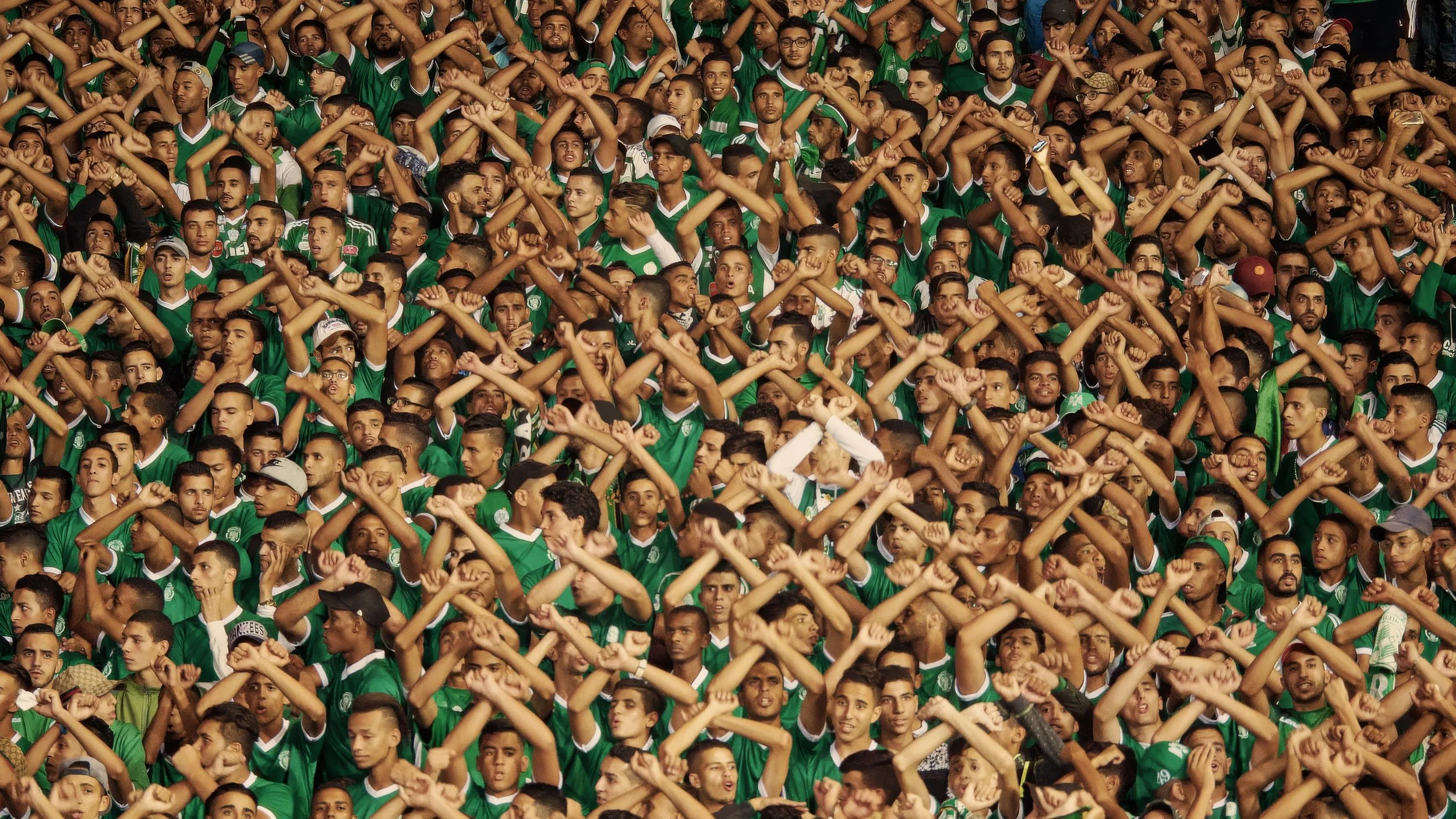
Raja Club Athletic supporters by Fabian Sigurd.
The film tackles more uncomfortable themes, particularly police and state repression.
An Italian Ultra from Bari argues that “the stadium is a testing ground for repression, once society accepts this form of repression it spreads to society because the stadium is a mirror of society”.
There is also a feature on the 2012 Port Said massacre in Egypt, in which 74 people were killed during a match between Al Masry and Al Ahly.
The film doesn’t shy away from discussing violence within the ultras’ movement, with the Bari Tifoso saying “subcultures have always been associated with violence, as a form of opposition to the prevailing social order”.
However, fighting at football, in most instances, will make up only a tiny proportion of match experiences. Ultras groups are by no means linked to all instances of clashes at games. Fighting firms can be separate from ultras groups and looking to go under the radar more than lads in balaclavas or noticeable clothing.
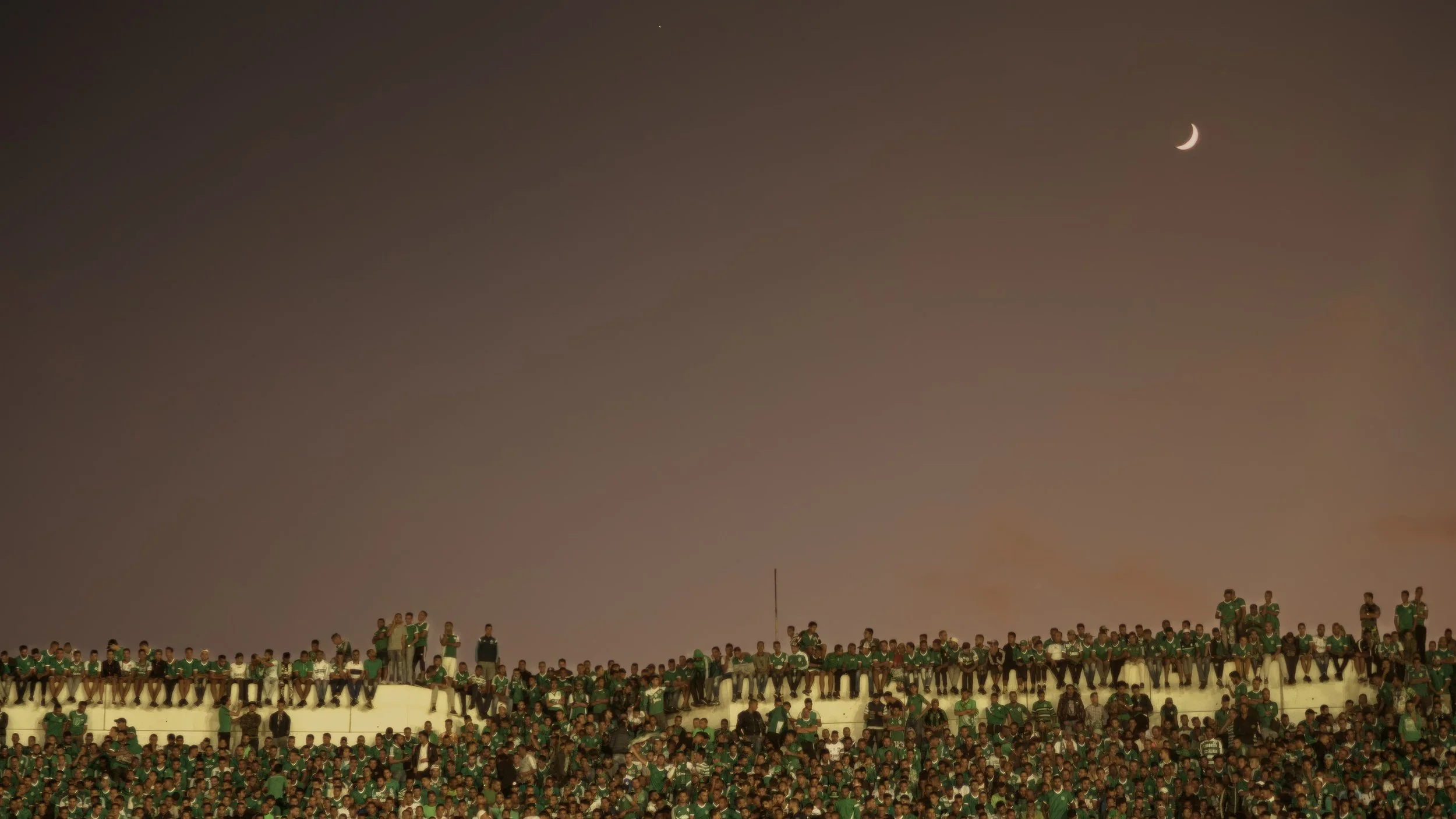
Raja Club Athletic supporters by Fabian Sigurd.
Those viewers looking for a total understanding of the ultras scene will be disappointed because it is something that is impossible to sum up, even the origins are argued over as previously discussed.
The film is Les Quatre Cents Coups for ultra culture, with escape from our lives being a central theme.
You won’t see any lingering close ups of faces as in the end scene of the French New Wave classic because the “no name, no face” mantra reigns supreme in many ultras groups. Cameras are frowned up and, in some cases, smashed up on the terraces.
Towards the end of François Truffaut’s epic of Parisian childhood, the protagonist’s best friend travels to visit him in the youth reform school. It reinforces a feeling of friendship over alienation which is also felt in the stands of the ultras.
Ekner echoes this sense of belonging and safety by saying “being a woman on the terraces in Sweden, I never feel as safe as going to the match. It’s much more unsafe going home by myself on a Friday evening on the tram.”
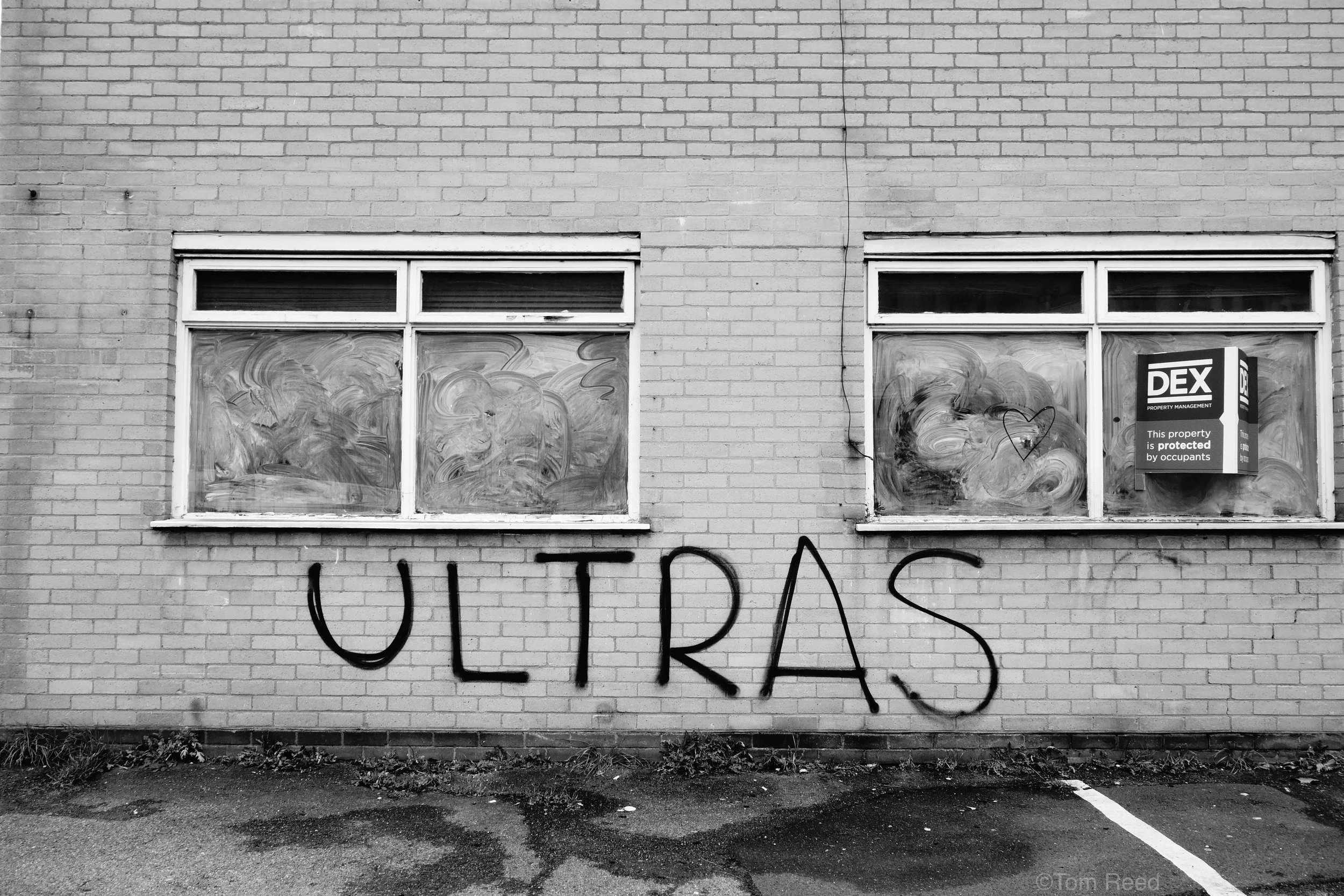
Ultras graffiti London by Tom Reed. ©Tom Reed/ Terrace Edition.
Ekner could have gone to a thousand games and not found a more fitting closing scene for the film as she did, a shot of a floodlight in the haze, with a single flare slowly lit up in accompaniment.
She describes fans descending on floodlit stadia as “moths to a flame”.
This is what separates football supporters (and that where Ultras begin and end) from the rest, who don’t follow the light.
It brings to mind that old school-yard retort for someone being too nosey.
What are Ultras? It is for us to know, and you to find out.
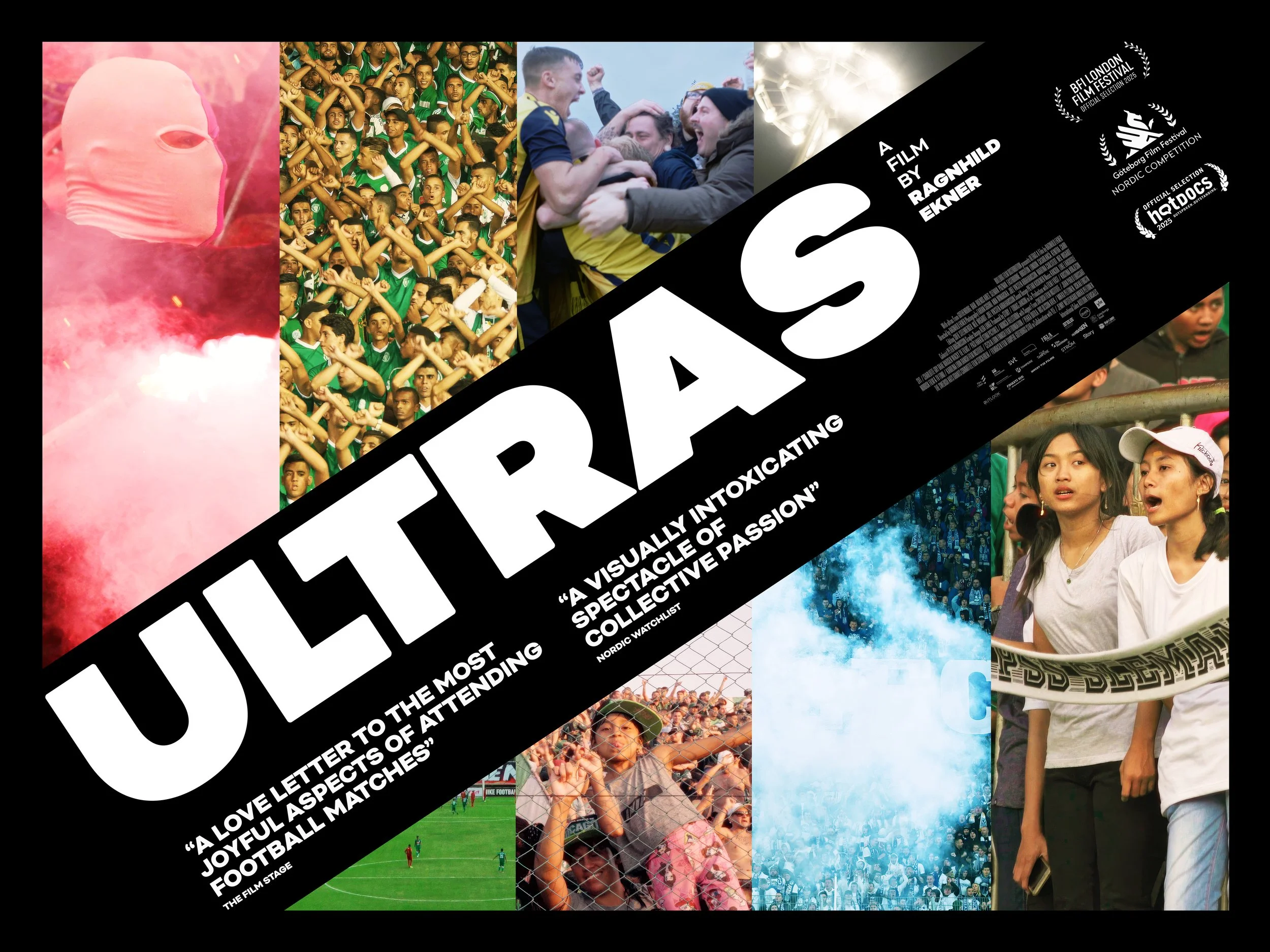
ULTRAS promo poster.
Ultras is showing in England and Scotland across May and June via Bulldog Films. Details of screenings are here
It is also available to stream via Amazon Prime Video and Apple TV.