San Siro: Impossible heritage
Words: Tom Reed
Images: Tom Reed
I sat alone with the dreams of children
Weeping willows and tall dark buildings, and
I've caught a fashion from the dreams of children
But woke up sweating to this modern nightmare
The Dreams of Children. The Jam.
Football’s lingua franca has always risen in the street, with its folklore being passed between kids kicking balls against walls.
Old Wembley and the Maracana became two of the most famous venues in the world, through the whispers of children, sight unseen, who dreamed of playing there and who exchanged stories as legend, scattered and traded like glass marbles.
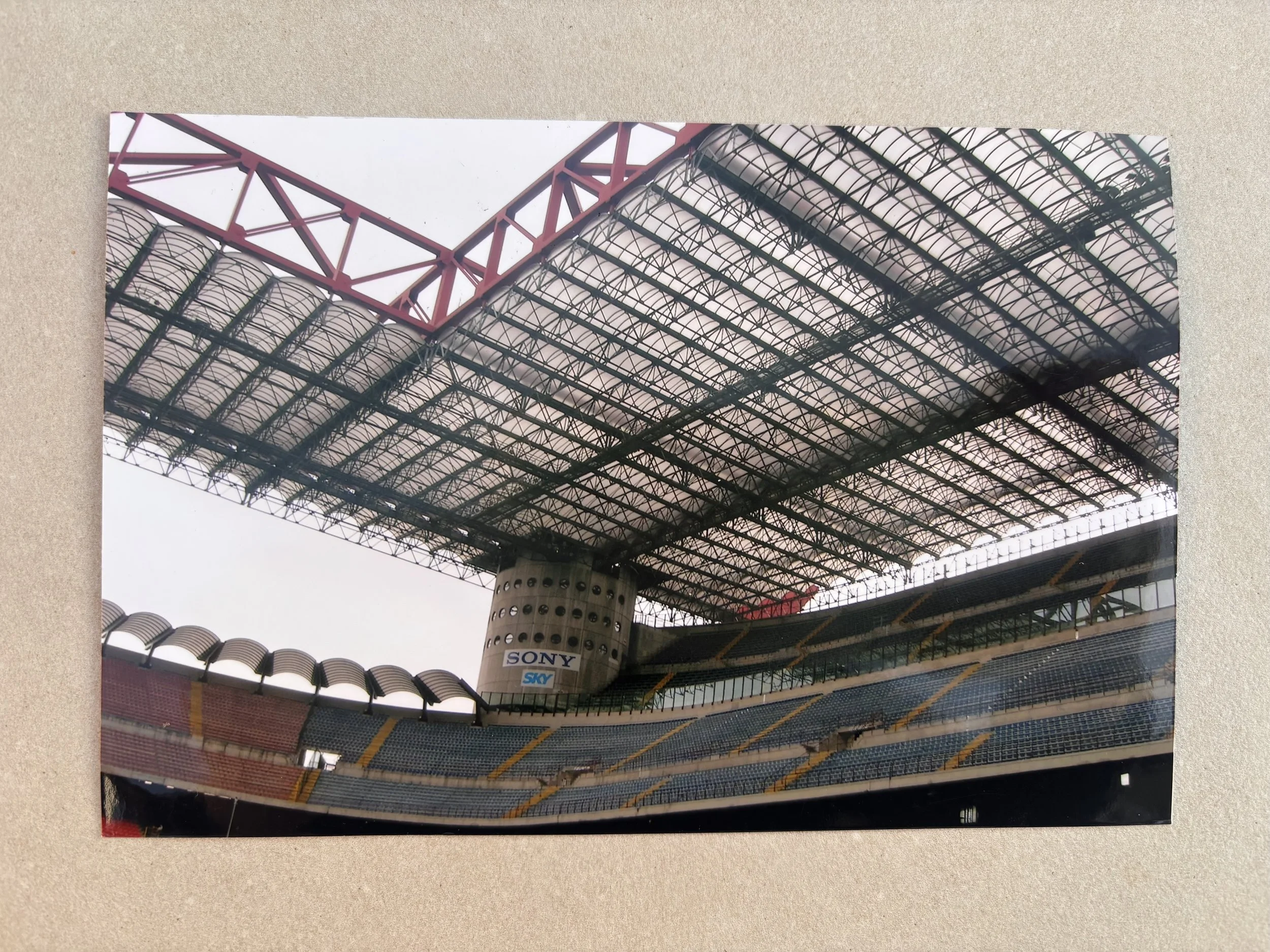
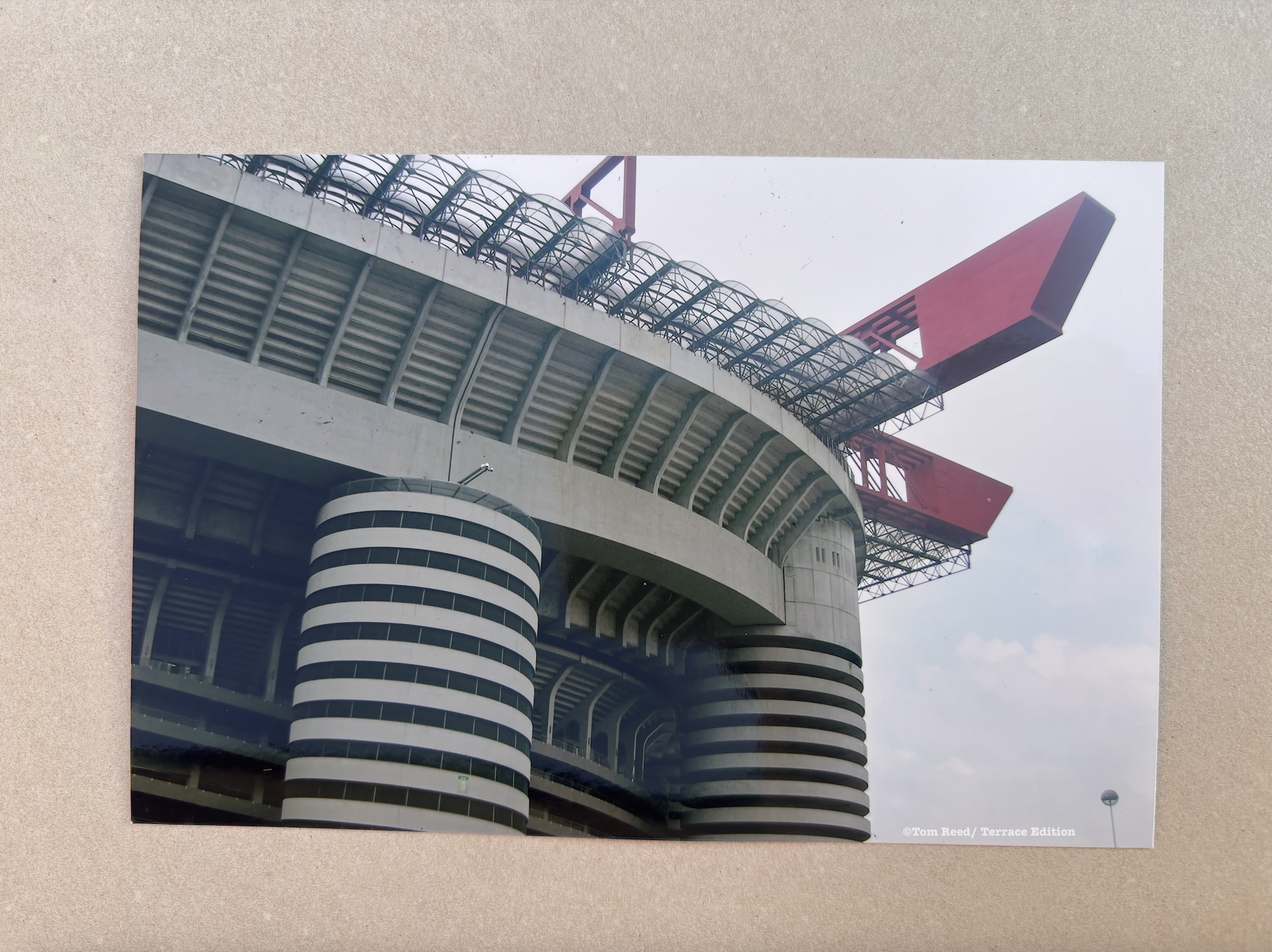
It is San Siro, or more accurately Stadio Giuseppe Meazza in Milano however, that has become the most visually recognisable stadium in global football with its spiral staircases and red girders that jut out temptingly like the stanchions on a goal.
If a photo of the San Siro was shown on the BBC TV quiz show “Pointless” and 100 people asked to name stadia by sight alone, then the bar would barely have started moving before it would be identified as the iconic “heaven in concrete” of the city of Milano.
©Tom Reed/ Terrace Edition. San Siro on film. c2005.
Yet, offer football fans or passers-by photos of modern-football stadia and there may well follow the “soulless bowl” phenomenon, where, despite huge sums spent on architectural commissions, designs blend into one another just long enough to create a split-second of disconnect.
A poor first touch, if you will.
The confirmation of San Siro’s majority demolition this week and the planned building of a new joint-venue wasn’t met with loud uproar from devotees of the stadium, after all, we follow a sport where abstract terms of “ambition” and being able to “compete” in a billion Euro industry are peddled in discourse of the game and how it is shaped.
Fans have become resigned to much-loved homes of football being razed to the ground in this arms race for super-stadia.
But, the past year and in particularly the build-up to the “derby de la madonina” between Milan and Inter had seen football supporters from all over the world making their own quiet pilgrimages to San Siro to see the stadium one last time before wrecking equipment eventually begins the upsetting job of destroying the concrete and metal structure as efficiently as HG Wells’ visitors did to Woking.
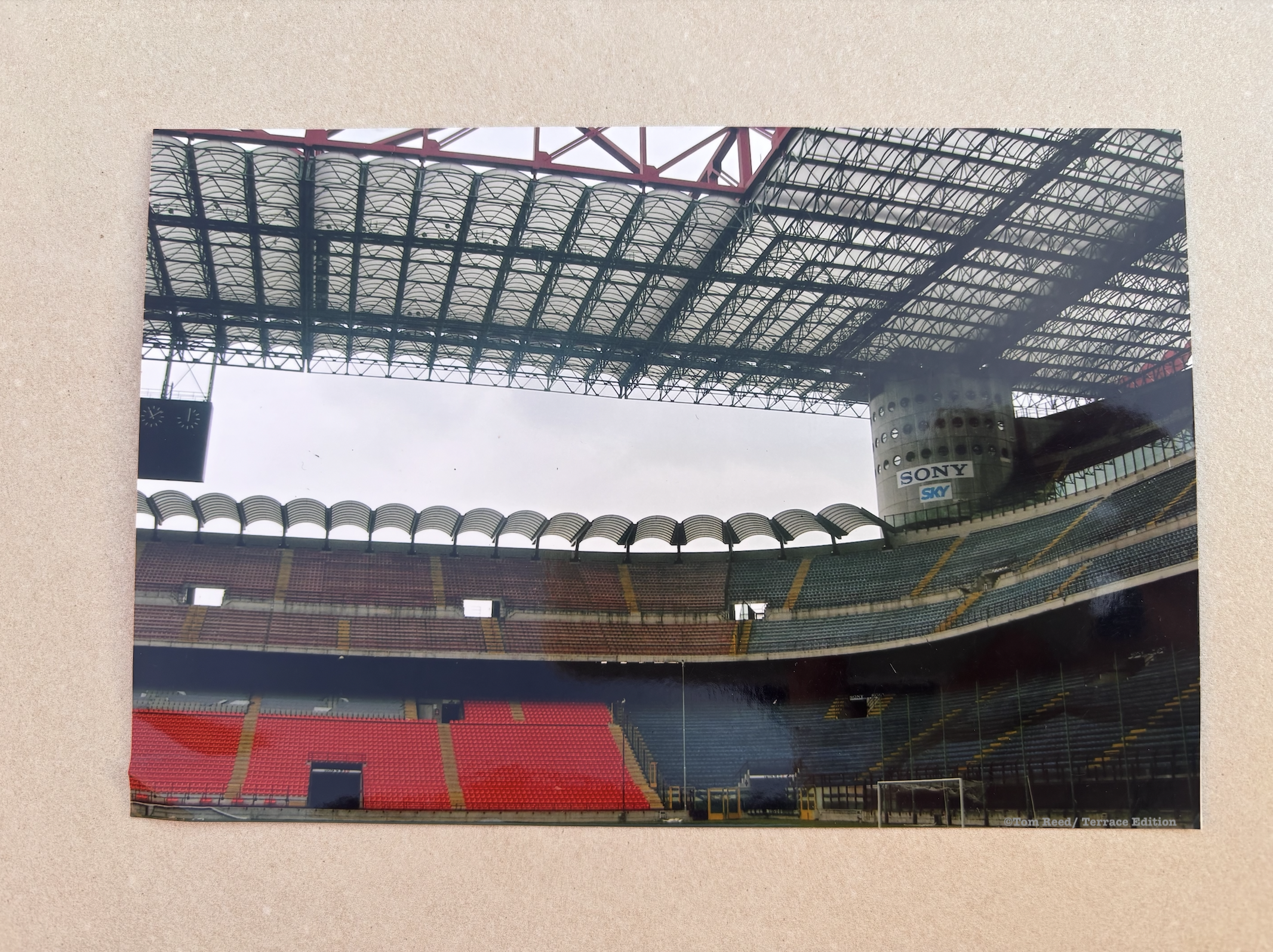
I went to San Siro in 2005 and remember a feeling that the place was too good to last, that the voices for a replacement from the powers-that-be would be amplified louder than the fans on the terraces, with their forlorn mega-phones.
©Tom Reed/ Terrace Edition. San Siro on film. c2005.
The name for the new stadium in Milano, the “Generali”, (for sponsorship purposes) seems apt, given the broad brush diversion from the current emblematic San Siro to a new design leaning on Milan’s Duomo church.
San Siro has become a cathedral of world football, because people have decided that it is a place of worship. Norman Foster + Partners and Manica’s new designs try and bridge the gap of devotion too bluntly, despite setting out to bring together a “striking structural form with a powerful rhythm”.
Leading football stadium website StadiumDB.com was moved to note the similarities between the Generali visuals and the proposed Washington Commanders’ future NFL stadium designed by HKS, saying that the “two future stadiums on different continents look surprisingly alike”.
These comparisons may prove uncomfortable to the architects, given the Norman Foster + Partners’ website describes the Generali plans as being “authentically and unmistakably Milano”.
Moreso for football supporters conscious of an increasing US influence on European sport, extending from club ownership to Gridiron spheres of support.
Indeed, the Generali plans follow on from the mixed reaction to Norman Foster + Partners concepts for a new home for Manchester United, with some detractors comparing what Foster called a “vast umbrella” to a “circus tent”.
Let’s not forget that Norman Foster + Partners were heavily involved with the designs for the “New” Wembley stadium, which opened in 2007 but has divided opinion on being a worthy successor to the twin-towered venue which hosted the 1966 World Cup.
Respected journalist Nick Miller of the Athletic, wrote a whole piece on “New” Wembley titled “Why everyone hates Wembley (sort of)”, furnished with the line “It would be fair to say that the new stadium has not exactly been taken into the hearts of the nation.”
You can understand then, the concerns of brave ultras of the Curva Nord at FC Internazionale Milano, who protested this week outside the launch for the Generali, holding up a banner which read “you’ll never turn off San Siro’s lights”.
The black and blue supporters chanted “Hands off San Siro” for several minutes, making the symbolic point that not everyone is invested in the plans in Western Milan.
Modern football marketing often plays on the centrality of supporters but with very few vestiges of fans having ownership over their own game.
Indeed, it is interesting that Norman Foster + Partners have drawn up some of the world’s landmark airports such as Beijing Capital Airport, areas of transit rather than belonging.
Inter and Milan’s ultras may wonder about the future of their curve, sweeping coves of support but also tight zones of vocal and hard-core fervour.
Football is a brief 90 minute game but modern football stadia are now stretched to be considered as leisure destinations, so much so, there is an online conversation on toilet facilities at San Siro.
It seems strange that with modern Western society valuing all things retro and antique and with a vinyl resurgence over music downloads, that football takes the opposite approach of pushing the brand spanking new into a point of reverence.
Everton FC have gone against the grain and made the choice of maintaining their cherished Goodison Park as part of a legacy project instead of reaching for the wrecking ball and it is now serving as a home to the Toffee’s women’s team.
At Rayo Vallecano in Spain, supporters created a human chain of protest around their stadium, against the building of a new bigger venue, stating that “they will not move us”.
Some have called the planned majority demolition of San Siro cultural vandalism but most acts of destruction take a lot of effort in order to tear apart community facilities. About 9-10% of San Siro has been reported to remain post-demolition but, it’s a slim legacy.
The case of San Siro may be looked back on as a regrettable dumping of not only an iconic stadium but also notions of football identity and heritage.
San Siro will one day be gone in the blink of an eye, but the repurcussions for the everyday fan and the soul of the sport will linger in the air and in the gutters, like ticker-tape on the curva.
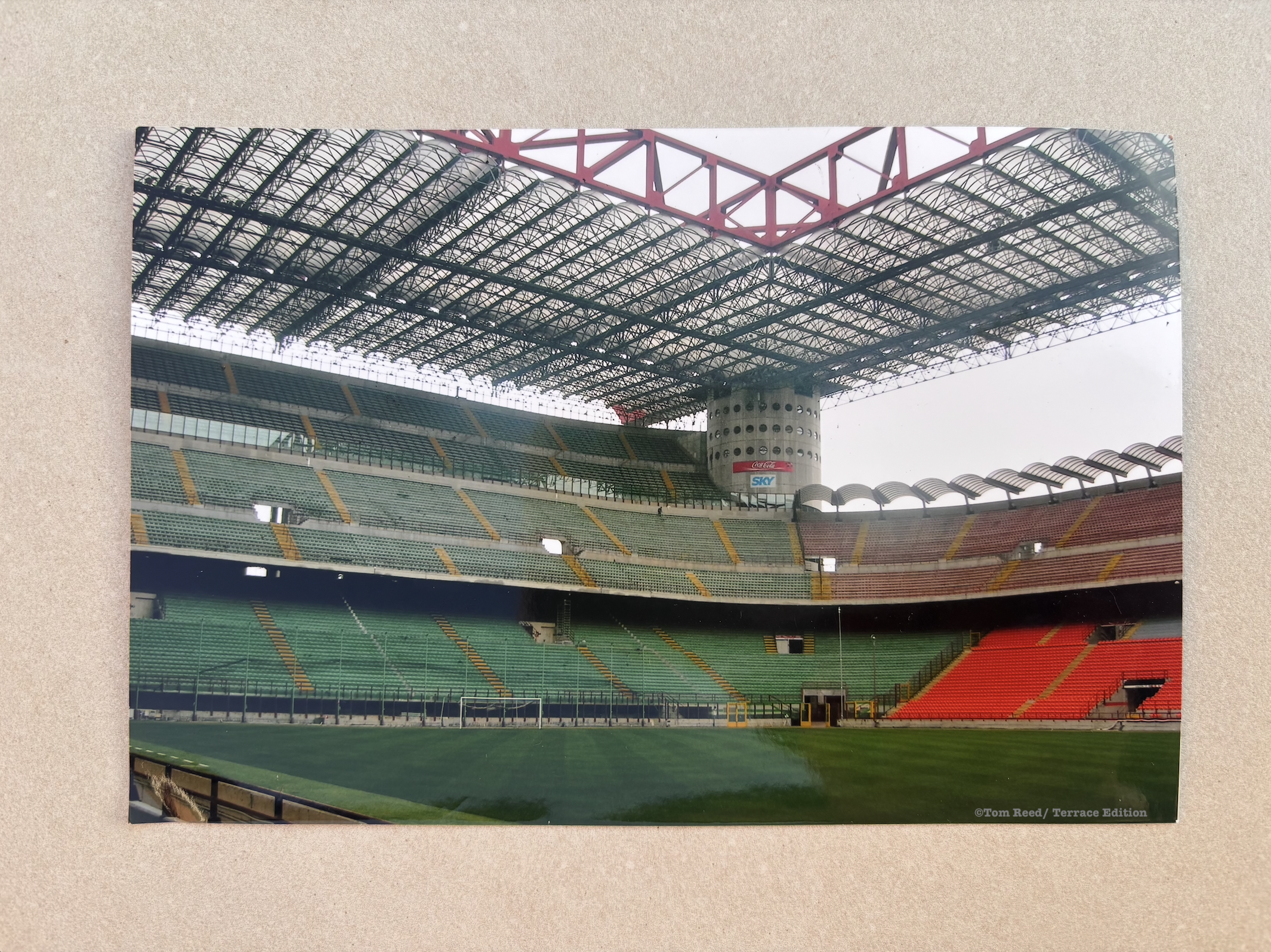
©Tom Reed/ Terrace Edition. San Siro on film. c2005.
San Siro’s to go they say
Gonna pull it down
Tell that to eight year old me
Italian football on the telly
Forget Wembley
San Siro’s the home
of those curly corners
Taking you to
heaven in concrete
They play in the dark
Just like we did
But switch on the lights
So you can watch the Kings
of headers and volleys
You could walk out
on those giant red girders
and see the whole city
We had Findus Crispy Pancakes
for tea
They had two great teams
Bergomi,
Van Basten.
Tom Reed is Terrace Edition Editor and can be found on X and Instagram: @tomreedwriting.
Tom is also on Bluesky @tomreedwriting.bluesky.social