Northampton: Pato. sapateiros. samba soul.
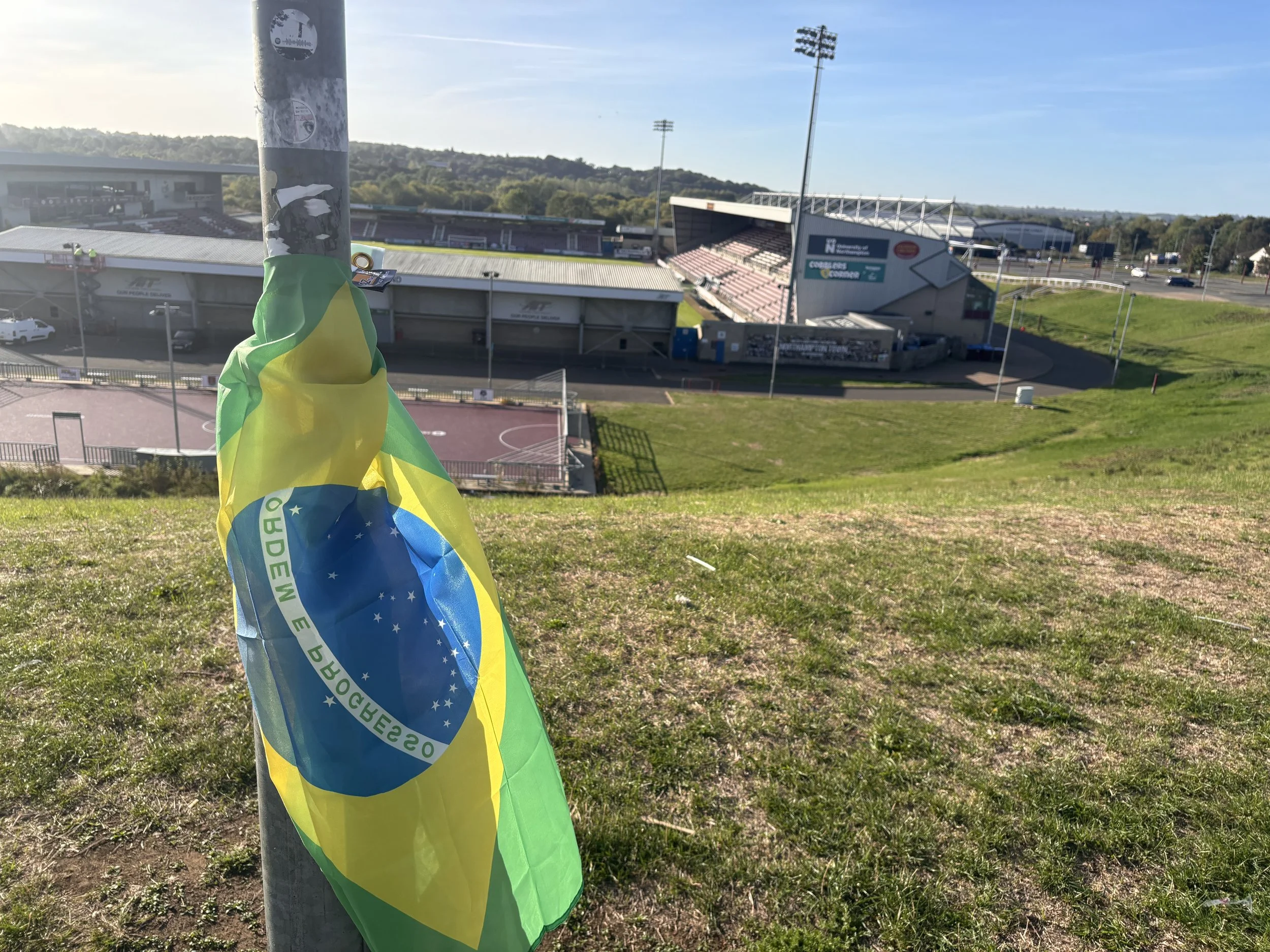
Words: Tom Reed
Images: Tom Reed
Publicado em português abaixo
The fields are green, the skies are blue
The river Nene goes winding through,
The market square is cobbled stoned,
It shakes the old dears to their bones,
No finer town you’ll ever see, no finer town, there’ll ever be,
Big city lights don’t bother me,
Northampton Town I’m proud to be.
(Northampton Town anthem)
The connection between the East-Midlands market town of Northampton and Brazil is not obvious.
A google search of the two brings up a Brazilian ju-jitsu class and not much else.
There’s a Portuguese cafe on the old market square in the town, where you can get a guarana to put some pep in your step.
A churrascaria restaurant serving delicious rodizio meats on rotating skewers never really caught on and closed many years ago in the Sol Central leisure mall.
Meanwhile, Jenny’s restaurant on Gold Street does a roaring trade with the old dears of the club anthem, wolfing down food cooked in the plain English style.
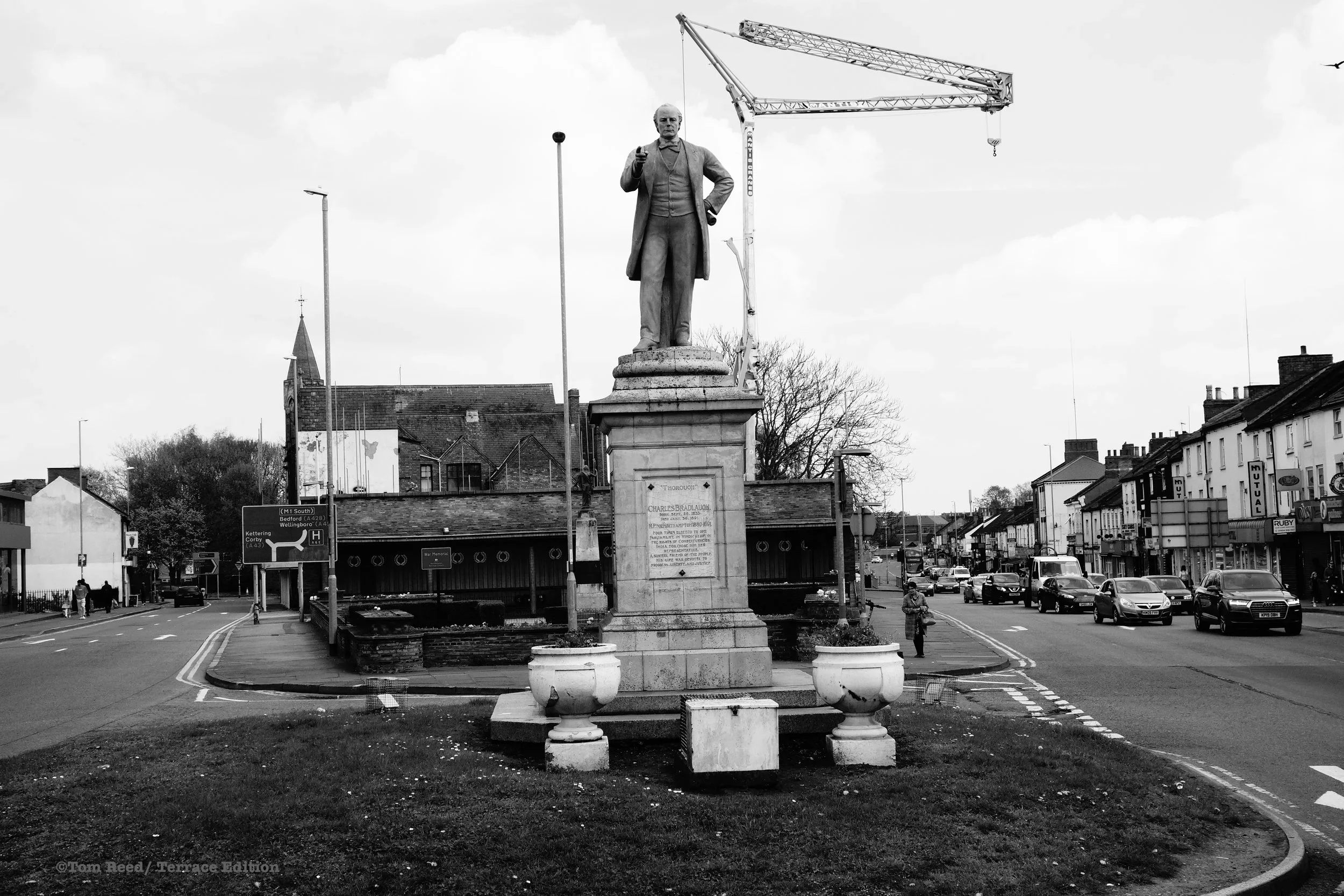
©Tom Reed/ Terrace Edition. Charles Bradlaugh statue. Northampton.
Fry-ups, cups of tea.
Yet, the link between Northampton and Brazil, is about to be bridged spectacularly with the acquisition of the town’s football club by a consortium fronted by Selecao and Milan legend Alexandre Pato.
From Internacional to Northampton. São Paulo to Semilong. It feels like a fever dream, but in a way, makes a strange sort of sense.
“Born to suffer” reads a Northampton Town FC flag hung by supporters, for their club, which has seen a battle against the odds for much of its existence since being formed way back in 1897.
The Cobblers have been through all too regular financial crises over the past 35-years, starting with the implosion under Michael McRitchie in the early 1990’s that birthed the first ever supporters’ trust.
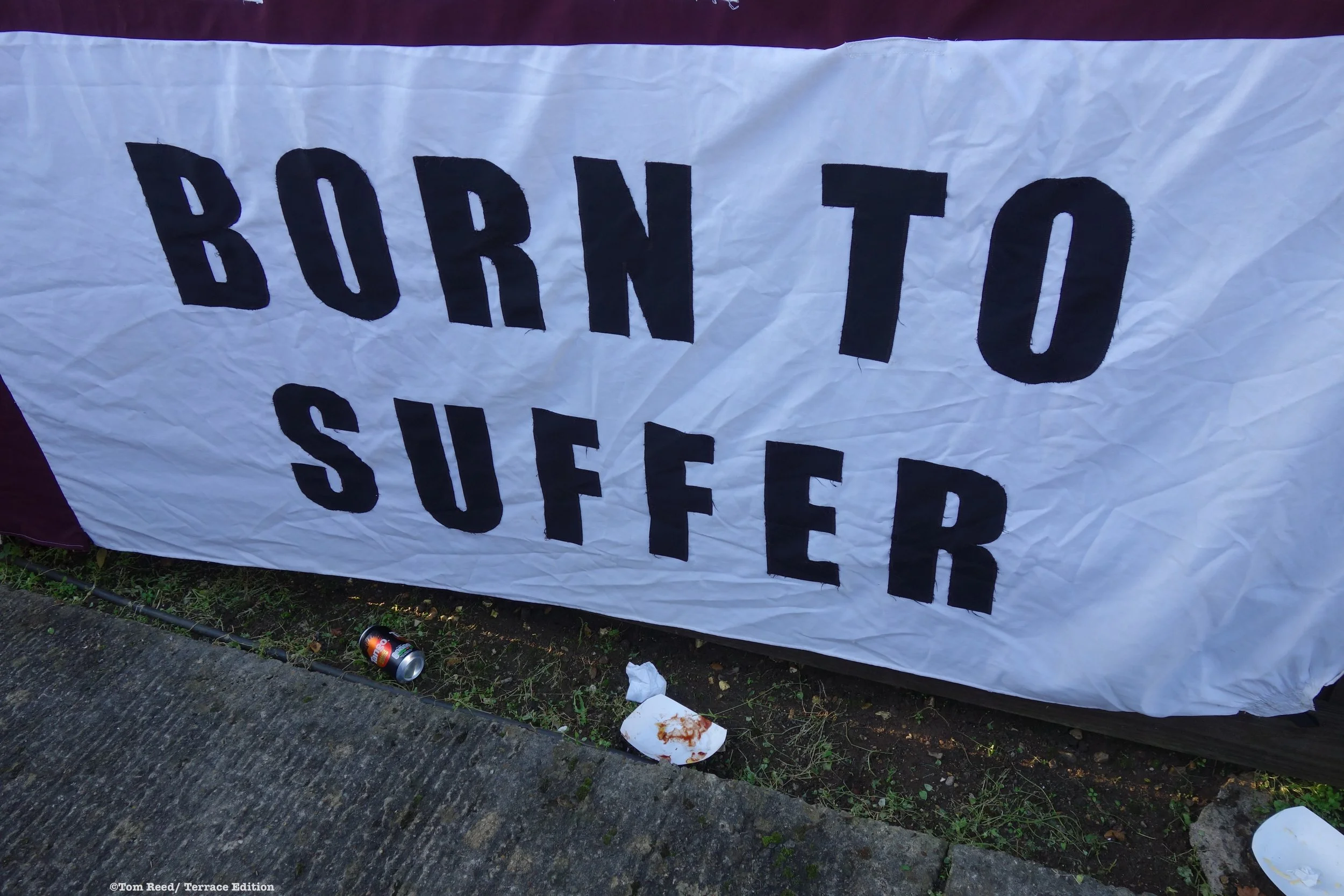
©Tom Reed. Northampton fans’ flag.
Then came the ITV Digital crisis in 2002, which had various teams take a huge budget hit via the collapse of the TV provider.
Worst of all, was the 2015 “Missing Millions scandal” where a £10.25 million council loan for stadium redevelopment did not reach its intended target, plunging the Cobblers into turmoil, facing insolvency and with players going unpaid for a period.
These financial earthquakes produce tremors for years to come, they hurt relationships and strangle progress.
Hence, there are are few shots of trophies being lifted in the slick video welcoming Pato and the Sports Alpha Capital consortium to the club, because very few trophies have ever been won at Northampton Town.
Instead, the promo video includes a niche reference to Northampton’s shoemaking industry from which the Cobblers derive their nickname, albeit a moniker which relates to the act of shoe repairing rather than making.
Visuals follow, on the frustrating feat of Northampton climbing all the way from the fourth division to the first in the mid 1960’s before tumbling all the way back down to the basement division.
But Pato’s route into football and indeed significant parts of his career were no crystal stair, suffering childhood cancer affecting use of his arm, the limb all kids need to shield the ball from bigger players.
Money was limited in Pato’s household growing up, according to an interview with The Players’ Tribune, meaning he had to take to the field initially with boots containing both rubber and metal studs.
Maybe that’s why he now has a penchant for fine footwear, of which Northampton’s shoe factories such as Trickers, Crockett and Jones and Church’s, produce the best in the world.
The struggles of the player and the club make the partnership one made in the gutter and by the gods.
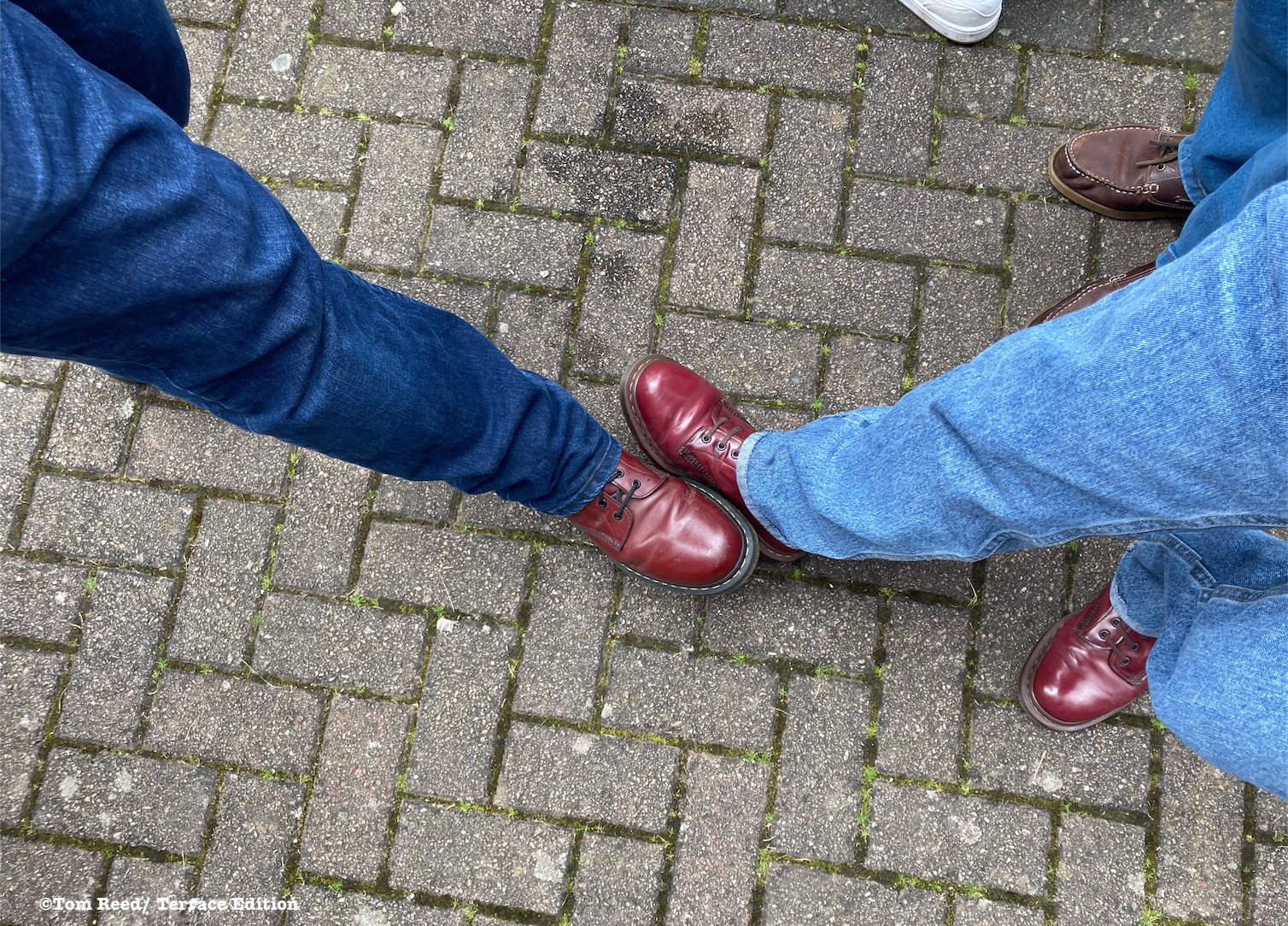
©Tom Reed/ Terrace Edition. Northampton fans’ flag.
Northampton is often said to be a rugby town and how can it not, given that it is home to the current PREM rugby champions, the Saints.
Football has always seemed like a poor relation in Northampton, with a club that, despite managing to retain a place in the EFL, sometimes by the skin of their teeth, has never matched the slickness of the Saints operation.
Northampton Saints supporters go to Paris and Biarritz to watch their side, Cobblers fans go Crawley and Accrington.
But you’ll see more vans of Sunday league players parked up on verges at the weekend, more round balls bouncing around park pitches and kids playing football than you will people practising rugby.
Northampton may be a rugby town but it sure loves its football, it’s just that its football has been hard to love.
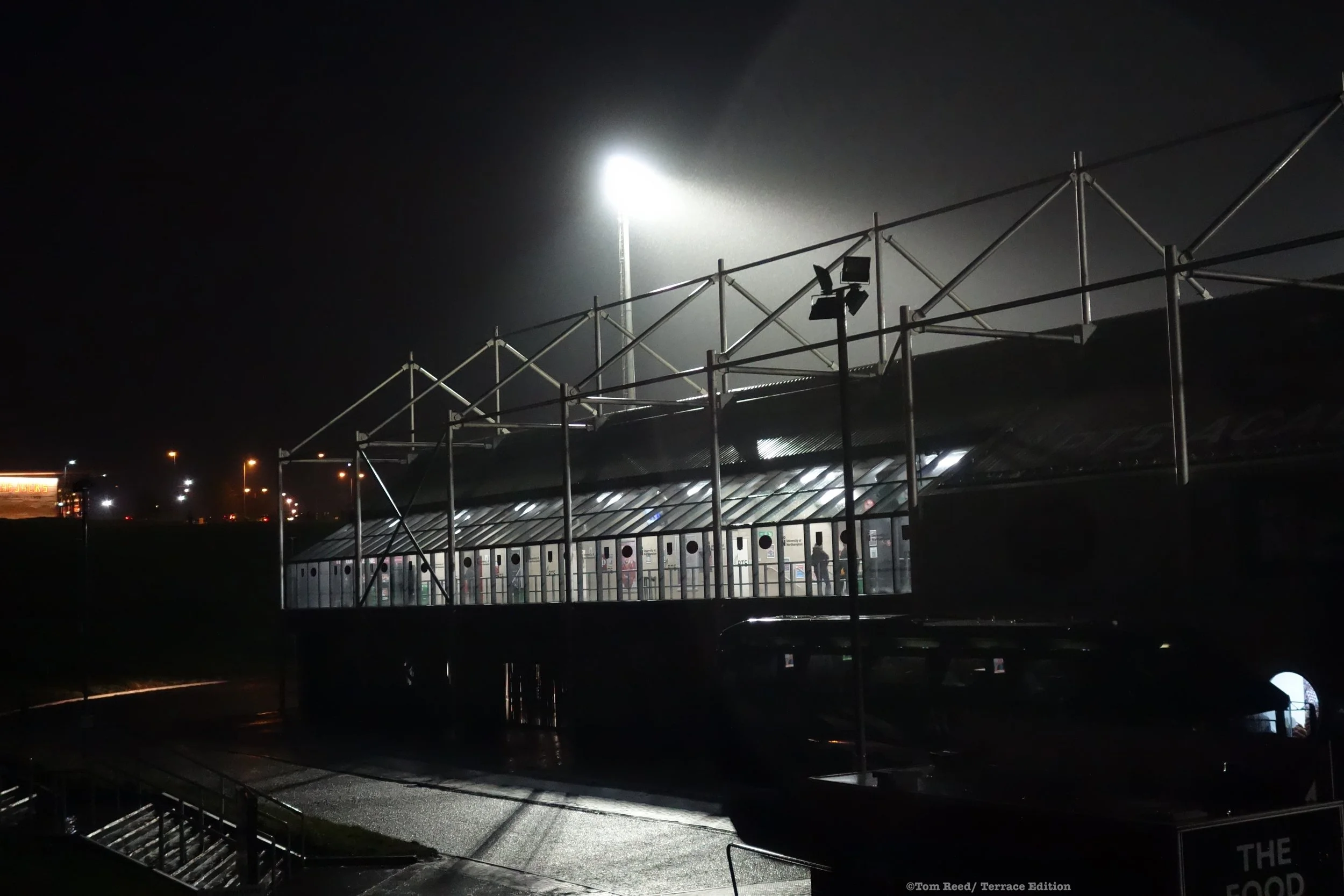
©Tom Reed/ Terrace Edition. Sixfields at night.
“Did you know that George Best put six past the Cobblers?” is a phrase that every Northampton Town supporter will have heard over the years, usually by a “plastic” Man Utd or Liverpool supporter in one of the town centre pubs.
Of course, every Cobblers fan knows, all too well, that Besty scored six goals at the old County Ground at Northampton in a 1970 FA Cup rout where the red army claimed the terraces and Town lost 8-2.
The sight of forlorn Cobblers’ keeper Kim Book falling to the ground when Best walked round him for his sixth was imprinted onto the psyche of the fans and in truth, the club was never the same again.
60’s attendances of over 20,000 at the County ground slowly dwindled. In 1984/85 Northampton registered a record lowest league gate of 942 hardy punters against Chester City.
2668 showed up in September 1992 when Northampton took on Hereford United. The Bulls had four players sent off but Cobblers could still only draw 1-1 with the visitors.
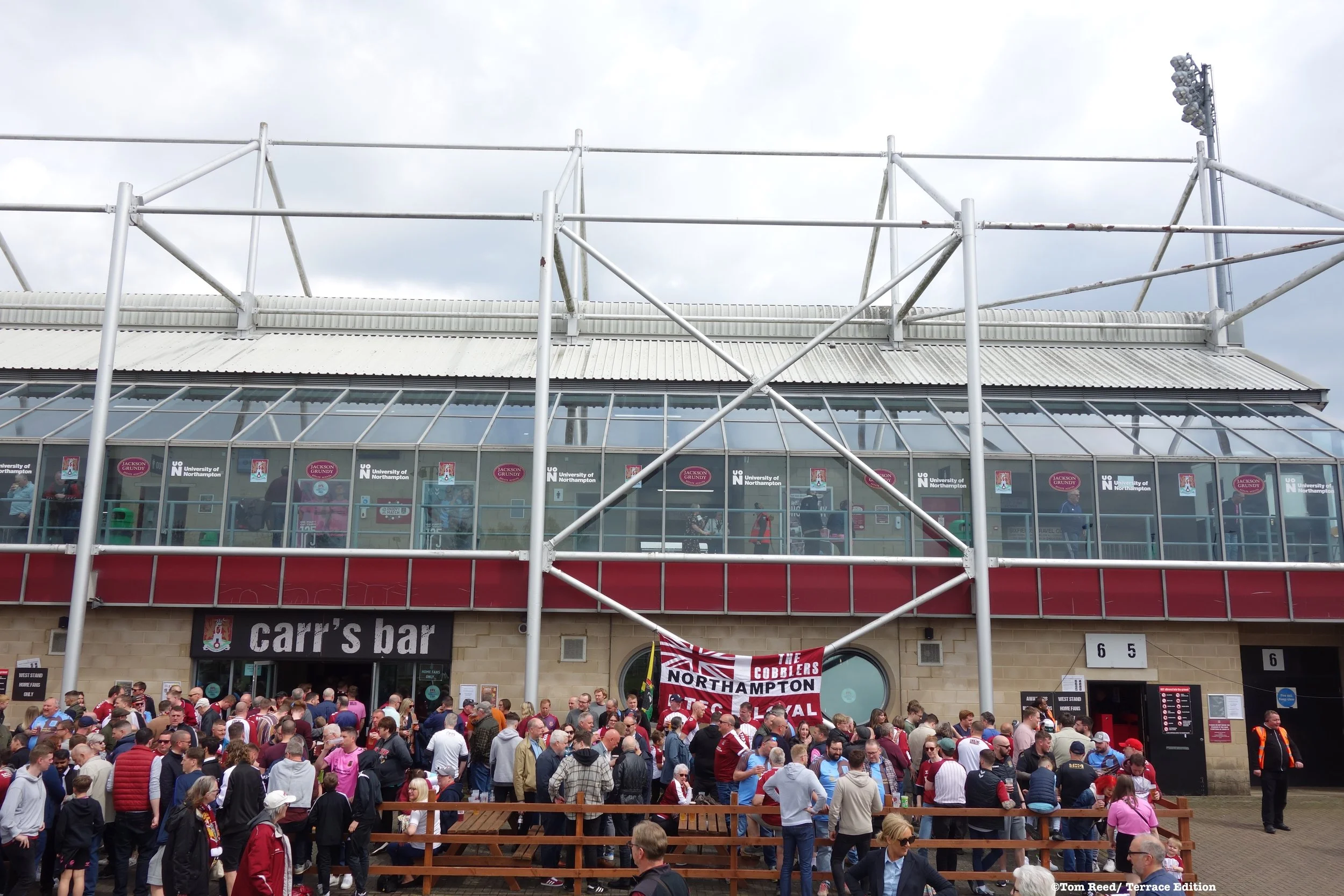
©Tom Reed/ Terrace Edition. Shoe army.
I was there at the Hereford match, watching on from the family enclosure with a mix of bemusement and amusement.
A year later, I stood under the tin roof of the Hotel End as Northampton thrashed Mansfield 5-1 at the County Ground. Fans, ironically, sang “it’s just like watching Brazil” but the very next match, Cobblers travelled to Scunthorpe and lost 7-0.
Yet, Northampton Town fans have never lost hope, being some of the most loyal fans in the country.
When the Cobblers pulled off the “great escape” in 1993, having travelled to Shrewsbury Town needing to win to avoid relegation to non-league, the Cobblers fans invaded the pitch at Gay Meadow after Pat Gavin scored a goal with his bum to seal an epic 2-3 comeback after being 2-0 down at half-time.
The Town fans took to the pitch and one Northampton supporter lost himself in the moment shouting “champions” at the TV camera before adding “next season” as a caveat.
That illusive genie “potential” has always weighed heavy at Northampton Town, with its position as one of the largest towns in Europe, in a county with no other EFL level clubs and a population not far off a million people.
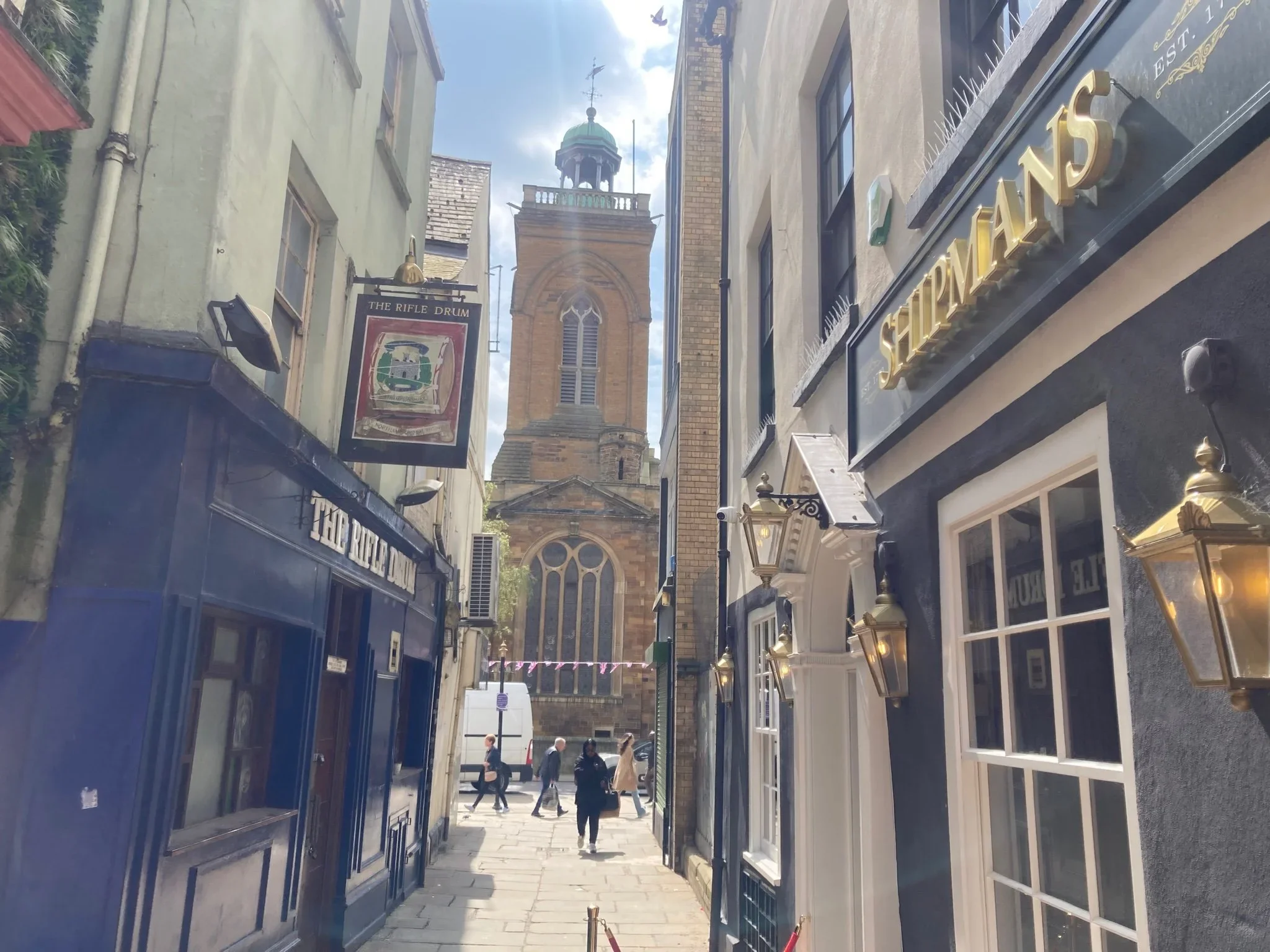
©Tom Reed/ Terrace Edition. Northampton town centre.
By the mid-late ’90s, with the Cobblers’ move to the all-seater Sixfields stadium there was a resurgence under Ian Atkins that saw Northampton reach consecutive play-off finals and actually coming 90 minutes away from what is now the Championship.
44,250 Northampton supporters made the trip from the teyn to Wembley’s twin towers in 1998 versus Grimsby Town, a record following from a lower league club at the time.
The local villages from Naseby in the North towards Leicester and Deanshanger in the South towards Milton Keynes were Cobblers strongholds.
But, bit by bit that fell away, blue Leicester shirts and the pitied white of MK Dons began to pop up more and more.
While there were nearly 45,000 Cobblers at Wembley in ’98, there were just over 5,000 hardy Northampton fans at Sixfields for the club’s most recent match against Rotherham in September 2026.
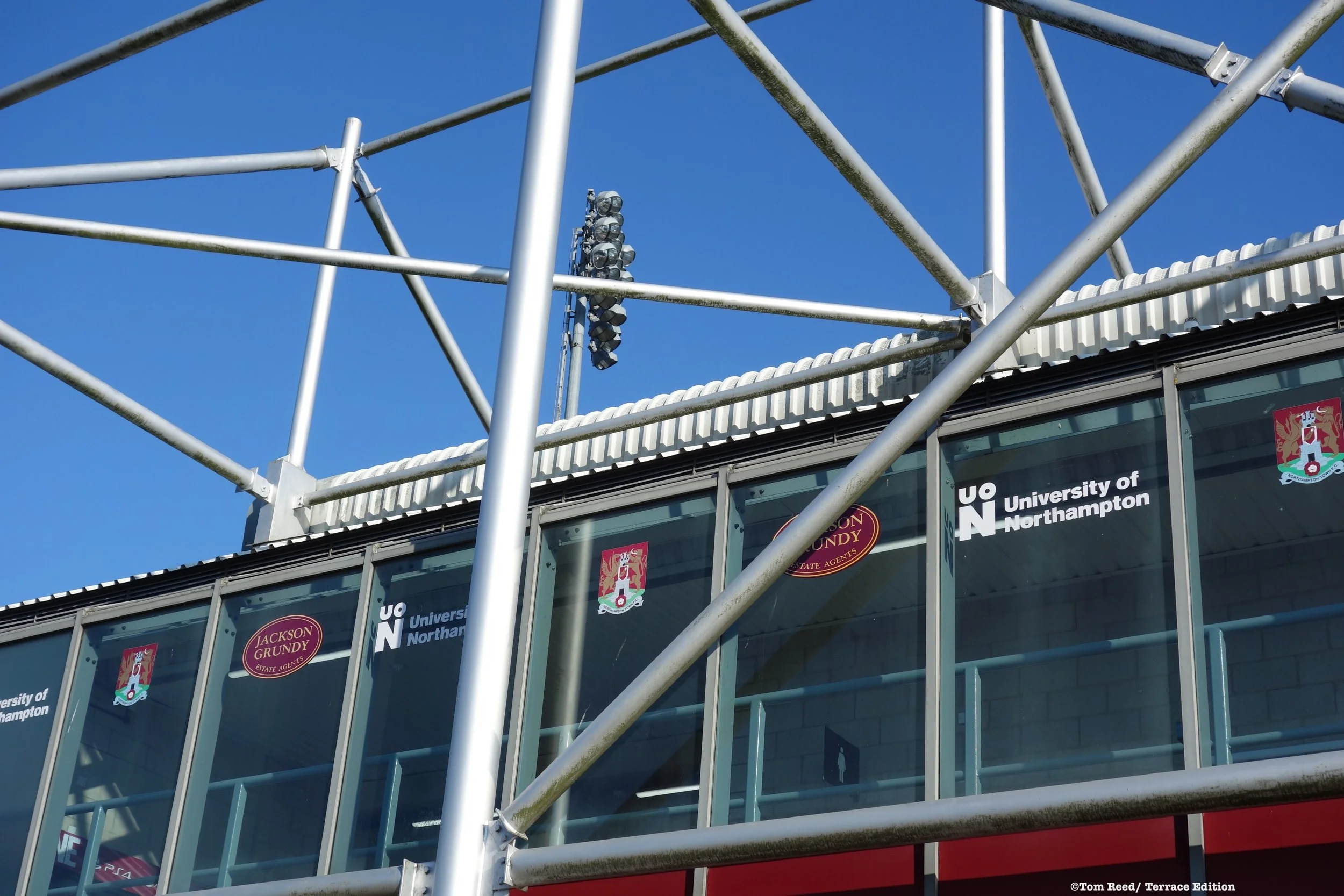
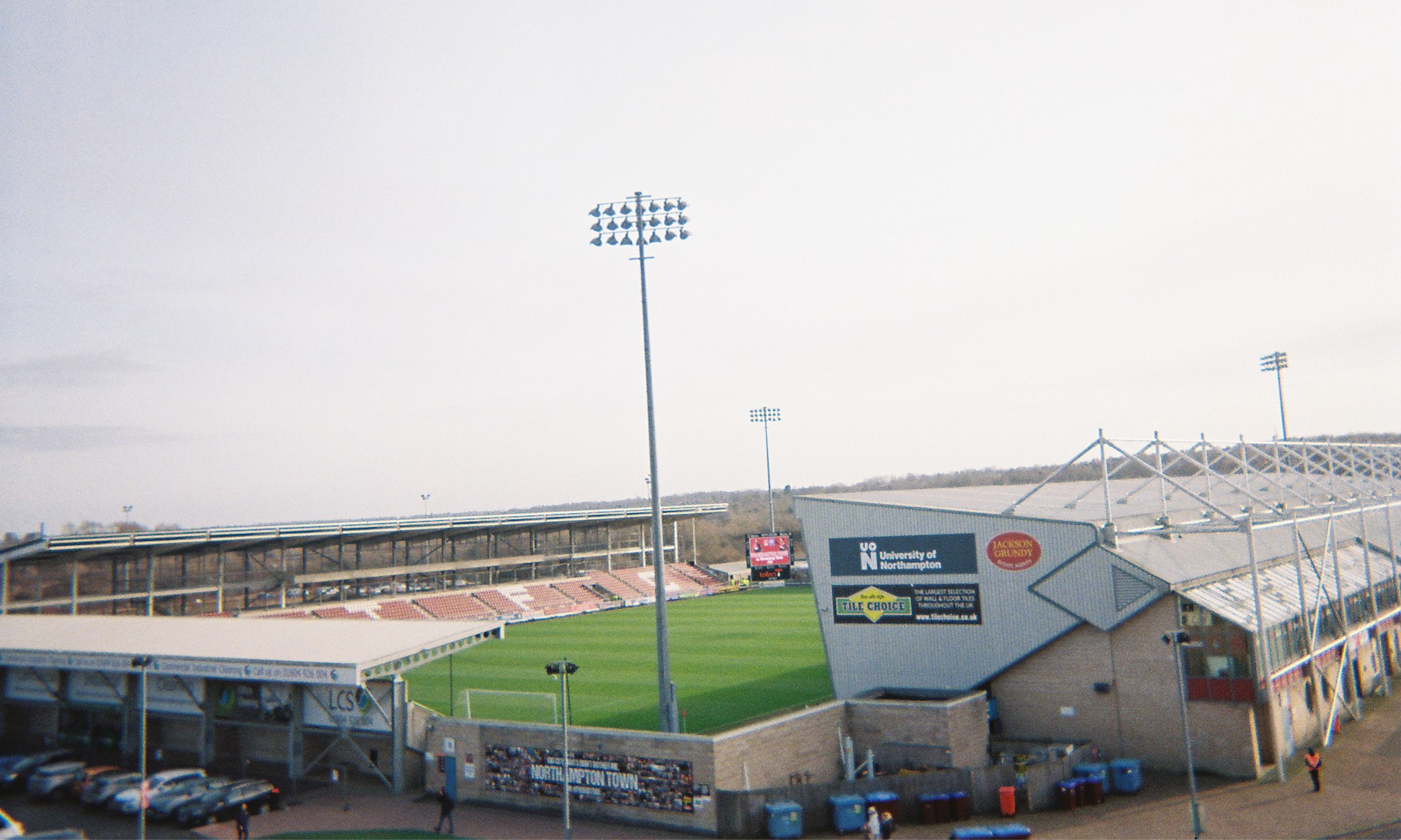
©Tom Reed/ Terrace Edition. Sixfields floodlight.
The game ended 0-1 to the visiting team, leaving Northampton just one place above the relegation zone in the bottom division.
Enter Pato and co, stage right, at a critical time in the club’s history and one, like the song blasted out at Wembley during Town’s initial playoff success in 1997, where “the only way is up”.
One of Sports Alpha Capital’s initial challenges will be to grow attendances at the club and to get the town engaged.
The Cobblers location at the Sixfields stadium, situated on the edge of town near the Upton estate has often meant the feel of a club in the town rather than the club of the town. There is very little visual presence for the Cobblers in the town centre itself, no club shop, few visual cues.
All too many United tops and even those of Paris Saint-Germain worn by lads who are nearer to the Bellinge estate than the Bois de Boulogne.
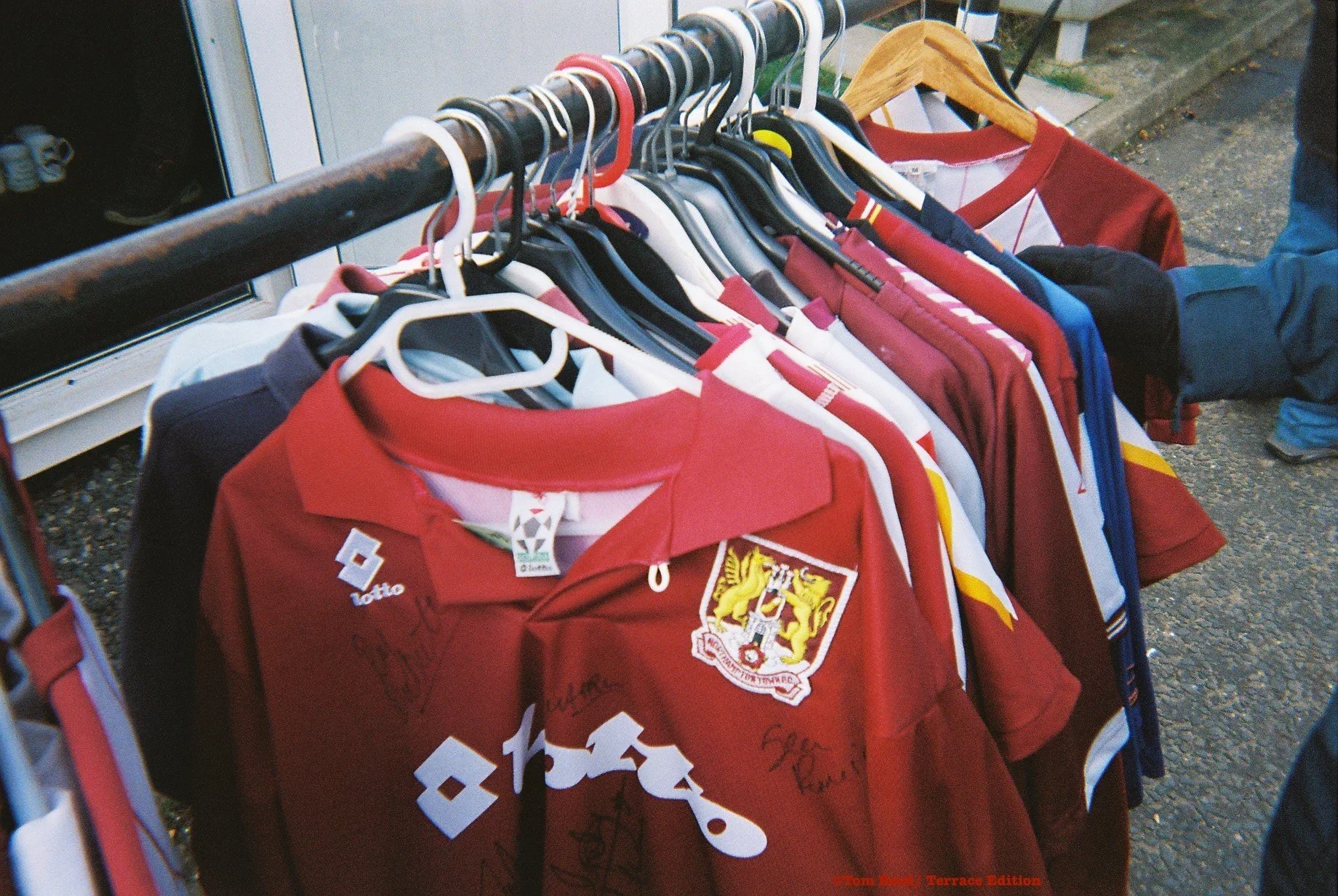
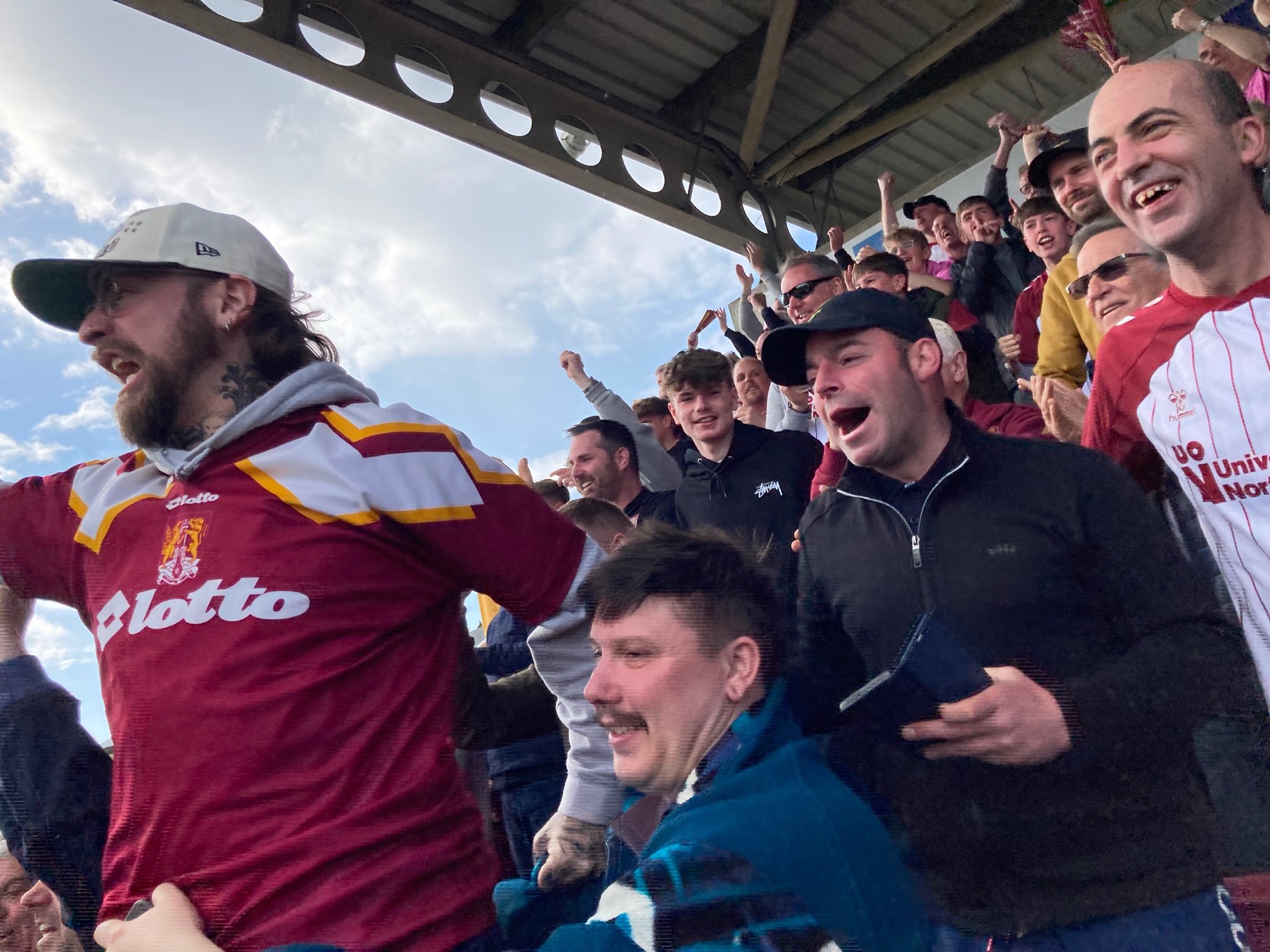
©Tom Reed/ Terrace Edition. 90s Northampton jersey by Lotto sports.
The atmosphere at Sixfields has rarely lived up to the one produced on the old Hotel End terrace at the County Ground, mainly due to the all-seater quiet that effects much of English football and it will be a challenge to get the shoe army in full voice again at home, like they can be away.
Pato, a youth prodigy himself will know the power of effective coaching from a young age and harnessing the local talent will be a further task for the Brazilian consortium.
Northampton has a significant catchment area and talent pool but too often has lost good local players to clubs up the food chain such as Aston Villa but new investment in the Cobblers academy may see the talent drain being plugged.
Ivan Toney is a prime example, the England international who grew up on Northampton’s Eastfield estate and came through the Cobblers academy but was sold to Newcastle United for a relatively modest fee.
Then you have Carney Chukwuemeka, of Borussia Dortmund and Austria, again, who started in the Northampton youth setup but left the club for Aston Villa at just 12 years-old under the Elite Player Performance Plan.
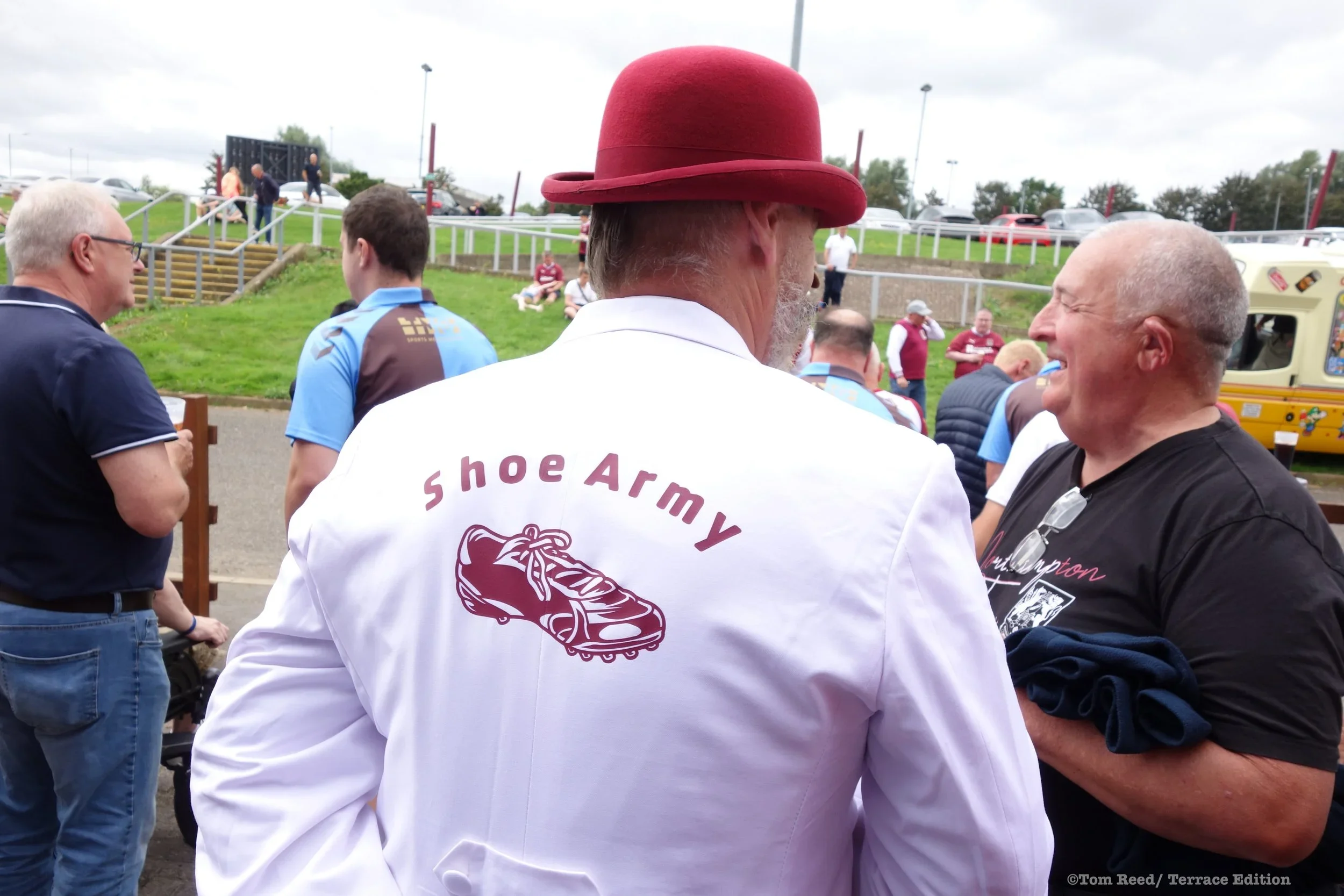
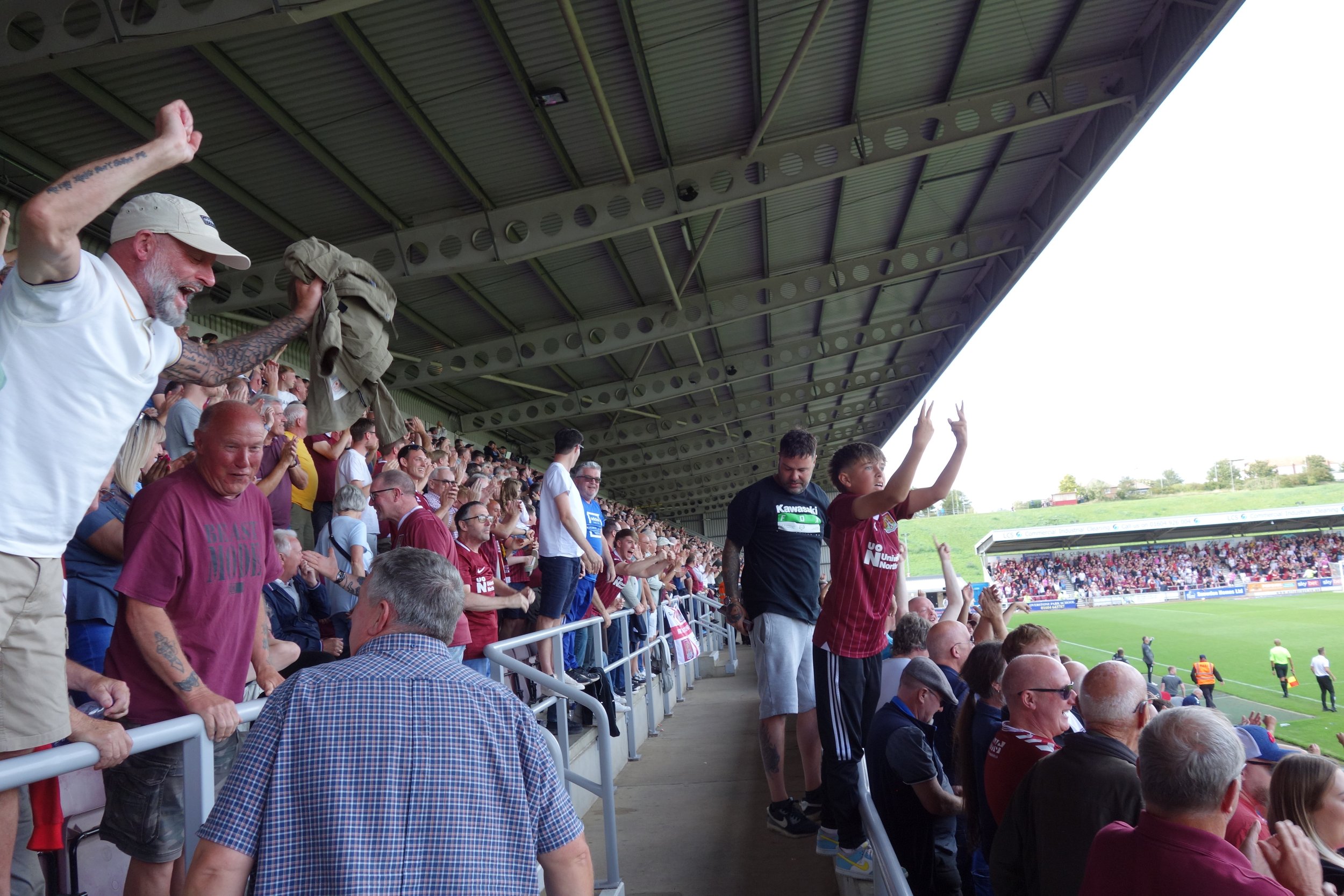
©Tom Reed/ Terrace Edition. Shoe Army.
People might be asking Pato why Northampton? But the answer is, why not?
What the town does has going for it is its position as a sporting centre, boasting not only the aforementioned Saints but also the T20 winning Northants County Cricket team and Silverstone, home of the British Grand Prix just a short drive down the road.
In addition, national hunt horse racing is due to return to nearby Towcester in 2027, meaning Northamptonshire has a unique roster of football, rugby, cricket, F1 and jumps horse racing, through which to create a mutually beneficial sporting brand and drive investment into the county.
As a child, after having fallen in love with Northampton Town at its beautifully ramshackle County ground, I was thrilled to save up for a yellow and blue Cobblers third shirt, sponsored by non other than local flooring merchants “Carpet Supacentre”.
A guy stopped me in the Grosvenor shopping centre, staggered that a kid would support the Cobblers, who were going through one of their regular bad patches.
Now, children in Northampton might be proud to wear the claret and white and those shirts will bear the name Pato.
Those older fans whose nearest embrace with samba football came through the twinkled toed Efon Elad might see a Brazilian wonder-kid or two grace the Sixfields turf.
Maybe the rodizio restaurant can open again and Northamptonians feast on steak served with silverware.
Maybe we’ll be Champions next season.
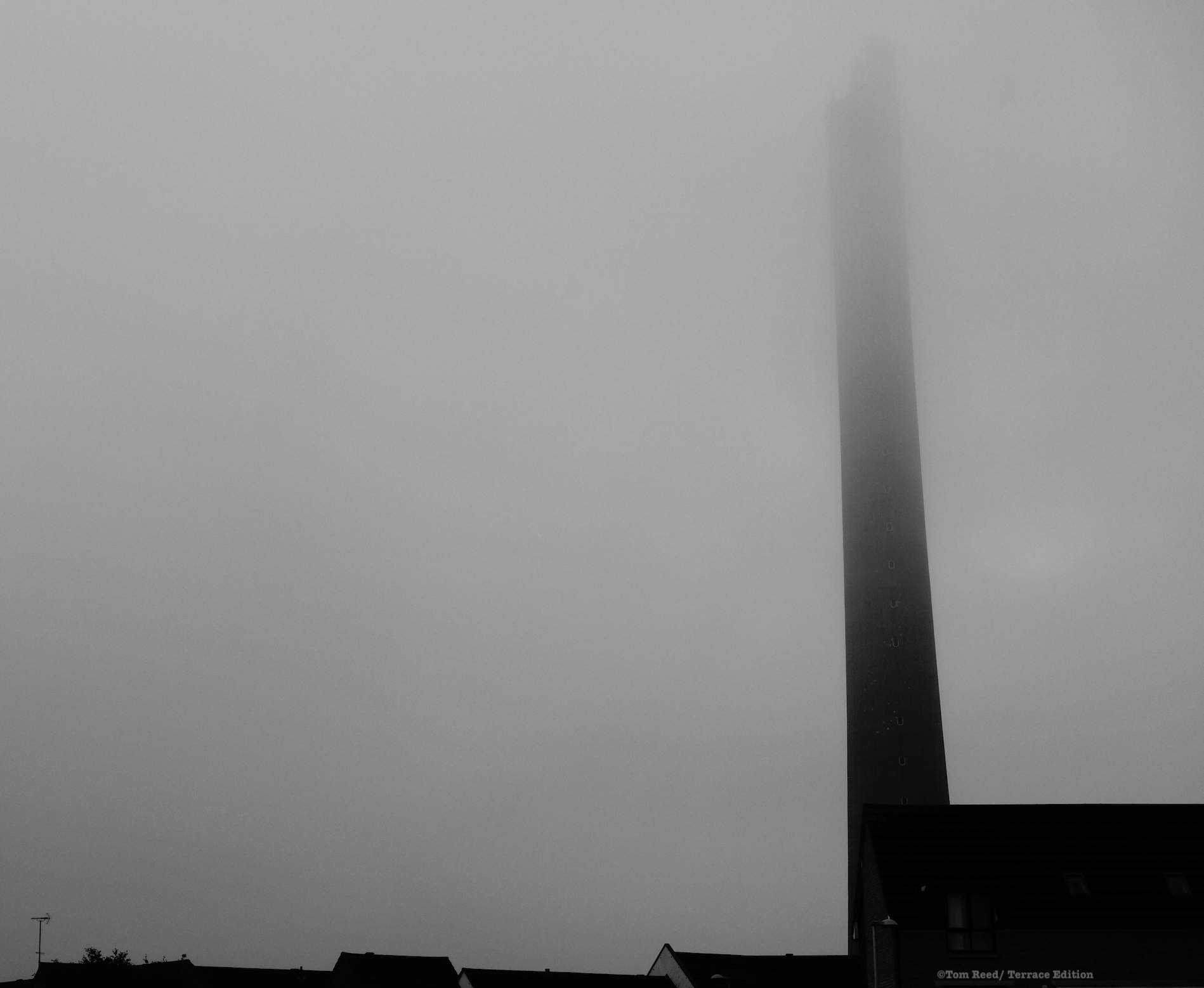
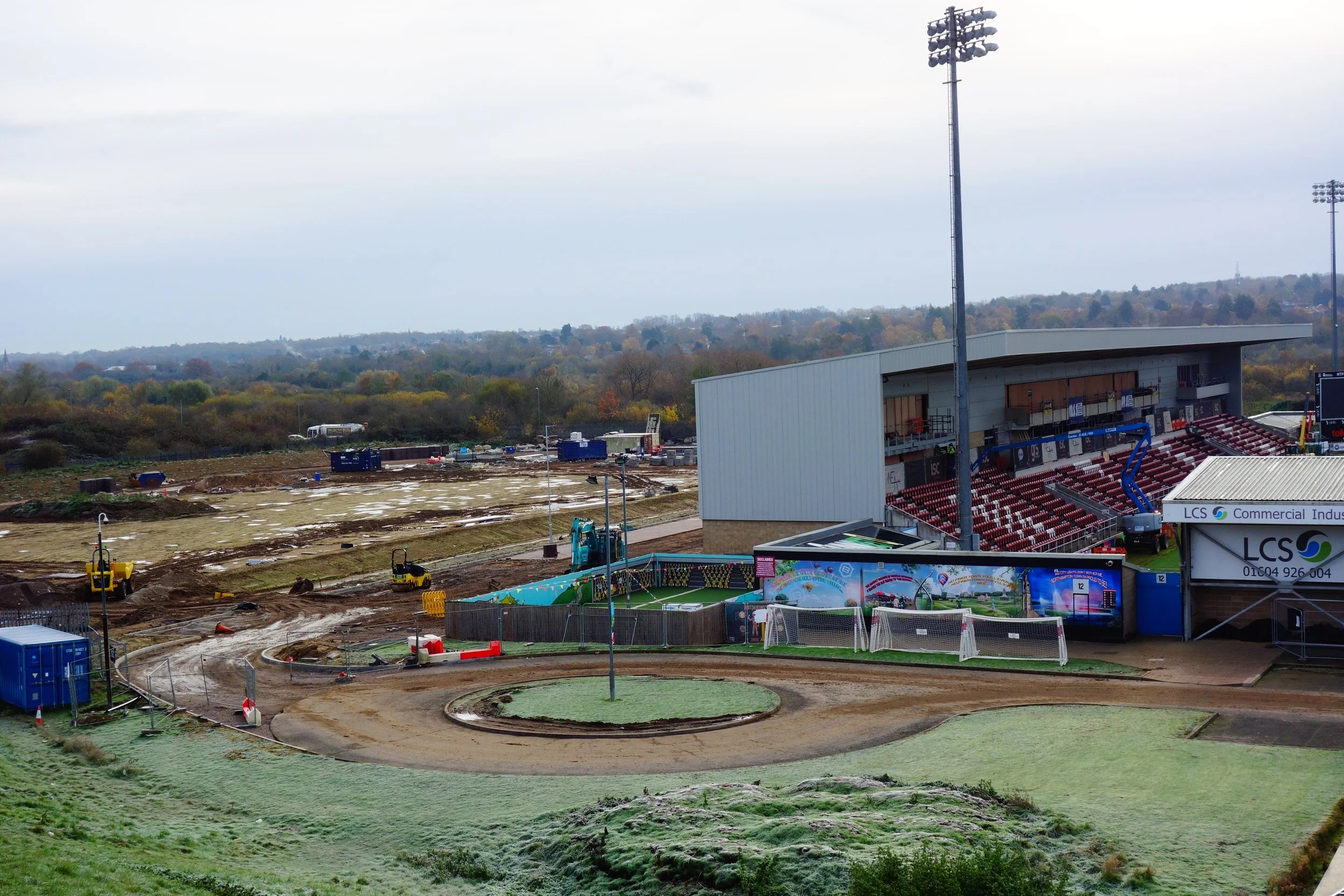
©Tom Reed/ Terrace Edition. Northampton lift tower.
Tom Reed is a lifelong Northampton Town fan, born and raised in Northampton.
He is Terrace Edition Editor and can be found on X and Instagram: @tomreedwriting
Tom is also on Bluesky @tomreedwriting.bluesky.social
——————————————————————————————————————————————————————
Os campos são verdes, o céu é azul,
O rio Nene serpenteia pelo caminho,
A praça do mercado tem chão de paralelepípedos,
Que faz as senhoras idosas tremerem até os ossos,
Cidade melhor você jamais verá, cidade melhor jamais haverá,
As luzes da cidade grande não me incomodam,
Tenho orgulho de pertencer à cidade de Northampton.
(Hino de Northampton).
A ligação entre Northampton — uma cidade comercial da região de East Midlands — e o Brasil não é óbvia.
Uma busca no Google pelos dois termos retorna apenas uma aula de jiu-jítsu brasileiro e pouco mais.
Há um café português na antiga praça do mercado, onde você pode tomar um guaraná para ganhar um pouco de energia.
Uma churrascaria que servia carnes em sistema de rodízio — com espetos giratórios — nunca chegou a fazer sucesso suficiente e fechou as portas há muitos anos no centro de lazer Sol Central.
Enquanto isso, o restaurante da Jenny, na Gold Street, faz bons negócios com as senhoras do clube, servindo pratos preparados no estilo inglês tradicional.
Cafés da manhã com frituras e xícaras de chá.
No entanto, a ligação entre Northampton e o Brasil está prestes a se concretizar de forma espetacular com a aquisição do clube de futebol da cidade por um consórcio liderado por Alexandre Pato, ídolo da Seleção Brasileira e do Milan.
O Corinthians encontra os "Cobblers". De São Paulo a Semilong. Parece um sonho febril, mas, de certa forma, faz um sentido curioso.
"Nascido para sofrer" — diz uma bandeira do Northampton Town FC exibida pelos torcedores, referindo-se a um clube que tem travado uma batalha contra as adversidades durante grande parte de sua existência, desde a sua fundação, lá em 1897.
Os Cobblers enfrentaram crises financeiras frequentes demais nos últimos 35 anos, começando pela derrocada sob a gestão de Michael McRitchie no início da década de 1990 — episódio que levou à criação da primeira associação de torcedores (*supporters’ trust*) do clube como resposta.
Depois, houve a crise da ITV Digital em 2002, quando várias equipes sofreram um enorme impacto orçamentário devido à falência da emissora.
O pior de tudo foi o escândalo dos "milhões desaparecidos" em 2015, no qual um empréstimo de £ 10,25 milhões concedido pelo conselho municipal para a reforma do estádio não chegou ao destino pretendido, mergulhando os Cobblers no caos, levando o clube à beira da insolvência e deixando os jogadores sem receber salários por um período.
Esses terremotos financeiros geram abalos que perduram por anos; eles prejudicam relacionamentos e sufocam o progresso.
Por isso, não há imagens de troféus sendo erguidos no vídeo bem produzido que dá as boas-vindas a Pato e ao consórcio Sports Alpha Capital ao clube, já que pouquíssimos títulos foram conquistados pelo Northampton Town ao longo de sua história.
Em vez disso, o vídeo promocional traz uma referência específica à indústria calçadista de Northampton — origem do apelido da equipe, "Cobblers" (Sapateiros) —, seguida pela menção à trajetória frustrante do clube, que ascendeu da quarta para a primeira divisão em meados da década de 1960, apenas para despencar novamente até a última divisão.
No entanto, a trajetória de Pato no futebol — e, de fato, partes significativas de sua carreira — não foi um caminho fácil; ele enfrentou um câncer na infância que afetou seu braço, uma parte do corpo essencial para que os jogadores protejam a bola contra adversários maiores.
Como os recursos financeiros de sua família eram limitados durante sua infância, ele precisava entrar em campo, inicialmente, com chuteiras que tinham travas mistas — de borracha e de metal.
Talvez seja por isso que ele hoje tenha uma predileção por calçados de alta qualidade, sendo que as fábricas de Northampton — como Trickers, Crockett & Jones e Church’s — produzem os melhores do mundo.
As adversidades enfrentadas tanto pelo jogador quanto pelo clube fazem dessa parceria uma união forjada tanto na lama quanto pelos deuses.
Costuma-se dizer que Northampton é uma cidade do rugby — e como não seria, visto que abriga os Saints, atuais campeões da Premiership de rugby?
O futebol sempre pareceu ocupar um plano secundário em Northampton; o clube local, embora tenha conseguido manter seu lugar na EFL — por vezes, por margens estreitas —, jamais alcançou a eficiência e o profissionalismo da operação dos Saints.
Os torcedores do Northampton Saints viajam a Paris e Biarritz para acompanhar seu time; os torcedores do Cobblers vão a Crawley e Accrington.
No entanto, nos fins de semana, você verá mais carros de jogadores de ligas amadoras estacionados nas calçadas, mais bolas redondas quicando nos campos dos parques e crianças jogando futebol do que pessoas treinando com a bola oval de rúgbi.
Northampton pode até ser uma cidade do rúgbi, mas certamente adora futebol — é só que o futebol de lá tem sido difícil de amar.
“Você sabia que o George Best marcou seis gols contra os Cobblers?” é uma frase que todo torcedor do Northampton Town já ouviu ao longo dos anos, geralmente dita por um torcedor “de fachada” do Manchester United ou do Liverpool em algum bar do centro da cidade.
É claro que todo torcedor dos Cobblers sabe muito bem que Besty marcou seis gols no antigo estádio County Ground, em Northampton, durante uma goleada histórica na Copa da Inglaterra em 1970 — ocasião em que a torcida visitante tomou conta do estádio e o Town perdeu por 8 a 2.
A imagem do desolado goleiro dos Cobblers, Kim Book, caindo no chão quando Best passou por ele para marcar seu sexto gol ficou gravada na memória dos torcedores e, na verdade, o clube nunca mais foi o mesmo.
O público de mais de 20.000 pessoas registrado no County Ground na década de 1960 foi diminuindo gradualmente. Na temporada 1984/85, o Northampton registrou seu menor público da história em jogos da liga: apenas 942 torcedores fiéis compareceram à partida contra o Chester City.
Em setembro de 1992, 2.668 pessoas assistiram ao confronto entre Northampton e Hereford United. Quatro jogadores do Hereford foram expulsos, mas, ainda assim, o Cobblers não passou de um empate em 1 a 1 com os visitantes.
Eu estava presente naquele jogo contra o Hereford, acompanhando a partida da área destinada às famílias no estádio, sentindo uma mistura de perplexidade e diversão típicas de uma criança.
No entanto, os torcedores do Northampton Town jamais perderam a esperança, figurando entre os mais leais do país.
Quando os Cobblers protagonizaram a "grande escapada" em 1993 — precisando vencer o Shrewsbury Town fora de casa para evitar o rebaixamento para as divisões inferiores —, a torcida invadiu o gramado de Gay Meadow. O momento ocorreu após Pat Gavin marcar um gol com o traseiro, selando uma virada épica de 3 a 2, depois de a equipe estar perdendo por 2 a 0 no intervalo.
Os torcedores dos "Cobblers" invadiram o campo, e um torcedor do Northampton deixou-se levar pela emoção do momento, gritando "campeões" para a câmera de TV antes de acrescentar "na próxima temporada" como uma ressalva.
Aquele conceito intangível de "potencial" sempre pesou muito para o Northampton Town, dada a sua localização em uma das maiores cidades da Europa, em um condado sem outros clubes da EFL e com uma população que beira o milhão de habitantes.
Entre meados e o final da década de 1990, com a mudança do clube para o estádio Sixfields — que conta apenas com assentos —, houve uma recuperação sob o comando de Ian Atkins; o time chegou a finais consecutivas dos *play-offs* e ficou a apenas 90 minutos de alcançar o que hoje é a Championship.
Em 1998, 44.250 torcedores do Northampton viajaram da cidade até as "Torres Gêmeas" de Wembley para o jogo contra o Grimsby Town — um número recorde de torcedores de um clube de divisão inferior para a época.
As localidades vizinhas — de West Haddon, ao norte (em direção a Leicester), até Deanshanger, ao sul (em direção a Milton Keynes) — eram redutos dos Cobblers.
No entanto, esse apoio popular diminuiu rapidamente; as camisas azuis do Leicester e o branco — visto com certo desprezo — do MK Dons começaram a aparecer cada vez mais nas áreas periféricas de Northamptonshire e, por vezes, na própria cidade.
Enquanto havia quase 45.000 torcedores dos *Cobblers* em Wembley em 1998, pouco mais de 5.000 torcedores do Northampton compareceram a Sixfields para a partida mais recente do clube contra o Rotherham, em setembro de 2026.
O jogo terminou com vitória de 1 a 0 para o time visitante, deixando o Northampton apenas uma posição acima da zona de rebaixamento da divisão inferior.
É nesse momento crítico da história do clube que entram em cena Pato e seus amigos — e, como dizia a música tocada em Wembley durante o sucesso inicial do Town nos *play-offs* de 1997: "o único caminho é para cima".
Um dos desafios iniciais da Sports Alpha Capital será aumentar o público nos jogos do clube e engajar a cidade.
O Sixfields, situado nos arredores da cidade, perto do bairro de Upton, muitas vezes passa a impressão de ser apenas um clube *na* cidade, e não o clube *da* cidade. Há pouquíssima presença visual dos "Cobblers" no centro propriamente dito: não há loja do clube nem qualquer sinalização visual.
Vêem-se camisas demais do United — e até do Paris Saint-Germain — sendo usadas por rapazes que estão muito mais perto do bairro de Bellinge do que do Bois de Boulogne.
A atmosfera em Sixfields raramente esteve à altura dos cânticos que ecoavam na antiga arquibancada "Hotel End", no antigo estádio do clube, o County Ground. Isso se deve, em grande parte, ao silêncio característico dos estádios com 100% de assentos, uma realidade que afeta grande parte do futebol inglês. Será um desafio fazer com que a torcida volte a cantar nos jogos em casa com o mesmo entusiasmo demonstrado nas partidas fora de seus domínios.
Pato, ele próprio um prodígio das categorias de base, conhece bem a importância de um trabalho de formação de qualidade desde cedo; manter os talentos locais será mais um desafio para o consórcio brasileiro. Northampton possui uma base de talentos significativa, mas, com frequência, perdeu bons jogadores locais para clubes de maior expressão, como o Aston Villa — embora novos investimentos nas categorias de base dos "Cobblers" possam ajudar a estancar essa fuga de talentos.
Ivan Toney é um excelente exemplo: o jogador da seleção inglesa cresceu no conjunto habitacional Eastfield, em Northampton, e passou pelas categorias de base do Cobblers, mas acabou sendo vendido ao Newcastle United por um valor modesto.
Há também o caso de Carney Chukwuemeka — que atua pelo Borussia Dortmund e pela seleção da Áustria —: ele começou nas categorias de base do Northampton, mas deixou o clube rumo ao Aston Villa com apenas 12 anos, por meio do *Elite Player Performance Plan* (Plano de Desempenho de Jogadores de Elite).
No entanto, um ponto forte de Northampton é a sua posição como polo esportivo, abrigando não apenas o já mencionado time dos Saints, mas também a equipe de críquete Northants County (campeã do torneio T20) e Silverstone — o centro da Fórmula 1 e sede do Grande Prêmio da Grã-Bretanha, situado a uma curta distância de carro.
Além disso, as corridas de cavalos devem retornar à vizinha Towcester em 2027, o que significa que Northamptonshire contará com um portfólio único — abrangendo futebol, rugby, críquete e turfe — capaz de criar uma marca esportiva mutuamente benéfica e atrair investimentos para o condado.
Quando criança, depois de me apaixonar pelo Northampton Town em seu estádio "County Ground" — um lugar que tinha um charme peculiar em sua precariedade —, eu ficava empolgado ao juntar dinheiro para comprar a terceira camisa dos "Cobblers" (o apelido do time), nas cores amarelo e azul e patrocinada por ninguém menos que a loja local de pisos "Carpet Supacentre".
Um homem me abordou no shopping Grosvenor, surpreso ao ver uma criança torcendo pelos Cobblers, que na época atravessavam uma de suas habituais fases ruins.
Hoje, as crianças de Northampton podem sentir orgulho de vestir as cores bordô e branco, e essas camisas exibirão o nome "Pato". Quem sabe o restaurante de rodízio não reabre, permitindo que os moradores de Northampton se deliciem com carnes e vinhos servidos em taças de prata?
Tom Reed é torcedor do Northampton Town de longa data, tendo nascido e crescido em Northampton.
Ele é escritor e fotógrafo especializado na cultura das torcidas de futebol.
Tom é editor da Terrace Edition e pode ser encontrado no X e no Instagram: @tomreedwriting.
Tom também está no Bluesky: @tomreedwriting.bluesky.social.